


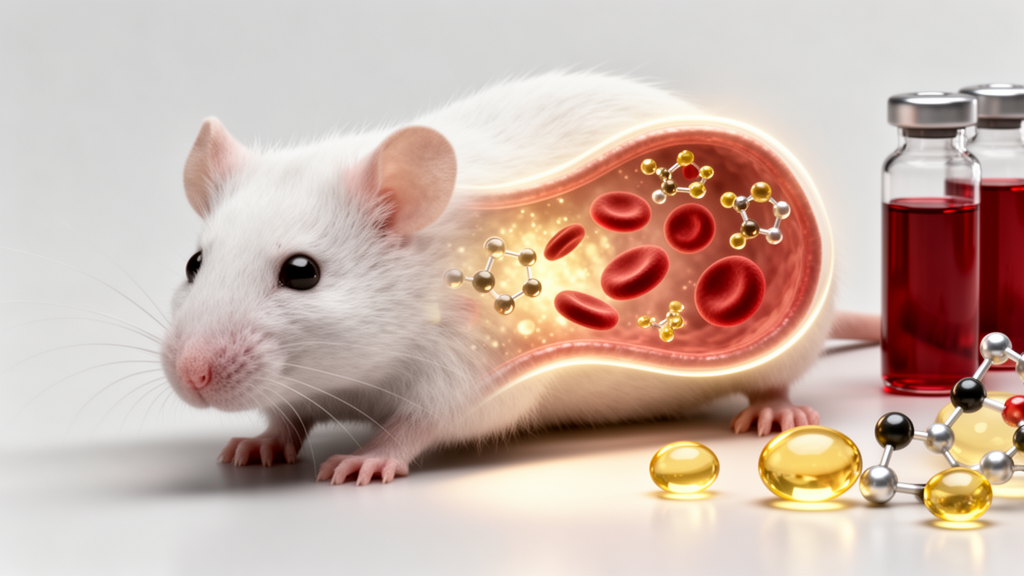
A humble pigment that turns flamingos pink and salmon flesh coral-red may soon find a new role in the fight against type 2 diabetes. In a study published in Food Science & Nutrition, researchers report that a carefully engineered complex of astaxanthin oil and fish oil lowered fasting blood glucose, improved cholesterol profiles, and repaired liver and pancreatic damage in diabetic mice—outperforming either ingredient on its own. The findings, drawn from both cell cultures and animal models, offer a tantalizing glimpse of how two widely available marine-derived nutraceuticals might work better together than apart.
Type 2 diabetes mellitus is the dominant form of a disease that now affects hundreds of millions of people worldwide, with prevalence projected to climb steeply over the coming decades. The condition is defined by insulin resistance—tissues failing to respond properly to the hormone insulin—combined with a relative shortfall in insulin production, producing chronically elevated blood sugar. Over time, that hyperglycemia damages blood vessels and organs, driving complications ranging from kidney disease and retinopathy to cardiovascular disease. Standard therapies such as metformin, sulfonylureas, and thiazolidinediones can be effective, but they often carry side effects including gastrointestinal distress and weight gain, prompting researchers to search for safer dietary adjuncts.
The two ingredients at the heart of the new study come from very different corners of the natural products world. Astaxanthin is a lipophilic carotenoid antioxidant produced by the microalga Haematococcus pluvialis, the only approved source for human consumption, as well as by krill, copepods, and the animals that eat them. Since the 1990s it has attracted scientific attention for its potent antioxidant, anti-inflammatory, and organ-protective properties, and prior research has suggested it can preserve pancreatic beta-cell function, ease insulin resistance, and enhance insulin secretion. Fish oil, meanwhile, delivers omega-3 polyunsaturated fatty acids—chiefly EPA and DHA—which are well documented to reduce inflammation, modulate blood lipids, and improve insulin sensitivity.
Crucially, fish oil also appears to boost the bioavailability of astaxanthin, and earlier work has hinted at synergistic effects when the two are co-administered. Yet no one had rigorously tested whether combining them produces a genuine hypoglycemic benefit. To find out, the research team created an astaxanthin oil–fish oil complex, blending astaxanthin oil containing 10 percent astaxanthin with fish oil rich in EPA and DHA ethyl esters, and put it through a two-pronged battery of tests: insulin-resistant human liver cells in the lab, and mice engineered to develop type 2 diabetes through a high-fat diet.
In the cellular experiments, the team first established an insulin-resistant model using HepG2 liver cells, which are a standard workhorse for studying glucose metabolism. Cells exposed to elevated glucose and insulin showed sharply reduced glucose consumption, mimicking the insulin-resistant state seen in diabetes. When the researchers treated these cells with the complex at a 1:12 ratio of astaxanthin oil to fish oil, the results were striking. At the highest concentration, glucose consumption surged by 94.24 percent compared with untreated model cells—a dramatic improvement that neither ingredient achieved alone at equivalent doses.
The complex also reshaped the activity of key metabolic enzymes. Hexokinase, which catalyzes the first step of glycolysis by phosphorylating glucose, was significantly and dose-dependently elevated by the combination, even though neither astaxanthin oil nor fish oil individually moved the needle. Pyruvate kinase, another glycolytic regulator, was similarly restored. Meanwhile, activity associated with glucose-6-phosphatase—a marker of glucose production through gluconeogenic and glycogenolytic pathways, which was abnormally elevated in the resistant cells—was suppressed more strongly by the complex than by either component alone. Cellular glycogen stores, depleted in the insulin-resistant state, rebounded most robustly with the combination treatment.
Oxidative stress, a major driver of diabetic complications, also came under attack. Insulin-resistant cells showed depressed superoxide dismutase activity and elevated malondialdehyde, a marker of lipid peroxidation. The medium-dose complex raised SOD and catalase activities by 43.43 percent and 10.63 percent respectively while cutting malondialdehyde by 35.05 percent; the high dose pushed those improvements further, lifting SOD by 66.84 percent and slashing lipid peroxidation by more than 40 percent. The authors attribute this to the complementary chemistry of the two ingredients: astaxanthin’s exceptional free-radical-scavenging ability paired with the omega-3 fatty acids’ anti-inflammatory action.
The animal experiments told a consistent story. In mice made diabetic and insulin-resistant through two months on a high-fat diet, four weeks of daily oral treatment with the high-dose complex reduced fasting blood glucose from 12.76 to 8.81 millimoles per liter—a reduction comparable to that achieved with metformin, the standard positive control. Oral glucose tolerance tests showed the complex groups clearing glucose from the bloodstream faster than mice given either ingredient alone. Serum analysis revealed a broad metabolic cleanup: in the high-dose group, LDL cholesterol, total cholesterol, and triglycerides fell by 61.6, 26.5, and 53.3 percent respectively, while HDL cholesterol rose by 57.2 percent. Liver injury markers ALT and AST dropped by roughly 40 percent, signaling meaningful hepatic protection.
Under the microscope, the differences were visible to the naked eye of a pathologist. Livers from untreated diabetic mice were disordered and fatty, riddled with vacuoles and inflammatory infiltrates, while those from the high-dose complex group looked strikingly close to healthy tissue. Pancreatic islets, shrunken and blurred in the diabetic controls, regained their shape and cellular density with treatment. Hepatic antioxidant defenses told the same quantitative story: glutathione levels soared by 180.92 percent and catalase activity by 66.67 percent in the high-dose group compared with untreated diabetic mice, alongside a marked drop in malondialdehyde.
The authors are careful to note the limits of their work. The insulin-resistant cell model is an operational approximation that did not directly measure insulin signaling or glucose transport, and mouse models cannot fully capture human diabetes pathophysiology. Mechanisms such as glucose uptake, GLUT expression, and PI3K/Akt signaling remain to be clarified in more physiologically relevant systems. Still, the pattern is compelling: across every metric tested—glucose consumption, glycolytic enzyme activity, glycogen storage, oxidative stress, blood lipids, liver enzymes, and tissue architecture—the astaxanthin–fish oil complex consistently outperformed its individual components. If future studies confirm these effects in humans, the pink pigment of the sea and the omega-3 fats of fish oil could become a powerful dietary alliance in managing one of the world’s fastest-growing diseases.
Subject of Research: Hypoglycemic effects of an astaxanthin oil and fish oil complex in cellular and mouse models of type 2 diabetes
Article Title: Hypoglycemic Effect of Astaxanthin Oil–Fish Oil Complex in Mice With Type 2 Diabetes
Article References: Lin, Z., He, J., Xi, X., Zhang, Y., Le, Q., Guo, Y., Fang, H., Jin, W., Chen, H., Chen, S., & Chen, W. (2026). Hypoglycemic Effect of Astaxanthin Oil–Fish Oil Complex in Mice With Type 2 Diabetes. Food Science & Nutrition, 14(10), Article e72410. https://doi.org/10.1002/fsn3.72410
Image Credits: AI Generated
DOI: 10.1002/fsn3.72410
Keywords: astaxanthin, fish oil, type 2 diabetes, insulin resistance, omega-3 fatty acids, hypoglycemic effect, oxidative stress, HepG2 cells, blood glucose, dyslipidemia, nutraceuticals, carotenoids
Cite Scienmag News
Alan Morgan. (October 9, 2026). Astaxanthin and Fish Oil Combo Shows Powerful Blood Sugar Benefits in Diabetic Mice. Scienmag. https://scienmag.com/astaxanthin-and-fish-oil-combo-shows-powerful-blood-sugar-benefits-in-diabetic-mice/
Alan Morgan. "Astaxanthin and Fish Oil Combo Shows Powerful Blood Sugar Benefits in Diabetic Mice." Scienmag, 9 October 2026, https://scienmag.com/astaxanthin-and-fish-oil-combo-shows-powerful-blood-sugar-benefits-in-diabetic-mice/. Accessed 9 October 2026.
Alan Morgan. "Astaxanthin and Fish Oil Combo Shows Powerful Blood Sugar Benefits in Diabetic Mice." Scienmag. October 9, 2026. https://scienmag.com/astaxanthin-and-fish-oil-combo-shows-powerful-blood-sugar-benefits-in-diabetic-mice/


