


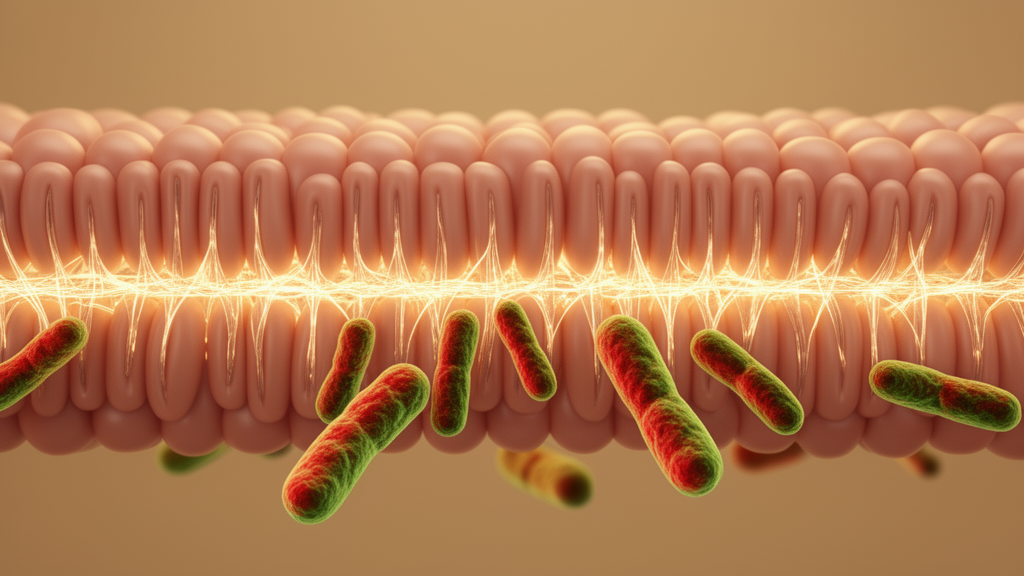
A protein long dismissed as a simple pore in the intestinal lining has turned out to be one of the gut’s most sophisticated defense molecules. In a study published in Nature Communications, researchers led by Balawant Kumar and Amar B. Singh at the University of Kansas Medical Center report that claudin-2, a tight-junction protein best known for letting sodium and water leak between intestinal cells, does far more than contribute to diarrhea. When mice are infected with Citrobacter rodentium, a bacterial pathogen that serves as the standard laboratory model of human enteropathogenic Escherichia coli infection, claudin-2 rises sharply in the intestinal epithelium and orchestrates a regenerative program that helps the gut wall expel the invader and repair itself. The finding reframes a protein that clinicians and researchers have often viewed with suspicion, because excess claudin-2 is frequently associated with the leaky gut of inflammatory bowel disease, as an active and potentially protective player in mucosal immunity.
The central puzzle the team set out to solve concerned the true function of the claudin-2 surge during infection. For years, the prevailing hypothesis held that the protein aids pathogen clearance by increasing the paracellular flux of sodium ions, thereby driving the watery diarrhea that flushes bacteria out of the intestinal lumen. Yet earlier work had shown that claudin-2 is dispensable for overall intestinal sodium homeostasis, which left the biological rationale for its induction unresolved. The researchers suspected a different explanation: rather than acting on the bulk movement of ions, claudin-2 might be reprogramming the epithelium itself, stimulating the rapid proliferation of cells within the intestinal crypts, the pocket-like invaginations that house stem cells and replenish the gut lining. Such proliferation had been observed during Citrobacter rodentium infection, but the molecular machinery driving it remained poorly understood.
To test this idea, the investigators turned to genetically engineered mice in which claudin-2 was either overexpressed specifically in the intestinal epithelium or deleted from it. When both groups were challenged with Citrobacter rodentium, the results were striking. Animals with elevated claudin-2 carried a markedly lower bacterial burden and suffered less colonic inflammation than their normal littermates. The knockout mice showed the opposite phenotype: higher colonization, exacerbated inflammatory damage, and a conspicuous failure of the crypts to mount the proliferative response that normally accompanies infection. These reciprocal outcomes established that claudin-2 is not a passive byproduct of inflammation but a decisive factor determining how successfully the intestinal barrier withstands an attaching-and-effacing bacterial pathogen.
Digging into the mechanism, the team identified a process they describe as crypt fetalization. During severe injury or infection, portions of the adult intestinal lining can revert to a gene-expression pattern resembling that of the fetal gut, a state associated with rapid cell division, enhanced wound healing, and improved tissue resilience. In the infected mice, claudin-2 promoted this fetal-like reprogramming of the crypts, whereas in the knockout animals the program was suppressed. The researchers used intestinal organoid cultures, miniature gut-like structures grown in vitro from epithelial stem cells, to confirm that the effect is intrinsic to the epithelium rather than a secondary consequence of immune signaling. Co-immunoprecipitation experiments then revealed the signaling complexes through which claudin-2 exerts its influence, anchoring the phenomenon in concrete molecular interactions rather than correlation alone.
The pathway the team mapped runs through three well-known signaling nodes: beta-1 integrin, focal adhesion kinase, and YAP. Claudin-2, according to their data, stabilizes the complex formed between beta-1 integrin, a matrix-binding receptor on the cell surface, and focal adhesion kinase, a cytoplasmic enzyme that transmits mechanical and adhesive signals into the cell. Stabilization of this complex activates FAK, which in turn triggers YAP, a transcriptional co-activator of the Hippo pathway that drives expression of growth and regeneration genes. With YAP active, crypt cells proliferate and adopt the fetal-like state that accelerates mucosal repair. In mice lacking claudin-2, this axis falls silent, the crypts fail to expand, and the damaged epithelium cannot regenerate quickly enough to limit bacterial colonization.
An additional experiment sharpened the causal chain by targeting the signal that initiates claudin-2 production in the first place. The researchers found that blocking activation of the epidermal growth factor receptor, EGFR, abolished the infection-induced upregulation of claudin-2 and reproduced the knockout phenotype, with increased bacterial burden and worsened colitis. This places EGFR upstream of claudin-2 in a coherent regulatory circuit: the pathogen or the tissue damage it causes activates EGFR, EGFR induces claudin-2, and claudin-2 engages the beta-1 integrin, FAK, and YAP cascade to reprogram the crypts. Interrupting the circuit at any point, the data suggest, leaves the gut vulnerable to the same infectious assault.
The clinical implications reach well beyond the mouse model. Enteropathogenic E. coli remains a major cause of diarrheal illness and childhood malnutrition worldwide, and attaching-and-effacing pathogens of this class depend on colonizing the epithelial surface. If claudin-2’s regenerative function operates similarly in humans, therapies designed to enhance its signaling could strengthen mucosal defenses during infection. The work also carries a cautionary message for inflammatory bowel disease research. Claudin-2 is consistently upregulated in ulcerative colitis and has been blamed for the barrier leakage that fuels chronic inflammation, prompting proposals to inhibit it. The new findings suggest that such a strategy could inadvertently strip the epithelium of a key repair mechanism, since the same protein that loosens tight junctions also appears to drive the regenerative response that heals the mucosa.
The study also adds to a growing appreciation that tight-junction proteins are signaling molecules in their own right rather than inert gaskets between cells. Claudin-7, for example, has recently been shown to maintain colonic stem cell homeostasis through Wnt and Notch signaling, indicating that the claudin family participates in developmental and regulatory programs throughout the gut. The demonstration that claudin-2 couples the epithelium’s adhesive machinery to YAP-driven proliferation provides a mechanistic template for how barrier proteins might coordinate physical sealing with biological renewal, two functions that must be balanced for the intestine to survive its constant exposure to microbes, toxins, and mechanical stress.
For now, the researchers emphasize that the work was conducted in mice and organoids, and that translating the beta-1 integrin, FAK, and YAP axis into human therapies will require further validation. Nevertheless, the conceptual shift is significant. A protein once studied almost exclusively as a channel for ions and water has emerged as a master regulator of mucosal defense, linking pathogen sensing through EGFR to structural regeneration through integrin mechanotransduction. As the authors conclude, claudin-2’s role in protecting against enteropathogenic infection and colitis extends far beyond its classical function in paracellular permeability, opening a new frontier in the search for treatments that help the gut heal itself.
Subject of Research: The role of claudin-2 in intestinal epithelial regeneration and defense against enteropathogenic bacterial infection
Article Title: Claudin-2 protects from enteropathogenic E. coli-infection and colitis by promoting crypt fetalization via β1-integrin/FAK/YAP signaling
Article References: Kumar, B., Ahmad, R., Talmon, G. A., Kapur, S., Oupicky, D., Dhawan, P., & Singh, A. B. (2026). Claudin-2 protects from enteropathogenic E. coli-infection and colitis by promoting crypt fetalization via β1-integrin/FAK/YAP signaling. Nature Communications. https://doi.org/10.1038/s41467-026-78238-w
Image Credits: AI Generated
DOI: 10.1038/s41467-026-78238-w
Keywords: claudin-2, enteropathogenic E. coli, Citrobacter rodentium, colitis, crypt fetalization, beta-1 integrin, FAK, YAP, EGFR, tight junctions, intestinal epithelium, mucosal defense
Cite Scienmag News
Kristina Jarvis. (October 8, 2026). Gut Protein Claudin-2 Revealed as a Hidden Defender Against Dangerous E. coli Infections. Scienmag. https://scienmag.com/gut-protein-claudin-2-revealed-as-a-hidden-defender-against-dangerous-e-coli-infections/
Kristina Jarvis. "Gut Protein Claudin-2 Revealed as a Hidden Defender Against Dangerous E. coli Infections." Scienmag, 8 October 2026, https://scienmag.com/gut-protein-claudin-2-revealed-as-a-hidden-defender-against-dangerous-e-coli-infections/. Accessed 8 October 2026.
Kristina Jarvis. "Gut Protein Claudin-2 Revealed as a Hidden Defender Against Dangerous E. coli Infections." Scienmag. October 8, 2026. https://scienmag.com/gut-protein-claudin-2-revealed-as-a-hidden-defender-against-dangerous-e-coli-infections/


