


Bacterial Toxin Exploits Host Exocytosis Machinery for Gut Epithelial Egress
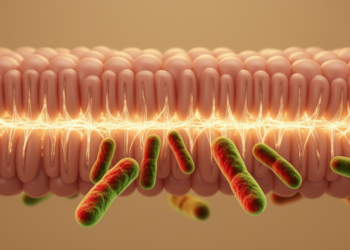
Researchers found Yersinia pseudotuberculosis uses the CNFY toxin to co-opt host exocytic machinery for non-lytic egress across human intestinal monolayers.
Researchers found Yersinia pseudotuberculosis uses the CNFY toxin to co-opt host exocytic machinery for non-lytic egress across human intestinal monolayers.

A comprehensive review highlights how natural and engineered bovine milk extracellular vesicles protect fragile therapeutics against digestive degradation and facilitate ...

Researchers demonstrated that biodegradable corn protein nanoparticles encapsulating enrofloxacin significantly reduced Escherichia coli O157:H7 burden within a three-dimensional intestinal scaffold ...

A review outlines how the crypt position of initiating cells and phenotypic plasticity shape colorectal cancer subtypes and therapy resistance.

A study in mice and transcriptomic datasets reveals that hepatocyte-specific interleukin-15 deletion reduces liver steatosis, while intestinal interleukin-15 receptor deficiency ...

A study reveals that deleting the conserved elongation factor LepA significantly impairs Salmonella Typhimurium host invasion, virulence gene induction, and ...

A cross-model transcriptomic study shows IPEC-J2 cells share core immune pathways with PEDV-infected piglet jejunum despite differences in response magnitude.

A soft membrane combining an electrospun nanofibrous scaffold with porcine colon extracellular matrix produced more native-like growth, marker and morphology ...

New siRNA knockdown experiments in human Caco2-BBE intestinal cells reveal that SLC26A6 and SLC26A2 mediate most apical oxalate transport while ...
New research in Nature Communications shows that the tight-junction protein claudin-2 protects mice from Citrobacter rodentium infection and colitis by ...


Embark on a thrilling journey of discovery with Scienmag.com—your ultimate source for cutting-edge breakthroughs. Immerse yourself in a world where curiosity knows no limits and tomorrow’s possibilities become today’s reality!