


When a stroke strikes a brain already awash in excess glucose, the consequences can be devastating. One of the most feared complications is hemorrhagic transformation, a process in which the oxygen-starved tissue deprived of blood flow by a clot begins to bleed once that clot is disrupted or dissolved. For patients with diabetes or stress-induced hyperglycemia, this risk climbs sharply, and clinicians currently have few tools to predict or prevent the catastrophic shift from ischemia to hemorrhage. Now, a team of researchers in China has identified a surprising culprit: sticky, web-like structures ejected by neutrophils, the immune system’s most abundant first responders. Their findings, published in the Journal of Translational Medicine, suggest that dismantling these structures could blunt the bleeding and open an entirely new therapeutic avenue for a patient population with few good options.
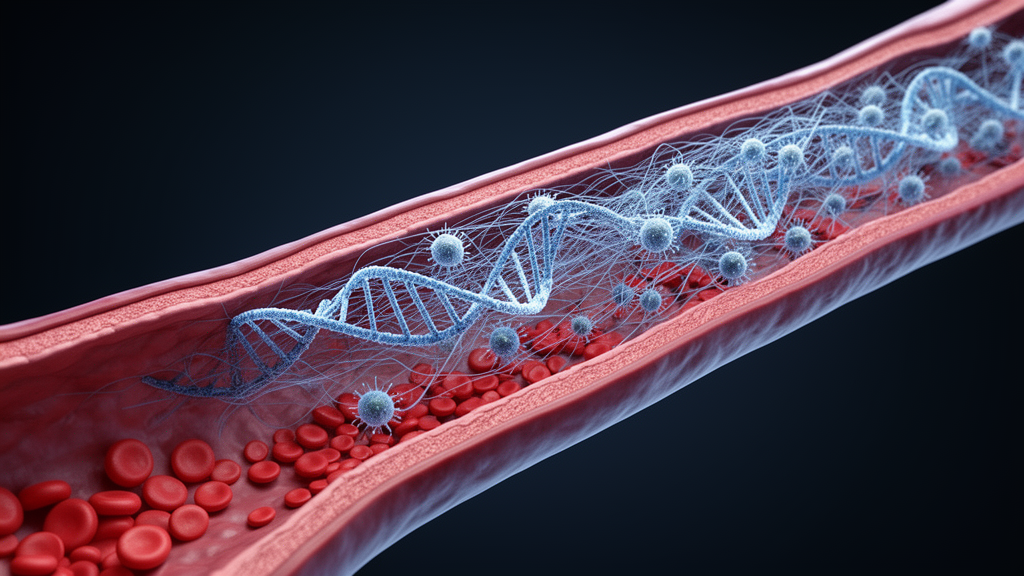
The structures in question are neutrophil extracellular traps, or NETs, gossamer lattices of DNA studded with toxic proteins that neutrophils release to ensnare bacteria and fungi. Discovered only in 2004, NETs have since been implicated in a growing list of diseases far removed from infection, including autoimmune disorders, cancer metastasis, and cardiovascular disease. In the context of stroke, they occupy a particularly dangerous intersection between two pathological processes: inflammation and coagulation. The DNA scaffolds of NETs provide a surface onto which platelets aggregate and fibrin deposits, while the embedded enzymes, such as neutrophil elastase and myeloperoxidase, can damage the delicate endothelial lining of blood vessels. This coupling of clot formation and tissue inflammation has been termed thromboinflammation, and it is precisely the mechanism the researchers suspected might link high blood sugar to bleeding in the brain.
To test that hypothesis, the team led by Ziyuan Zhao, Yiming Ma, and senior authors Lianhua Fang and Linglei Kong of the Institute of Materia Medica at the Chinese Academy of Medical Sciences and Peking Union Medical College began with a computational approach. They mined publicly available gene expression datasets from the Gene Expression Omnibus, searching for molecular pathways that distinguish hyperglycemia-induced hemorrhagic transformation from ordinary ischemic injury. The analysis pointed repeatedly toward neutrophil activation and NET formation, suggesting that the regulatory circuits governing these immune webs were among the most prominent signatures of the complication.
Computational predictions, however, are only as good as their validation in biological systems. The researchers next turned to human samples, measuring NET levels in blood drawn from stroke patients and comparing them against circulating glucose concentrations. The correlation was clear and positive: the higher a patient’s blood glucose, the greater the burden of NETs in their bloodstream. The team also collected neutrophils from rats and exposed them to hyperglycemic conditions in the laboratory, observing that elevated glucose drove the white blood cells to expel more of their DNA-based traps. Together, these findings established the first pillar of the study’s argument: hyperglycemia and NET formation are not merely coincidental features of severe stroke but appear to be mechanistically intertwined.
The second pillar came from animal experiments. The researchers induced ischemic stroke in rats by occluding the middle cerebral artery, the standard model of human ischemic stroke, while simultaneously rendering the animals hyperglycemic. They then tracked both NET levels and cerebral hemorrhage over time. The results were striking in their synchrony: NET burden and brain hemoglobin content, a direct measure of bleeding, both peaked one day after the stroke, and the severity of hemorrhagic transformation rose in a linear relationship with the amount of NETs present. In other words, the more DNA webs circulating in the vasculature and infiltrating the brain, the worse the bleeding, a dose-response pattern that strengthens the case for a causal connection.
Correlation alone, however, rarely satisfies the standards of translational research, so the team moved to intervention. They treated the hyperglycemic stroke rats with two complementary agents targeting NETs by different mechanisms. The first, Cl-amidine, inhibits peptidyl arginine deiminase 4, or PAD4, the enzyme responsible for the citrullination of histones that loosens chromatin and allows neutrophils to release their traps. At a dose of 20 milligrams per kilogram given intraperitoneally, Cl-amidine prevents NETs from forming in the first place. The second, DNase I, is an enzyme that chops up the DNA backbone of already-released NETs, effectively dissolving existing webs; it was administered intravenously at 10 milligrams per kilogram. Both strategies produced the same outcome: significantly reduced hemorrhagic transformation in the hyperglycemic rats. That two mechanistically distinct interventions converged on the same protective effect is among the strongest forms of evidence available in preclinical pharmacology, and it argues that NETs are not a bystander in this process but an active driver.
Having established that NETs matter, the researchers probed how they inflict their damage. Using RNA sequencing of brain tissue, immunofluorescence microscopy, and enzyme-linked immunosorbent assays, they mapped the molecular fallout of NET accumulation. The picture that emerged was one of runaway thromboinflammation. Rats with abundant NETs showed elevated levels of pro-inflammatory cytokines, including tumor necrosis factor-alpha and interleukin-8, signaling molecules that recruit further immune cells and amplify tissue damage. At the same time, the animals displayed increased concentrations of thrombosis-related factors, among them von Willebrand factor, a glycoprotein that promotes platelet adhesion; thrombin-antithrombin complexes, a marker of active clot formation; and fibrinogen, the soluble precursor of the fibrin mesh that solidifies clots. The coexistence of heightened inflammation and heightened coagulation in the same animals captures the essence of thromboinflammation: a self-reinforcing loop in which clotting provokes immune activation and immune activation provokes further clotting.
The consequences of this loop for the blood-brain barrier are particularly consequential. The barrier, a tightly sealed layer of endothelial cells joined by protein complexes such as zonula occludens-1, normally shields the brain from blood-borne molecules and cells. NETs and their associated inflammatory mediators are known to degrade the proteins that hold these junctions together, and matrix metalloproteinase-9, an enzyme released by neutrophils, can chew through the basement membrane supporting the vessel wall. When the barrier fails, red blood cells and plasma proteins flood into brain parenchyma, converting an ischemic lesion into a hemorrhagic one. The study’s finding that NET inhibition preserved barrier integrity and reduced bleeding is consistent with this mechanism, although the authors note that the full cascade of downstream events remains to be worked out in detail.
The clinical implications of the work are twofold. First, NETs may serve as a biomarker. Because NET levels correlated with blood glucose in patients and with hemorrhage severity in rats, a simple blood test measuring NET components, such as circulating cell-free DNA, myeloperoxidase-DNA complexes, or nucleosomes, could potentially identify which hyperglycemic stroke patients are at highest risk of hemorrhagic transformation before it occurs. This would be invaluable in decisions about reperfusion therapy, where physicians must weigh the benefit of restoring blood flow against the danger of provoking bleeding into tissue that has been rendered fragile by inflammation. Second, NETs represent a therapeutic target. Drugs that inhibit PAD4 or degrade extracellular DNA already exist in some form; DNase I, for instance, is an approved therapy for cystic fibrosis, where it liquefies DNA-rich mucus in the lungs. Repurposing such agents for stroke would face substantial hurdles, including the challenge of delivering them across the blood-brain barrier and the risk of impairing neutrophil-mediated host defense, but the present study provides the preclinical proof of concept that such an approach could work.
Cautious optimism is warranted. The findings come from rat models and a modest human correlative dataset, and rodent stroke research has a long history of therapies that succeeded in animals but failed in human trials. Hyperglycemia in the laboratory, typically induced acutely, may not fully recapitulate the chronic vascular damage seen in diabetic patients. Nevertheless, the study is the first to directly implicate NETs in hyperglycemia-induced hemorrhagic transformation, and it does so with a methodological rigor that spans computational prediction, human correlation, dose-response modeling, and dual-pharmacological intervention. As the prevalence of diabetes continues to rise worldwide, and with it the number of strokes occurring in hyperglycemic brains, the need for such mechanistic insights has never been greater. If future studies confirm that neutrophil webs are the thread connecting sugar and bleeding in the injured brain, unraveling them may become one of the most consequential interventions in acute stroke medicine.
Subject of Research: The role of neutrophil extracellular traps in hyperglycemia-induced hemorrhagic transformation after ischemic stroke
Article Title: Inhibition of NETs-mediated thromboinflammation alleviates hemorrhagic transformation after hyperglycemic stroke
Article References: Zhao, Z., Ma, Y., Sun, W., Liu, C., Wang, L., Jiang, Y., Du, G., Fang, L., & Kong, L. (2026). Inhibition of NETs-mediated thromboinflammation alleviates hemorrhagic transformation after hyperglycemic stroke. Journal of Translational Medicine. https://doi.org/10.1186/s12967-026-08901-9
Image Credits: AI Generated
DOI: 10.1186/s12967-026-08901-9
Keywords: stroke, hemorrhagic transformation, hyperglycemia, neutrophil extracellular traps, thromboinflammation, PAD4, DNase I, blood-brain barrier, inflammation, coagulation, biomarker, Journal of Translational Medicine
Cite Scienmag News
Cassandra Pierce. (October 8, 2026). Immune Webs of DNA May Drive Brain Bleeding After High-Sugar Stroke. Scienmag. https://scienmag.com/immune-webs-of-dna-may-drive-brain-bleeding-after-high-sugar-stroke/
Cassandra Pierce. "Immune Webs of DNA May Drive Brain Bleeding After High-Sugar Stroke." Scienmag, 8 October 2026, https://scienmag.com/immune-webs-of-dna-may-drive-brain-bleeding-after-high-sugar-stroke/. Accessed 8 October 2026.
Cassandra Pierce. "Immune Webs of DNA May Drive Brain Bleeding After High-Sugar Stroke." Scienmag. October 8, 2026. https://scienmag.com/immune-webs-of-dna-may-drive-brain-bleeding-after-high-sugar-stroke/


