


From tidepools on the California coast to the fire-scarred rings of ancient New Mexico pines, a new roundup of peer-reviewed research from the Ecological Society of America offers a sweeping look at how living systems function, how humans have reshaped them, and how science might help restore what has been lost. The five studies, published across the society’s journals, span conservation psychology, decomposition ecology, fire history, marine trophic connectivity and environmental policy. Taken together, they tell a strikingly coherent story: ecosystems are held together by connections that are often invisible, whether those links run between people and tidepools, between insects and carcasses, between reefs and the open ocean, or between centuries-old social upheavals and the landscapes we manage today.
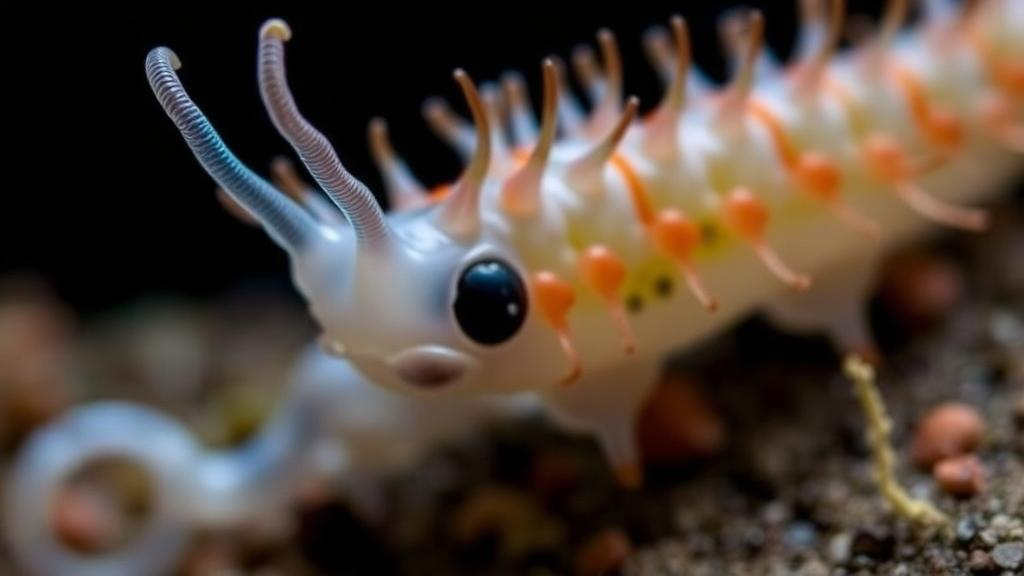
The first study, appearing in Earth Stewardship, turns its attention to one of the ocean’s most charismatic miniature creatures: the nudibranch, commonly known as the sea slug. Researchers proposed that poking around tidepools can be a genuinely useful activity for boosting environmental awareness, and they put the idea to the test in a practical way. Rather than relying on professional educators, the team recruited knowledgeable amateurs to guide city dwellers on short treks through California’s intertidal zones. Crucially, the program focused on reaching non-English-speaking adults, a community that has historically been underrepresented in outdoor recreation and conservation circles. The guides introduced participants to the colorful sea slugs that dwell in tidepools, along with the multitude of other sea creatures that abound in these rocky nurseries between land and sea.
The logic behind the approach is grounded in a well-established idea in conservation psychology: people protect what they care about, and they care about what they know. By cultivating stronger connections to the ocean at both the personal and community level, the researchers argue, such experiences can engender greater support for large-scale conservation measures that might otherwise be met with public skepticism. Protected areas and no-fishing zones, for example, often face resistance from communities that feel excluded from decisions about coastal waters. The study reinforces the view that environmental stewardship requires building relationships between people and the natural world through participatory, nature-based activities. In an era when climate advocacy increasingly depends on broad coalitions, a tidepool full of neon-colored sea slugs may prove to be an unexpectedly effective ambassador.
From the shoreline, the second study moves to the rugged mountains of Australia’s Kosciuszko National Park, where a team set out to answer a deceptively simple question: who actually does the work of recycling animal carcasses? The answer matters because scavengers play a vital role in returning nutrients to ecosystems, and scientists are increasingly interested in whether some scavengers can compensate when others disappear due to environmental change. To find out, the researchers compared how long the carcasses of 64 kangaroos lasted under different experimental conditions and across seasons, tracking which animals visited and how quickly the remains were consumed.
The results upend a common assumption. Insects, mainly flies and beetles, turned out to be the primary drivers of decomposition during the warmer times of the year, while brushtail possums, ravens, dingoes and other vertebrate scavengers played a relatively minor role. More remarkably, the insects were able to make up for an outright absence of vertebrate scavengers, producing similar rates of carcass decomposition even when the larger animals were experimentally excluded. During the chillier months, however, the picture reversed. Decomposition slowed dramatically as insect activity declined, and although vertebrate scavengers visited carcasses more frequently in these cooler periods, they failed to compensate for the insects’ absence, leaving kangaroo carcasses to persist for long stretches of time. The findings suggest that in this Australian ecosystem, tiny insects may be the unsung heroes keeping nature’s recycling system running, a conclusion with real implications for predicting how nutrient cycling will respond as insect populations face mounting global pressures.
The third study, published in Ecosphere, reaches back several centuries to reveal how abruptly human history can rewrite the fire regime of an entire region. In New Mexico’s Rio Grande del Norte National Monument, researchers analyzed the rings of ancient trees, reading fire scars preserved in the wood like a documentary archive. The record showed that fires were common from the 1400s to the 1600s, occurring on average every 8 to 12 years. Then, following Spanish colonization beginning around 1650, wildfire frequency declined sharply, with large burns occurring only every 38 to 166 years. Strikingly, this trend continued even through the Pueblo Revolt of 1680, during which Indigenous groups drove away Spanish settlers for more than a decade, suggesting that the ecological transformation outlasted the political one.
Because climate conditions were stable during this period, the researchers attribute the marked reduction in fire to human-related causes rather than shifts in drought or temperature. Two mechanisms stand out: intensive livestock grazing reduced the amount of grass and herbs available to fuel fires, and intentional ignitions by Indigenous people, which had long shaped the landscape, became less frequent. The implications extend well beyond historical curiosity. Understanding when and why fire regimes shifted is essential for the effective management and conservation of the region’s unique ecosystems, particularly as land managers weigh the return of prescribed fire. The study also stands as a vivid reminder of the enduring environmental effects that can be triggered by abrupt social change, a legacy written into the very rings of trees that still stand today.
The fourth study dives into the western Pacific, where the island nation of Palau is surrounded by both coral reefs and open-ocean waters. Researchers focused on 33 species of predatory fish to investigate how large marine predators help connect these neighboring ecosystems, a question of growing urgency as climate change, habitat degradation and overfishing reshape marine food webs. Using two complementary techniques, analysis of chemical signatures in muscle tissue and examination of stomach contents, the team traced where each animal had been and what it had been eating, effectively reconstructing the movement of energy and nutrients across habitat boundaries.
The findings revealed that predatory fish transport substantial quantities of energy and nutrients between reef and ocean habitats, but that this exchange is decidedly lopsided. Oceanic predators such as marlin and tuna largely stick with oceanic prey and only occasionally venture into reef habitats, while reef-based predators like snapper and grey reef sharks regularly feed on both reef and open-ocean prey. This asymmetry indicates that Palau’s reefs are more dependent on inputs from the open ocean than the other way around. The study demonstrates that predatory fish can forge important links between seemingly distinct marine habitats, but that the strength and direction of those connections vary considerably with habitat, species and environmental conditions. For fisheries managers, the message is clear: protecting a single habitat in isolation may not be enough if the predators that sustain it depend on resources flowing in from elsewhere.
The final study, published in Frontiers in Ecology and the Environment, shifts from documenting ecological connections to reimagining the policy tools that govern development. The authors ask a provocative question: what if new housing developments, roads, solar farms and other infrastructure could leave nature better off than before construction began? They argue that environmental impact assessments, or EIAs, should focus not only on reducing environmental harm but also on delivering measurable gains in biodiversity. Current EIAs are typically triggered by the presence of threatened species or other protected ecological features, which means degraded sites with real restoration potential may receive little ecological attention at all.
To close this gap, the researchers propose adding a complementary biodiversity gains assessment to the traditional EIA process. In addition to identifying and mitigating potential harms, developers would assess a site’s ecological potential and identify concrete opportunities to improve it. A vacant urban lot, for example, could be transformed with native plants, wetlands and green roofs that create habitat and connect nearby green spaces. Such an approach would shift EIAs from simply limiting biodiversity losses to actively increasing biodiversity, reframing nature as something to be enhanced, measured and rewarded rather than merely an obstacle to development or an administrative box to be checked. If adopted widely, the framework could help steer the global construction boom toward a genuinely nature-positive future, one project at a time.
Woven together, these five studies illustrate the breadth of modern ecology and the unexpected places where its most important insights are found: in the curiosity of a first-time tidepool visitor, in the appetite of a beetle on a kangaroo carcass, in a fire scar from the seventeenth century, in the muscle tissue of a grey reef shark, and in the fine print of a planning permit. Each paper, in its own way, argues that the connections between organisms, habitats and human societies are the true architecture of the natural world, and that understanding them is the first step toward protecting them.
Subject of Research: Five ecological studies on conservation engagement, carrion decomposition, historical fire regimes, marine trophic connectivity and environmental impact assessment reform
Article Title: September research news from the Ecological Society of America
Article References: September research news from the Ecological Society of America. (n.d.). Original publication
Image Credits: AI Generated
DOI: Not provided
Keywords: nudibranchs, tidepools, scavengers, carrion decomposition, fire history, dendrochronology, Spanish colonization, coral reefs, marine predators, nutrient cycling, environmental impact assessment, biodiversity
Cite Scienmag News
Gavin Prescott. (October 8, 2026). Sea Slugs, Hungry Insects and Fiery Legacies: Five Ecological Studies Reshape How We See Nature. Scienmag. https://scienmag.com/sea-slugs-hungry-insects-and-fiery-legacies-five-ecological-studies-reshape-how-we-see-nature/
Gavin Prescott. "Sea Slugs, Hungry Insects and Fiery Legacies: Five Ecological Studies Reshape How We See Nature." Scienmag, 8 October 2026, https://scienmag.com/sea-slugs-hungry-insects-and-fiery-legacies-five-ecological-studies-reshape-how-we-see-nature/. Accessed 8 October 2026.
Gavin Prescott. "Sea Slugs, Hungry Insects and Fiery Legacies: Five Ecological Studies Reshape How We See Nature." Scienmag. October 8, 2026. https://scienmag.com/sea-slugs-hungry-insects-and-fiery-legacies-five-ecological-studies-reshape-how-we-see-nature/


