


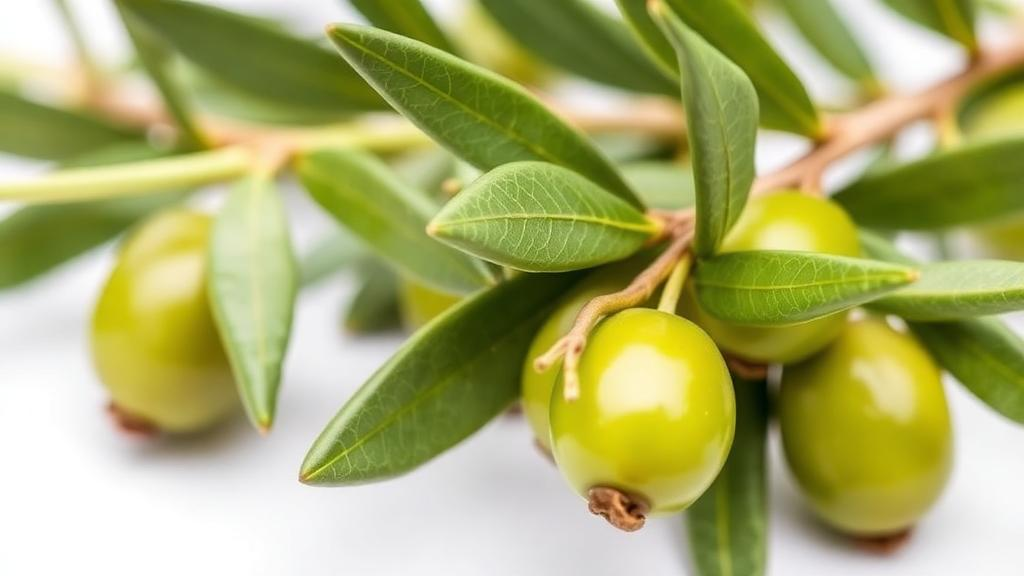
Olive leaves, long discarded as agricultural waste from pruning and harvesting, are emerging as a remarkably rich source of bioactive compounds, and a new study suggests that two iconic Turkish olive varieties may hold particular promise for pharmaceutical and nutraceutical applications. Researchers from Gazi University in Türkiye and Babeș-Bolyai University in Romania set out to map the phytochemical profile of leaves from the Ayvalık and Gemlik cultivars of Olea europaea L., the species behind the country’s celebrated olive oil. Their findings, published in BMC Complementary Medicine and Therapies, reveal that a simple, environmentally friendly extraction technique can unlock meaningful antioxidant activity and a previously undocumented link between a specific plant compound and diuretic-like enzyme inhibition.
The team’s central innovation was methodological. Rather than relying on conventional solvent-hungry extraction, the researchers employed ultrasound-assisted extraction, a green chemistry approach that uses high-frequency sound waves to agitate the plant material in solution. The cavitation bubbles generated by ultrasound collapse violently at the surface of the leaf tissue, rupturing cell walls and releasing intracellular compounds far more efficiently than passive soaking. This allows shorter extraction times, lower solvent consumption, and reduced energy input, all of which matter for any industrial process hoping to claim genuine sustainability credentials. The researchers varied two key parameters: the solvent system, comparing hydroalcoholic mixtures with other solvent options, and the extraction duration, testing 15-minute and 30-minute ultrasound treatments.
Using spectrophotometric assays alongside Ultra Performance Liquid Chromatography with UV detection, the team quantified the phytochemical content and biological activity of the resulting extracts. They prepared extracts from each variety separately, designated P1 for Ayvalık and P2 for Gemlik, and also created a mixture containing equal amounts of both. The analytical strategy allowed them to track how cultivar identity, solvent choice, and extraction time interacted to shape the final chemical composition of each preparation, a level of granularity that is essential if olive leaf extracts are ever to be standardized as ingredients in supplements or herbal remedies.
The results painted a nuanced picture in which no single extract dominated every metric. The hydroalcoholic extract from Ayvalık leaves, obtained with a 30-minute ultrasound procedure, delivered the highest rosmarinic acid content, measured at 8.42 micrograms per milliliter of extract. Rosmarinic acid, a polyphenolic compound also found in rosemary, mint, and other aromatic herbs, has attracted considerable scientific interest for its antioxidant and anti-inflammatory properties. Its prominence in the Ayvalık extract suggests that this cultivar could serve as a natural source of the compound, and that extended ultrasound treatment helps coax it out of the leaf matrix.
Antioxidant capacity told a different story. Here it was the Gemlik variety that shone, with its 15-minute ultrasound-assisted extract achieving the strongest radical-scavenging performance, expressed as an efficient concentration, or EC50, of 211.75 micrograms per milliliter. The EC50 value indicates the concentration of extract needed to neutralize half of the free radicals in the test system, so lower numbers signal greater potency. The fact that a shorter extraction time produced the most effective antioxidant preparation is a practical boon: less processing, less energy, and less time for the same or better antioxidant yield. It also underscores how sensitive phytochemical extraction is to processing conditions, with different compound classes responding differently to ultrasound exposure.
Perhaps the most intriguing finding concerns carbonic anhydrase, an enzyme that has become a legitimate drug target in modern medicine. Carbonic anhydrase catalyzes the rapid interconversion of carbon dioxide and water into bicarbonate and protons, a reaction fundamental to pH regulation throughout the body. Inhibiting this enzyme in the kidneys increases the excretion of bicarbonate, sodium, and water, producing a diuretic effect, which is why carbonic anhydrase inhibitors are used clinically both as diuretics and in the treatment of glaucoma and certain other conditions. Natural products that modulate this enzyme are therefore of keen interest to researchers hunting for gentler, plant-derived alternatives to synthetic drugs.
The Ayvalık hydroalcoholic extract again led the pack, inhibiting carbonic anhydrase with an inhibitory concentration, or IC50, of 334.64 micrograms per milliliter. The IC50 value represents the extract concentration required to halve the enzyme’s activity, and while this potency is far weaker than that of synthetic pharmaceutical inhibitors, it is meaningful for a crude plant extract. More significantly, the researchers went a step further and proposed a new UPLC-UV method to quantify rosmarinic acid specifically, using it to reveal, for the first time, the contribution of this compound to the diuretic-associated enzyme inhibition of the olive leaf extracts. Establishing that a single, quantifiable molecule correlates with a biological effect is a crucial step toward standardization, because it gives manufacturers a measurable marker compound rather than relying on the vague notion of total extract.
The authors conclude that hydroalcoholic extracts from the leaves of Olea europaea L. represent a potential source of rosmarinic acid and exhibit beneficial antioxidant and diuretic properties relevant to pharmaceuticals, food supplements, nutraceuticals, and herbal remedies. That framing matters because olive leaf products already occupy a growing niche in the wellness market, typically marketed for cardiovascular support and general antioxidant benefits. Rigorous, cultivar-specific data on exactly which compounds are present, in what quantities, and under which extraction conditions, could help transform a loosely regulated category into one grounded in verifiable chemistry. It could also encourage producers to treat olive leaves not as waste but as a secondary crop with real economic value, harvested from the same trees that yield table olives and oil.
The study also carries broader lessons for green extraction science. Ultrasound-assisted extraction has matured from a laboratory curiosity into a technique with genuine industrial traction, and studies like this one demonstrate why: by tuning solvent composition and sonication time, researchers can selectively enrich extracts for different compound classes. The comparison between the two Turkish cultivars adds an agricultural dimension, hinting that varietal selection could become as important in botanical ingredient production as it already is in wine and olive oil. The researchers acknowledged support from a Turkish organic olive farm, which supplied the leaves, a reminder that this kind of work depends on collaboration between academic laboratories and the growers whose raw material makes it possible.
Caveats remain, as they always do at this stage of research. The antioxidant and enzyme inhibition results come from in vitro assays, meaning they were performed in test systems rather than in living organisms, and the path from an IC50 value in a cuvette to a demonstrated diuretic effect in humans is long and uncertain. The published version of the study was also shared early as a citable accepted manuscript, subject to further editorial processing. Still, the work stands as a careful piece of analytical chemistry with a clear practical orientation: it identifies which cultivar to grow, which solvent to use, how long to extract, and which marker compound to measure. For a world increasingly interested in plant-based therapeutics and circular agricultural economies, the humble olive leaf, once destined for the compost heap, is proving to be anything but a leftover.
Subject of Research: Phytochemical analysis and carbonic anhydrase inhibition of olive leaf extracts from two Turkish olive cultivars obtained by ultrasound-assisted green extraction
Article Title: Phytochemical profile, antioxidant capacity, and carbonic anhydrase inhibition of Olea europaea L. (cv. Gemlik and Ayvalik) leaves: a green extraction approach
Article References: Phytochemical profile, antioxidant capacity, and carbonic anhydrase inhibition of Olea europaea L. (cv. Gemlik and Ayvalik) leaves: a green extraction approach. (n.d.). https://doi.org/10.1186/s12906-026-05563-4
Image Credits: AI Generated
DOI: 10.1186/s12906-026-05563-4
Keywords: olive leaf extract, Olea europaea, rosmarinic acid, ultrasound-assisted extraction, green chemistry, antioxidant activity, carbonic anhydrase, diuretic activity, Ayvalık, Gemlik, UPLC-UV, nutraceuticals
Cite Scienmag News
Ophelia Keating. (October 7, 2026). Olive Leaf Extracts Show Potent Antioxidant and Diuretic Potential in Green Extraction Study. Scienmag. https://scienmag.com/olive-leaf-extracts-show-potent-antioxidant-and-diuretic-potential-in-green-extraction-study/
Ophelia Keating. "Olive Leaf Extracts Show Potent Antioxidant and Diuretic Potential in Green Extraction Study." Scienmag, 7 October 2026, https://scienmag.com/olive-leaf-extracts-show-potent-antioxidant-and-diuretic-potential-in-green-extraction-study/. Accessed 7 October 2026.
Ophelia Keating. "Olive Leaf Extracts Show Potent Antioxidant and Diuretic Potential in Green Extraction Study." Scienmag. October 7, 2026. https://scienmag.com/olive-leaf-extracts-show-potent-antioxidant-and-diuretic-potential-in-green-extraction-study/


