


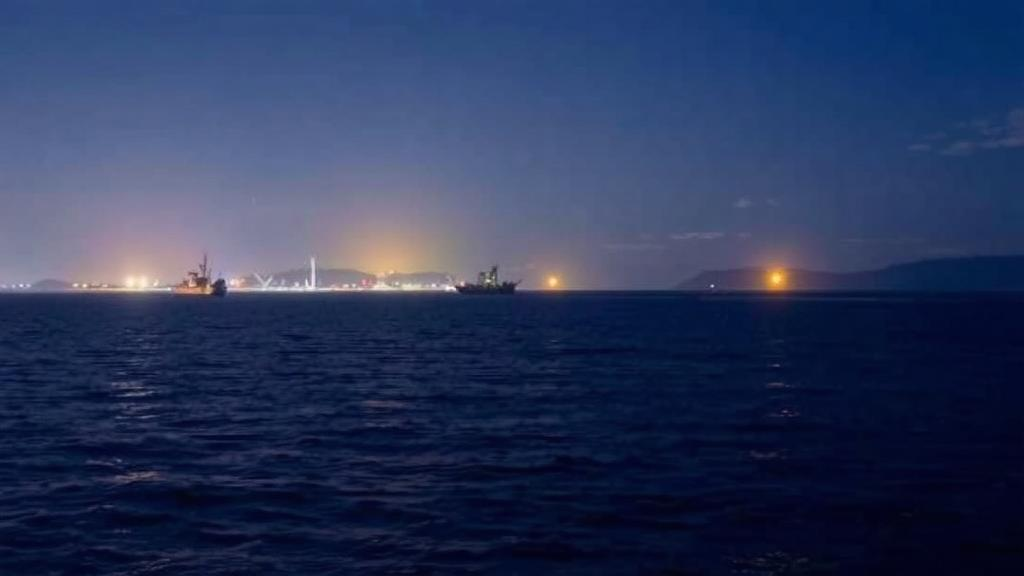
Artificial light at night has quietly become one of the ocean’s most pervasive yet least regulated pollutants, and now scientists have produced the first systematic assessment of where European waters face the greatest danger. The study, led by researchers at the University of Plymouth and published in the journal Ocean & Coastal Management, introduces a novel framework for judging whether a marine region can be considered to be in Good Environmental Status when it comes to artificial light at night, commonly abbreviated as ALAN. The verdict is stark: enclosed seas bordered by heavily urbanised coastlines, above all the Adriatic Sea, the Baltic Sea and the western Mediterranean Sea, are the European waters most exposed to harmful levels of nighttime illumination, while remote open-ocean regions such as Macaronesia, the Barents Sea and the Iceland Sea remain comparatively dark and therefore comparatively safe.
The research addresses a conspicuous gap in European environmental law. The European Union’s Marine Strategy Framework Directive, introduced in 2008 to protect marine ecosystems and biodiversity, was intended to cover a broad suite of human pressures on the sea, and light pollution was nominally among them. In practice, however, no defined criteria for Good Environmental Status with respect to ALAN have ever been established, which means member states have had no operational way to measure, monitor or manage the problem. Without such criteria, light pollution has remained what the study’s authors describe as a hidden environmental threat, one that is acknowledged in principle but ignored in regulatory terms. The new methodology is designed to close that gap by providing a scientifically grounded, operational and adaptable framework that can be applied with existing knowledge and tools.
Technically, the framework draws on an approach already developed for underwater noise, another form of marine pollution that is extensively covered in existing Marine Strategy Framework Directive guidance. The research team, working as part of the AquaPLAN project, developed separate risk scoring criteria for the water column and for the seabed, recognising that light behaves differently as it travels through clear versus turbid water and that different habitats and organisms are exposed at different depths. The scoring system takes into account the light pollution being emitted by coastal towns and cities, the optical clarity of the seawater in particular locations, and how easily light can penetrate downward through the water column. Where water is clear, artificial light from shore can reach considerably deeper and affect a larger volume of habitat; where it is turbid, penetration is reduced but scattering can still illuminate surface waters.
To produce the risk maps, the team combined these criteria with existing datasets, most notably the 2021 Global Atlas of Artificial Light at Night Under the Sea, which integrates satellite observations of nighttime lights with models of how that light propagates underwater. Each regional sea was then scored according to the percentage of its area exposed to nil, low, medium or high risk of harm. The result is a ranked league table of European sea regions ordered from highest to lowest exposure risk. The Adriatic Sea tops the list, followed by the Baltic Sea and the western Mediterranean Sea, with the Greater North Sea, the Aegean-Levantine Sea, the Ionian and Central Mediterranean Sea, the Black Sea and the Sea of Azov also ranking among the more exposed waters. At the opposite end of the scale sit Macaronesia, a region encompassing the Canary Islands, the Azores, Madeira and Cape Verde, along with the Barents Sea, the Iceland Sea, the Norwegian Sea and the White Sea.
The pattern that emerges is geometric as much as demographic. Enclosed regions bordered by land on several sides accumulate light from multiple densely populated coastlines simultaneously, and because the water cannot disperse or dilute the illumination the way open ocean can, the exposure risk compounds. The Adriatic, wedged between the Italian peninsula and the Balkans and fringed by major tourist destinations, exemplifies the problem. The Baltic, with its low-lying, heavily developed catchment and relatively shallow, partially enclosed basin, shows a similar signature. The western Mediterranean combines intense coastal urbanisation with some of the clearest water in Europe, allowing shore-based light to penetrate further into the water column than it would in murkier northern seas.
For the United Kingdom, the news is comparatively reassuring. The Greater North Sea and the Celtic Seas are largely characterised as being of medium to low risk, reflecting the moderating effect of open connections to the Atlantic and the relatively diffuse distribution of coastal light sources. Yet the assessment also flagged a distinctly industrial contributor: the North Sea’s oil and gas fields, and the infrastructure associated with them, add significant levels of light pollution to what would otherwise be an open ocean setting. Offshore platforms, flares and floodlit installations create islands of artificial brightness far from any coastline, illuminating waters that would naturally experience only moonlight and starlight. This finding underscores that marine light pollution is not solely a coastal phenomenon driven by tourism and urbanisation.
The scientific case for concern has been building for more than a decade. Dr Thomas Davies, Associate Professor of Marine Conservation at the University of Plymouth, led the first ever study into the effects of light pollution on the marine environment in 2014 and is the lead author of the new research. He argues that the accumulated evidence now justifies regulatory action. Over many years, he notes, research has repeatedly shown that light pollution is significantly impacting many important coastal species, yet it remains largely absent from global policy. The Marine Strategy Framework Directive was supposed to include measures linked to light pollution, but that never fully materialised, with the standing argument being that the evidence base was insufficient to support detailed legislation. Davies contends that this argument no longer holds, and that the study, together with the wider body of work since 2014, provides clear evidence of risk and harm that urgently needs to be translated into meaningful action.
Senior author Professor Tim Smyth, Director of Science at Plymouth Marine Laboratory, emphasises that defining and quantifying Good Environmental Status requires more than measurement alone. It depends, he says, on combining global observations and mapping with expert scientific judgement about what a healthy ocean should look like. The 2021 Global Atlas of Artificial Light at Night Under the Sea, together with the extensive evidence generated over the past decade, has made it possible to assess this emerging pressure at a global scale. Smyth frames ALAN alongside other under-regulated stressors such as underwater noise, arguing that together they help build a more complete picture of cumulative human impacts on the ocean and provide the evidence base for effective action ranging from global policy down to local management decisions.
The study was written by scientists from the University of Plymouth, the Centre for Environment, Fisheries and Aquaculture Science, the University of Pisa, the Genoa Marine Centre and the Italian Institute for Environmental Protection and Research, many of whom are also members of the Global Ocean Artificial Light at Night Network, known as GOALANN. The network was launched by Dr Davies and Professor Smyth at the United Nations Ocean Decade Conference in April 2024 and was later endorsed by the UN as one of its Ocean Decade Actions. Professor Elena Maggi, Professor in Ecology at the University of Pisa and AquaPLAN Project Coordinator, describes the central challenge as translating the substantial evidence that artificial light at night affects marine organisms and ecological processes into approaches that identify where ecosystems are most at risk, bringing together ecological knowledge and monitoring to provide a stronger basis for assessment and mitigation.
The authors also point to practical remedies, particularly for the tourist hotspots that dominate the list of most impacted regions. Authorities in those areas could explore meaningful changes to lighting infrastructure, including shielding fixtures to direct light downward, dimming or switching to part-night lighting schemes, and manipulating the wavelength composition of coastal lighting to reduce how far it penetrates into the sea, since blue-rich white light travels furthest through clear water. They further suggest designating dark spaces on and around islands, offering visitors an alternative experience to seasides ringed by artificial illumination. The researchers hope the methodology can be applied globally, and with the Marine Strategy Framework Directive currently under review, they argue the moment is ripe for light pollution to finally be written into European marine law with the same seriousness as noise, nutrients and chemical contaminants.
Subject of Research: A risk assessment framework for artificial light at night pollution in European marine waters
Article Title: Study highlights the European waters at greatest risk of harmful light pollution
Article References: Study highlights the European waters at greatest risk of harmful light pollution. (n.d.). Original publication
Image Credits: AI Generated
DOI: Not provided
Keywords: light pollution, artificial light at night, marine conservation, Adriatic Sea, Baltic Sea, Mediterranean Sea, Marine Strategy Framework Directive, Good Environmental Status, AquaPLAN, water clarity, coastal ecosystems, University of Plymouth
Cite Scienmag News
Violet Maxwell. (October 7, 2026). Adriatic and Baltic Seas Named Europe’s Worst Hotspots for Marine Light Pollution. Scienmag. https://scienmag.com/adriatic-and-baltic-seas-named-europes-worst-hotspots-for-marine-light-pollution/
Violet Maxwell. "Adriatic and Baltic Seas Named Europe’s Worst Hotspots for Marine Light Pollution." Scienmag, 7 October 2026, https://scienmag.com/adriatic-and-baltic-seas-named-europes-worst-hotspots-for-marine-light-pollution/. Accessed 7 October 2026.
Violet Maxwell. "Adriatic and Baltic Seas Named Europe’s Worst Hotspots for Marine Light Pollution." Scienmag. October 7, 2026. https://scienmag.com/adriatic-and-baltic-seas-named-europes-worst-hotspots-for-marine-light-pollution/


