


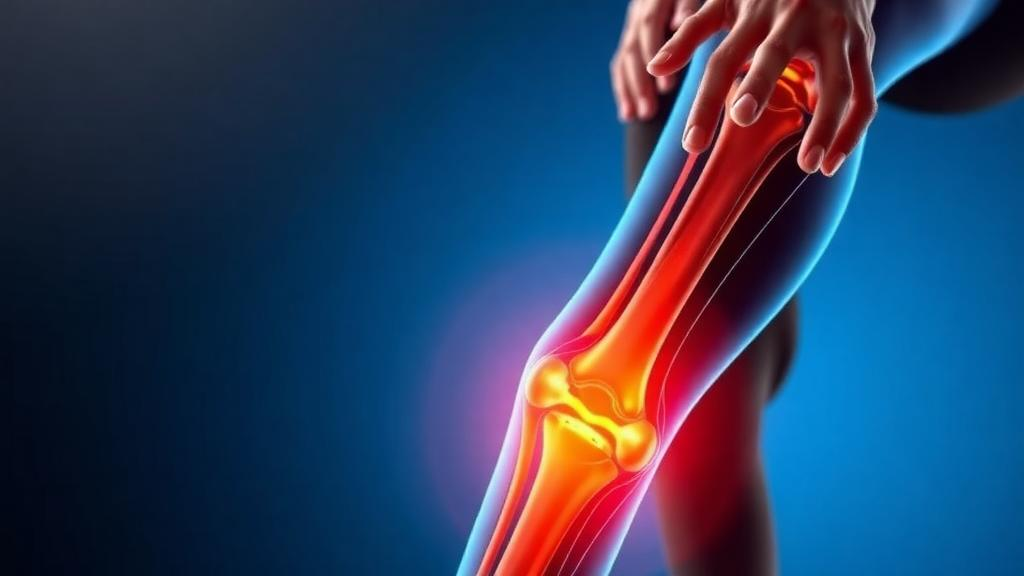
For decades, physicians have prescribed physical activity as one of the most reliable treatments for osteoarthritis, the degenerative joint disease that afflicts hundreds of millions of older adults worldwide. Yet the biological machinery behind that benefit has remained frustratingly opaque. Why does moving the body protect the very cartilage that movement wears down? A new study from investigators at Mass General Brigham offers one of the most detailed answers yet, tracing the protective effect of exercise to tiny particles released into the bloodstream that carry molecular instructions capable of making aged cartilage cells behave more youthfully.
The research, led by physical therapists and scientists Hirotaka Iijima and Fabrisia Ambrosio of the Discovery Center for Musculoskeletal Recovery within the Department of Physical Medicine and Rehabilitation at Mass General Brigham, was published in the journal Nature Aging. The team set out to test a hypothesis that has been gaining traction in regenerative medicine: that circulating extracellular vesicles, or EVs, act as messengers through which exercise exerts its systemic effects on distant tissues. These nanoparticles, shed by cells throughout the body into the blood, are packed with proteins, lipids and RNA molecules that can alter the behavior of the cells they encounter.
Osteoarthritis is among the leading causes of pain, disability and loss of mobility in aging populations, and its prevalence is expected to climb as populations grow older. The disease involves the progressive breakdown of articular cartilage, the smooth, load-bearing tissue that cushions the ends of bones within joints. Once cartilage degrades, it has very limited capacity for self-repair, and current treatments largely manage symptoms rather than halt or reverse structural deterioration. Regular moderate exercise is strongly recommended for people with the condition and is known to protect joint tissue, but the molecular pathways translating a bout of physical activity into healthier cartilage have never been fully mapped.
The researchers designed their investigation to span multiple levels of biological organization, combining analyses of extracellular vesicles, cell culture experiments, mouse models of aging-associated osteoarthritis and a structured human exercise intervention. In the human portion of the study, older adults completed a three-month moderate-intensity aerobic exercise program. Blood samples were collected before the program began and again after the training period, allowing the team to compare the molecular contents of circulating EVs before and after sustained physical activity and to evaluate the biological effects of these exercise-derived vesicles on cartilage cells and joint tissues.
The results were striking. Moderate-intensity exercise significantly reshaped the cargo carried by circulating EVs in ways that promoted cartilage health and tissue resilience. When the researchers applied EVs collected from participants after exercise to cartilage cells and joint tissues in laboratory and animal settings, those vesicles improved cellular and tissue health in the knee joint. In other words, the blood of a person who had just completed months of aerobic training carried particles that could actively encourage cartilage cells toward a healthier state, a finding that reframes exercise not merely as mechanical conditioning but as a source of circulating therapeutic signals.
Among the molecular signals enriched in EVs after exercise training, one stood out: microRNA-29, a small regulatory RNA molecule. The team identified microRNA-29 as a key mediator of the beneficial effects, and when they delivered it directly to aged, osteoarthritic joints in their experimental models, the treatment restored more youthful characteristics in cartilage cells and reduced features associated with joint degeneration. This single microRNA, shuttled through the bloodstream inside exercise-altered vesicles, appears capable of nudging aged chondrocytes, the resident cells of cartilage, away from the degenerative patterns that characterize osteoarthritis and toward a healthier, more resilient phenotype.
The technical implications of this work are considerable. Extracellular vesicles have become a major focus of regenerative medicine because they can cross biological barriers, deliver their cargo to specific target cells and carry complex mixtures of signaling molecules that are difficult to reproduce with a single synthetic drug. By demonstrating that exercise naturally enriches circulating EVs with a cartilage-protective microRNA, the study provides a mechanistic bridge between rehabilitation science and molecular therapeutics. It suggests that the benefits of a supervised exercise program can, at least in part, be bottled in principle, raising the possibility of EV-based or microRNA-based therapies that reproduce the joint-protective effects of physical activity.
Such therapies would be especially meaningful for patients who cannot exercise sufficiently because of pain, disability or other health limitations. For a person with advanced knee osteoarthritis, the very activity that would protect their joints may be intolerably painful, creating a vicious cycle in which immobility accelerates degeneration. A treatment that harnesses the biological signals generated by exercise, without requiring the exercise itself, could break that cycle. The researchers note that these strategies would pair regenerative medicine with traditional rehabilitation principles, potentially guiding the design of clinical programs focused on maximizing the biological responses associated with joint protection and tissue health rather than relying on activity alone.
The study also carries a broader conceptual message about how the body responds to physical activity. Exercise has long been recognized to benefit organs far removed from the muscles doing the work, including the brain, heart, immune system and bone, and circulating extracellular vesicles are increasingly implicated as one of the communication channels behind these systemic effects. The Mass General Brigham findings extend that framework to cartilage, a tissue that lacks blood vessels of its own and was long thought to be largely insulated from systemic signals. The demonstration that vesicle-borne microRNA-29 can reach and rejuvenate aged chondrocytes suggests that cartilage is far more responsive to whole-body physiology than its isolated biology would imply.
For the investigators, both of whom trained as physical therapists, the work is animated by a deceptively simple question: why and how does exercise work? Much remains to be learned about why physical activity ranks among the most effective interventions for a wide range of musculoskeletal conditions, but this study represents a concrete step toward that understanding. By pinpointing a specific, exercise-regulated molecular signal that improves the health of aging cartilage cells, the research transforms an old clinical observation into a testable biological pathway, and it opens a realistic path toward treatments that could one day deliver the medicine of movement to patients whose bodies will no longer let them move.
Subject of Research: How exercise-derived extracellular vesicles and microRNA-29 protect aging cartilage in osteoarthritis
Article Title: Research Spotlight: Exercise as medicine—how exercise protects joints in aging-related osteoarthritis
Article References: Research Spotlight: Exercise as medicine—how exercise protects joints in aging-related osteoarthritis. (n.d.). Original publication
Image Credits: AI Generated
DOI: Not provided
Keywords: osteoarthritis, exercise, extracellular vesicles, microRNA-29, cartilage, chondrocytes, aging, Nature Aging, regenerative medicine, joint health, physical therapy, Mass General Brigham
Cite Scienmag News
Beatrice Stafford. (October 6, 2026). Exercise Sends Molecular Messages That Rejuvenate Aging Joint Cartilage. Scienmag. https://scienmag.com/exercise-sends-molecular-messages-that-rejuvenate-aging-joint-cartilage/
Beatrice Stafford. "Exercise Sends Molecular Messages That Rejuvenate Aging Joint Cartilage." Scienmag, 6 October 2026, https://scienmag.com/exercise-sends-molecular-messages-that-rejuvenate-aging-joint-cartilage/. Accessed 6 October 2026.
Beatrice Stafford. "Exercise Sends Molecular Messages That Rejuvenate Aging Joint Cartilage." Scienmag. October 6, 2026. https://scienmag.com/exercise-sends-molecular-messages-that-rejuvenate-aging-joint-cartilage/


