


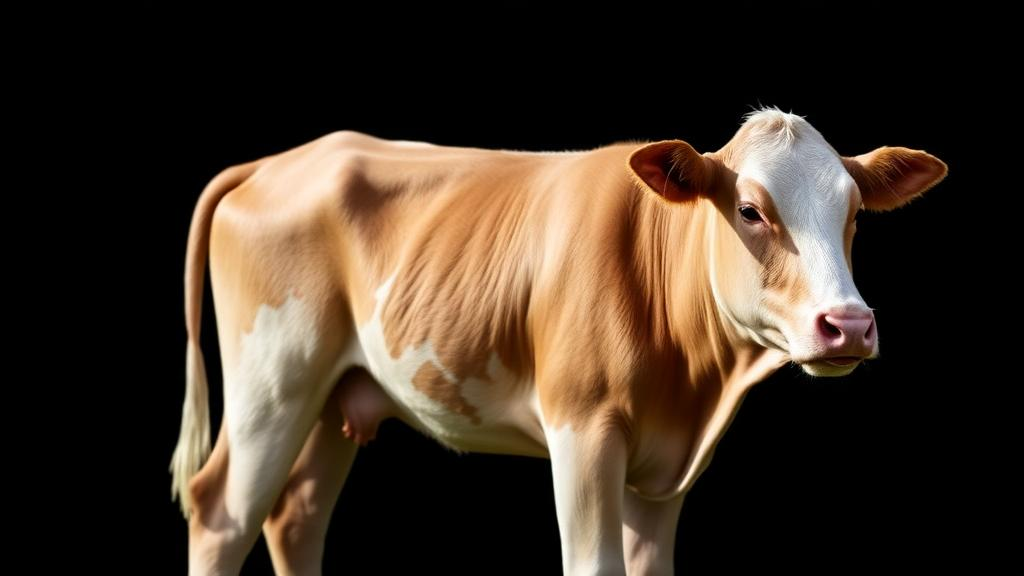
The first milk that a cow produces after giving birth has long been treated as little more than a calf’s survival kit, but a comprehensive new review argues that this thick, yellowish secretion deserves a far more prominent place in human nutrition and medicine. Published in Food Science of Animal Resources, the review synthesizes decades of research on bovine colostrum, a fluid so densely packed with antibodies, growth factors and antimicrobial molecules that it has no true equivalent in mature milk. Because cattle cannot pass immunoglobulins across the placenta, colostrum is the sole source of passive immunity for the newborn calf, which explains why evolution has loaded it with an extraordinary concentration of bioactive compounds. That same molecular arsenal, the authors contend, is now finding applications that stretch from sports recovery drinks to clinical nutrition for patients with inflammatory bowel disease.
The chemistry behind this promise is striking. Immunoglobulins, chiefly IgG, make up roughly 70 to 80 percent of the total protein in first-day colostrum, and their concentration can reach 50 to 100 milligrams per milliliter in the first days after delivery, orders of magnitude above the levels found in mature milk. Total protein in day-one colostrum approaches 15 percent by weight before falling to around 3 percent within days. Alongside the antibodies sit lactoferrin, an iron-binding glycoprotein with antibacterial, antiviral and anti-inflammatory activity; lactoperoxidase, an enzyme that generates reactive compounds lethal to a broad range of bacteria; and growth factors such as IGF-1 and TGF-beta that drive epithelial repair and tissue regeneration. Proline-rich polypeptides add a further layer of immune regulation, capable of damping down overactive responses of the kind seen in allergy and autoimmunity.
What makes bovine colostrum particularly attractive compared with colostrum from other species is a combination of potency, abundance and cross-species compatibility. The IgG concentration in bovine colostrum is nearly 100 times higher than in human colostrum, and many of its bioactive molecular structures are conserved across mammals, allowing bovine-derived molecules to interact effectively with human receptors. Dairy cows also produce far more colostrum than a calf can consume, creating a renewable surplus that can be harvested without compromising animal welfare. Regulatory agencies in several countries already recognize bovine colostrum as a generally safe natural nutraceutical ingredient, and its production is scalable in a way that human, goat or camel colostrum simply is not.
The carbohydrate fraction of colostrum is proving equally interesting. Bovine colostrum contains between 0.7 and 1.2 milligrams per milliliter of oligosaccharides, the majority of them acidic, sialylated structures such as 3′-sialyllactose, which accounts for about 70 percent of the total. Forty distinct oligosaccharide compositions have been identified so far, and their levels peak immediately after parturition before declining within 48 hours. Unlike the predominantly fucosylated oligosaccharides of human milk, bovine milk oligosaccharides are mostly sialylated, and recent advances in enzymatic glycosylation are making it possible to modify their structures to resemble human milk oligosaccharides more closely. Glycoproteins such as the casein-derived glycomacropeptide add prebiotic value, promoting the growth of beneficial Bifidobacterium in the gut.
Turning this perishable fluid into a stable commercial ingredient is a technological challenge in its own right, and the review devotes considerable attention to processing science. Freeze-drying, or lyophilization, is described as the gold standard: by freezing colostrum and removing water through sublimation under reduced pressure, the process avoids the heat that would denature thermolabile proteins. Freeze-dried colostrum retains 85 to 95 percent of original IgG activity, and with cryoprotectants such as trehalose or maltodextrin, probiotic survival rates of 80 to 90 percent can be achieved. Spray-drying, by contrast, is the workhorse of industrial production, atomizing liquid colostrum into hot air at inlet temperatures of 140 to 180 degrees Celsius. Although somewhat harsher, optimized spray-drying can still preserve 70 to 80 percent of immunoglobulin activity while dramatically reducing microbial load and extending shelf life, which is why it remains the method of choice for large-scale manufacturing.
Clinical evidence is accumulating across a surprising range of conditions. In gastrointestinal medicine, colostrum has shown benefit in irritable bowel syndrome, ulcerative colitis and infectious diarrhea. A small pilot trial of a colostrum enema in ulcerative colitis saw symptom improvement in seven of eight treated patients, and hyperimmune colostrum tablets targeting enterotoxigenic E. coli provided roughly 90 percent protection against experimentally induced traveler’s diarrhea in challenge studies. Perhaps most striking is the interaction with painkillers: in a crossover trial, volunteers taking the NSAID indomethacin alongside whey protein saw intestinal permeability rise nearly threefold, whereas those co-administered bovine colostrum showed no significant increase at all, an effect attributed to growth factors that promote healing of the gut lining.
Athletes form another key target population. The first study of colostrum supplementation in sport, published in 1997, reported increases in serum immunoglobulin concentrations and explosive muscular power. Subsequent controlled trials have found improvements in lean body mass, cycling performance and recovery in runners, and one study of older adults undergoing resistance training showed enhanced leg press strength and reduced bone resorption at a dose of 60 grams per day. Supplementation has also been linked to reduced exercise-induced gut permeability and, in some studies, elevated secretory IgA in saliva, although these immune findings have not always been replicated. Researchers caution that the mechanisms remain unclear and that the effects probably cannot be explained by protein content alone, since whey protein controls with matching protein levels generally perform less well.
The newest frontier comes from omics technologies. Proteomic profiling has identified more than a thousand distinct proteins and peptides in bovine colostrum, revealing low-abundance bioactives such as osteopontin, milk fat globule membrane proteins and lactoperoxidase that participate in immune signaling, mucosal defense and tissue repair. Even more provocative is the discovery of microRNAs packaged within stable extracellular vesicles. These small regulatory RNAs, including miR-148a and miR-21, appear capable of surviving passage through the digestive tract and influencing gene expression in recipient cells, modulating T-cell differentiation, macrophage activation and the integrity of tight junctions in the intestinal barrier. Some evidence suggests these molecules may even cross species barriers, adding an epigenetic dimension to colostrum’s bioactivity that extends well beyond its traditional protein and peptide mechanisms.
The review is careful to balance enthusiasm with caution. Colostrum’s bioactive content varies substantially between batches depending on breed, diet, parity and collection time, raising standardization and labeling concerns in loosely regulated markets. Milk protein allergy and lactose intolerance remain relevant risks for sensitive individuals, and fresh colostrum is highly perishable and prone to contamination with pathogens such as E. coli, Salmonella and Listeria unless properly pasteurized or dried. Theoretical questions also persist about long-term exposure to concentrated growth factors, particularly for people with hormone-sensitive conditions, and the authors call for larger, well-designed, double-blind and placebo-controlled trials to confirm many of the reported clinical benefits.
Nevertheless, the overall trajectory is unmistakable. From functional foods and infant nutrition to sports supplements and pharmaceutical formulations, bovine colostrum is being repositioned as a multifunctional bioactive matrix rather than a simple dairy byproduct. New encapsulation and delivery systems are being developed to improve the bioavailability and targeting of its fragile components, and metabolomic and transcriptomic studies continue to uncover candidates with antiviral and immunomodulatory potential. As consumer demand shifts toward natural products with immune-enhancing and regenerative properties, the review concludes that this ancient first milk, once valued only for the survival of newborn calves, may become a staple ingredient of future functional nutrition and therapeutic development, provided that quality control, sustainable sourcing and processing standardization keep pace with the science.
Subject of Research: Nutritional composition, bioactive components and therapeutic applications of bovine colostrum
Article Title: Health benefits and value addition of bovine colostrum (BC): a comprehensive review of its nutritional and functional potential
Article References: Riaz, S., Imran, A., Rasheed, M., Amjad, A., Shankar, A., Chauhan, G., Basharat, Z., Islam, F., Naeem, U., & Ndagire, C. T. (2026). Health benefits and value addition of bovine colostrum (BC): a comprehensive review of its nutritional and functional potential. Food Science of Animal Resources, 46(1), Article 55. https://doi.org/10.1007/s44463-026-00057-w
Image Credits: AI Generated
DOI: 10.1007/s44463-026-00057-w
Keywords: bovine colostrum, immunoglobulins, lactoferrin, growth factors, gut health, functional foods, nutraceuticals, freeze-drying, spray-drying, microRNAs, immune modulation, sports nutrition
Cite Scienmag News
Kristina Jarvis. (October 4, 2026). Bovine Colostrum Emerges as a Bioactive Powerhouse for Immunity, Gut Health and Recovery. Scienmag. https://scienmag.com/bovine-colostrum-emerges-as-a-bioactive-powerhouse-for-immunity-gut-health-and-recovery/
Kristina Jarvis. "Bovine Colostrum Emerges as a Bioactive Powerhouse for Immunity, Gut Health and Recovery." Scienmag, 4 October 2026, https://scienmag.com/bovine-colostrum-emerges-as-a-bioactive-powerhouse-for-immunity-gut-health-and-recovery/. Accessed 4 October 2026.
Kristina Jarvis. "Bovine Colostrum Emerges as a Bioactive Powerhouse for Immunity, Gut Health and Recovery." Scienmag. October 4, 2026. https://scienmag.com/bovine-colostrum-emerges-as-a-bioactive-powerhouse-for-immunity-gut-health-and-recovery/


