


In the sprawling, often unregulated world of artisanal and small-scale gold mining, two of chemistry’s most notorious poisons are increasingly finding themselves mixed together in the same rivers and streams. Metallic mercury has long been the workhorse of informal gold extraction, used to bind gold particles from crushed ore into a workable amalgam. When the mercury-contaminated leftovers are then processed with cyanide to squeeze out the remaining precious metal, an entirely new class of hazardous compounds emerges: mercuric cyanide complexes. A new study published in Discover Toxicology has now provided some of the first direct evidence that these compounds, which until recently have been largely overlooked by toxicologists, can derail the earliest stages of vertebrate development and dramatically reduce the survival of fish embryos.
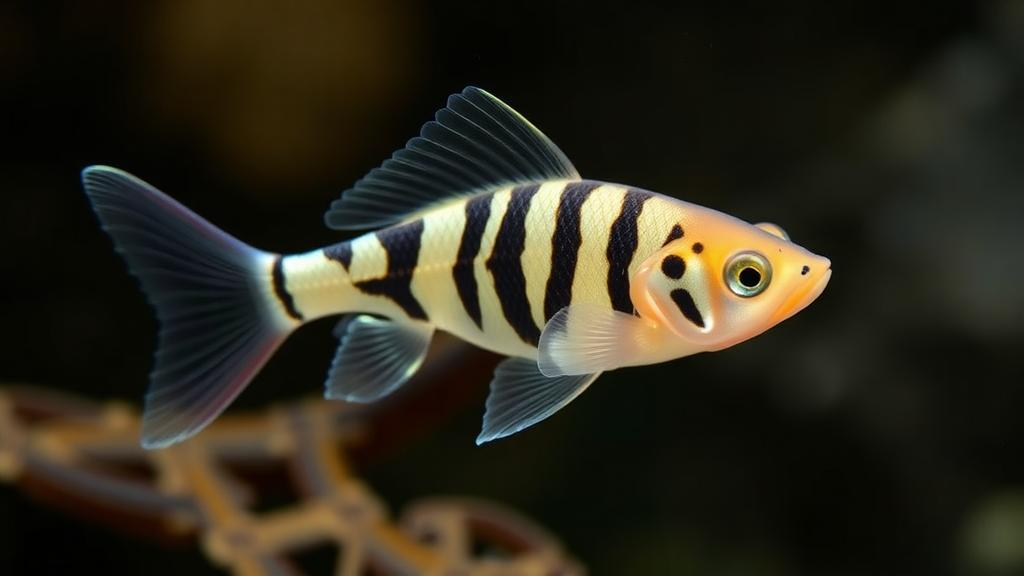
The research team, led by Elizabeth H. Pittman and Christy C. Bridges of Mercer University School of Medicine, together with chemists Adam M. Kiefer and Caryn S. Seney, exposed zebrafish embryos to a range of concentrations of mercuric cyanide, from 0.05 to 0.3 milligrams per liter, beginning just one hour after fertilization. Zebrafish are a mainstay of developmental toxicology for good reason: their embryos are transparent, develop rapidly, and share much of their early biology with other vertebrates, making them an ideal sentinel for what might happen in contaminated waterways. The exposure protocol followed the Organization for Economic Cooperation and Development’s standardized fish embryo acute toxicity test, lending regulatory weight to the findings.
The chemistry behind the hazard is as elegant as it is alarming. Artisanal miners use metallic mercury because it is fast, cheap, and accessible, but the process is inefficient, often leaving the majority of the gold behind in the tailings. Those mercury-laden tailings are frequently sold and subjected to cyanidation, a process that can recover up to 90 percent of the remaining gold. When metallic mercury reacts with cyanide under aerobic conditions, it forms soluble complexes of the general formula Hg(CN)n(2−n), including the highly stable tetracyanomercurate ion. Once formed, these complexes barely dissociate at all, meaning they persist in water as intact, bioavailable packages of both mercury and cyanide rather than breaking down into less harmful constituents.
What makes the new findings particularly striking is the pattern of toxicity the researchers observed. Some of the most fundamental milestones of early development, including germ ring formation at six hours post fertilization, tail segmentation at ten to twelve hours, and the initiation of the heartbeat at twenty-four hours, proceeded normally even at the highest concentrations tested. Exposed embryos looked, at first glance, remarkably like their untreated counterparts. Yet beneath that deceptively normal surface, the poison was quietly at work, and the damage became apparent as development progressed.
The first visible warning sign came from spontaneous movement. Healthy zebrafish embryos twitch inside their protective chorion, the outer membrane that surrounds them, typically averaging seven to nine twitches per minute by twenty hours post fertilization. While the twitching rate itself appeared unchanged, the speed and intensity of the movements were visibly diminished in embryos exposed to higher doses. By twenty-five hours, the proportion of embryos displaying spontaneous twitching had dropped by roughly 25 percent at 0.15 milligrams per liter and by a staggering 75 percent at 0.3 milligrams per liter. Reduced twitching is a well-recognized hallmark of neurotoxicity in zebrafish studies, suggesting that the developing nervous system is an early and sensitive target of the mercuric cyanide complexes.
As the embryos approached hatching, the physical deterioration became unmistakable. Embryos exposed to 0.15 milligrams per liter or higher appeared atrophic, with unevenly distributed melanin pigment and poorly formed eyes. Their heartbeats, though not significantly slower in rate than controls, were noticeably weaker in intensity, and at the highest concentrations a heartbeat could not be detected at all. Embryos exposed to 0.3 milligrams per liter appeared to be decomposing inside their chorions, evidenced by particulate brown matter visible under the microscope. The authors suggest that oxidative stress may underlie these effects, though they note this mechanism was not directly assessed in the current study and remains a question for future work.
Hatching and survival told an equally sobering story. Not a single embryo exposed to 0.1 milligrams per liter or above managed to hatch at all. Even at the lowest concentration tested, 0.05 milligrams per liter, half of the embryos experienced delayed hatching, and while all of them eventually emerged, only 75 percent survived the first 120 hours of development. The survivors were lethargic and carried dense melanin deposits in the pronephric region, the epiphysis, and the cerebellum. Some larvae exhibited a permanent thirty-degree lateral bend in their tails and, despite looking outwardly similar to control larvae, were unable to swim upright, a deficit that could stem from the spinal deformity or from broader toxicological damage to organ systems.
The environmental context gives these laboratory numbers real-world urgency. The concentrations used in the study were chosen based on previous measurements of mercury and cyanide in contaminated rivers and on earlier work with adult zebrafish, and the authors acknowledge that contamination levels in the wild vary enormously. Some mercury-cyanide-contaminated water bodies have been measured at concentrations as high as 22.7 milligrams per liter, while others sit around one to two milligrams per liter, both well above the levels that proved lethal to embryos in this study. Because artisanal and small-scale gold mining is the largest human-made source of mercury in the environment, and because mining waste contaminated with both mercury and cyanide is routinely deposited into neighboring bodies of water, the pathway from mine site to fish nursery is disturbingly short.
The study also fills a conspicuous gap in the toxicological literature. The effects of mercury alone and cyanide alone on fish have been studied for decades, with mercury linked to neurological, teratogenic, and reproductive toxicity, and cyanide known to disrupt ion transporters, impair equilibrium and swimming, and damage reproductive capacity. A recent in vitro study had shown that mercuric cyanide complexes are highly bioavailable in adult zebrafish, accumulating readily in the brain, gills, muscles, and kidneys, with significant damage to gills and renal tubules. But no one had previously examined what these compounds do to a developing embryo, the life stage that is often most vulnerable to environmental poisons.
The authors are careful to note the limits of their work. The study examined only acute exposure during embryonic development, and chronic exposure of adults or embryos could produce entirely different outcomes, making direct extrapolation unwise. Still, the core message is hard to escape: the marriage of mercury and cyanide in gold mining produces compounds that are stable, mobile, and demonstrably lethal to developing fish at environmentally relevant concentrations. As the researchers conclude, contamination of waterways with these complexes may significantly affect aquatic biodiversity and the balance of ecosystems that depend on it. Understanding the molecular mechanisms of toxicity, and the difference between acute and chronic exposure, will be the next frontier. For communities living downstream of artisanal gold mines, the study adds a new and troubling entry to the growing ledger of costs hidden in the global appetite for gold.
Subject of Research: Developmental toxicity of mercuric cyanide complexes from gold mining in zebrafish embryos
Article Title: Exposure to mercuric-cyanide complexes alters viability of zebrafish embryos
Article References: Exposure to mercuric-cyanide complexes alters viability of zebrafish embryos. (n.d.). https://doi.org/10.1007/s44339-025-00019-9
Image Credits: AI Generated
DOI: 10.1007/s44339-025-00019-9
Keywords: mercury, cyanide, zebrafish, artisanal gold mining, ecotoxicology, embryonic development, aquatic pollution, heavy metals, neurotoxicity, hatching, water contamination, Discover Toxicology
Cite Scienmag News
Sloane Callahan. (October 3, 2026). Gold Mining’s Toxic Legacy: Mercuric Cyanide Compounds Disrupt Zebrafish Embryo Development. Scienmag. https://scienmag.com/gold-minings-toxic-legacy-mercuric-cyanide-compounds-disrupt-zebrafish-embryo-development/
Sloane Callahan. "Gold Mining’s Toxic Legacy: Mercuric Cyanide Compounds Disrupt Zebrafish Embryo Development." Scienmag, 3 October 2026, https://scienmag.com/gold-minings-toxic-legacy-mercuric-cyanide-compounds-disrupt-zebrafish-embryo-development/. Accessed 3 October 2026.
Sloane Callahan. "Gold Mining’s Toxic Legacy: Mercuric Cyanide Compounds Disrupt Zebrafish Embryo Development." Scienmag. October 3, 2026. https://scienmag.com/gold-minings-toxic-legacy-mercuric-cyanide-compounds-disrupt-zebrafish-embryo-development/


