


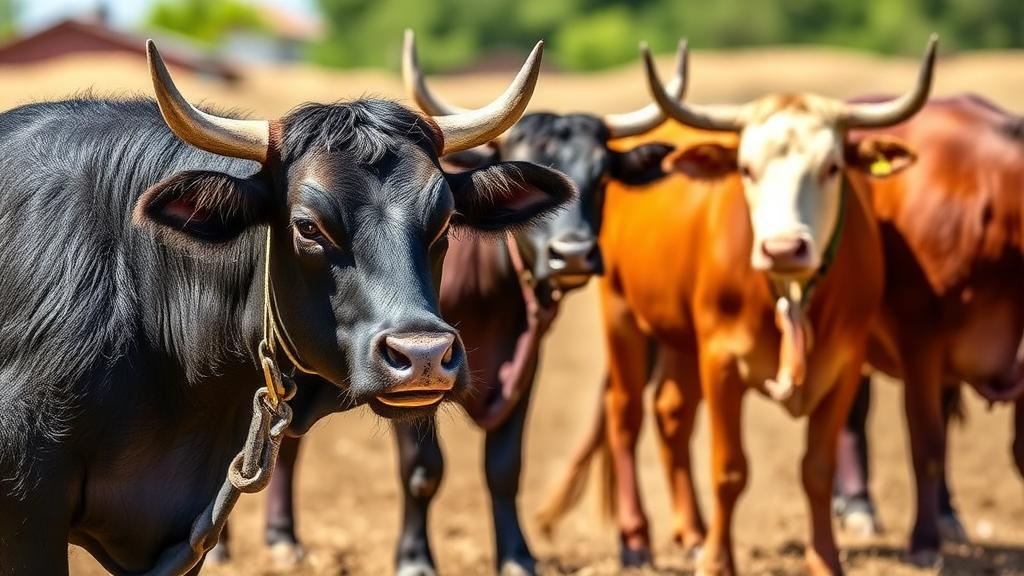
As global temperatures climb, the cattle industry is facing one of its most pressing challenges: how to keep animals productive and healthy in a warming world. Heat stress reduces feed intake, impairs growth and reproduction, and increases susceptibility to disease, costing livestock producers billions each year. But not all cattle suffer equally. Nellore cattle, a humped zebu breed descended from animals domesticated in the Indian subcontinent, shrug off tropical conditions that leave Angus, a temperate-adapted taurine breed, visibly struggling. A new study published in the journal Stress Biology has now peered into the blood of these two breeds to uncover the chemical fingerprints of that difference, and the results suggest that heat tolerance is less about any single magic molecule and more about the coordinated orchestration of an entire metabolic network.
An international team of researchers from Italy and Brazil, led by Gabriele Rocchetti of the Università Cattolica del Sacro Cuore, used an untargeted metabolomic approach based on ultra-high-performance liquid chromatography coupled to high-resolution Orbitrap mass spectrometry. Rather than testing a pre-selected list of compounds, untargeted metabolomics casts a wide analytical net, capturing and tentatively identifying as many small molecules as possible in a biological sample. In this case, the platform putatively annotated 1,412 metabolites in whole blood, cross-referenced against the comprehensive Bovine Metabolome Database. Amino acids, peptides and their analogues dominated the detectable metabolome with 281 compounds, followed by carbohydrates and their conjugates with 90, and fatty acids and conjugates with 63.
The experimental design took advantage of a long-running field study at São Paulo State University’s experimental station in Araçatuba, Brazil. Twenty-five Nellore and 25 Angus young bulls, half-sibs within each breed to minimize genetic variation, were reared under identical conditions. After an adaptation period with access to shade, half of the animals in each breed were exposed to direct sunlight and high temperature-humidity conditions for 56 days during the height of the southern summer, from early December 2015 to early February 2016. Shading was then restored and the animals entered a recovery phase. Blood was drawn from five sun-exposed animals per breed at the peak of heat stress and again in the cooler season, allowing the researchers to compare each animal against its own baseline. Notably, these were the same animals whose DNA methylation patterns the team had characterized in an earlier study, providing an unusual opportunity to link epigenetic regulation with metabolic chemistry.
When the researchers applied supervised statistical modeling to the metabolomic profiles collected during the challenge period, the two breeds separated cleanly, with a prediction ability of Q² = 0.917. Twenty metabolites showed outstanding discriminating power, each achieving a perfect area under the receiver operating characteristic curve. The single most predictive compound was the steroid 4-hydroxyestrone, which accumulated far more in the blood of heat-stressed Angus than in Nellore, with a log2 fold-change of 3.79. Steroid metabolism is known to be highly responsive to environmental stressors, and this finding points to breed-specific endocrine regulation under thermal load. Other top discriminators included lysine, the membrane lipid LysoPC(16:0), and citric acid, all previously implicated in heat-related metabolic adjustments and consistent with the known effects of heat stress on mitochondrial metabolism, substrate use, and membrane lipid turnover.
The most striking results, however, emerged from the longitudinal comparison of each breed between the heat challenge and the recovery period. Because repeated measurements from the same animals can inflate apparent significance, the team used linear mixed models that accounted for individual identity and then applied stringent false discovery rate correction. Under this rigorous framework, the contrast between the breeds was dramatic. Nellore cattle showed 114 metabolites whose phase-dependent changes remained statistically significant, spanning amino acids and peptides, carbohydrates, purine and pyrimidine derivatives, acyl-carnitines, steroids, and tetrapyrrole-related compounds. Angus, by comparison, retained only three significant metabolites: urobilin, deoxycitidine, and D-1-piperideine-2-carboxylic acid.
Interpreting this asymmetry requires care, the authors caution. The scarcity of significant metabolites in Angus does not mean the breed was unaffected by heat. Multivariate modeling still identified 264 metabolites contributing to class discrimination in Angus, but their univariate changes were modest and variable across animals. The researchers suggest two non-exclusive explanations: either Angus responses are more biologically variable between individuals, or the breed lacks the systemic metabolic plasticity that characterizes its zebu cousin. In Nellore, the large and coherent set of regulated metabolites points to a tightly controlled, network-level reprogramming, precisely the kind of coordinated response one would expect from a breed evolutionarily shaped by tropical climates.
Within the Nellore response, each chemical class told a coherent physiological story. Amino acids and peptides formed the largest affected category, with 34 significant compounds showing a global reduction, consistent with heat-induced shifts in nitrogen metabolism, increased amino acid catabolism, and the redistribution of substrates toward energy production. Carbohydrate-related metabolites also declined, plausibly reflecting altered glucose utilization and gluconeogenic flux. Purine and pyrimidine derivatives were predominantly reduced during heat exposure, a pattern linked to energy balance, redox homeostasis, and stress signaling. Perhaps most intriguingly, acyl-carnitines, key intermediates in fatty acid transport and mitochondrial beta-oxidation, showed a strong cumulative increase, suggesting that heat-stressed Nellore cattle shift their metabolism toward lipid substrates. Steroids and steroid-conjugated metabolites were broadly reduced, while phenolic compounds of dietary origin, including quercetin and enterolactone, also fell during the challenge period.
The metabolic findings dovetail elegantly with the team’s earlier epigenetic work on the same animals. In the previous DNA methylation study, Nellore cattle exhibited hypo-methylation of stress-responsive genes during heat exposure, including ELOVL5 and FADS1, which govern fatty acid chain elongation and desaturation, and PDE5A, a regulator of vascular function and oxidative stress responses. The convergence of epigenetic loosening of lipid-metabolism genes with the observed remodeling of acyl-carnitines and membrane lipids supports the hypothesis that Nellore cattle possess a multi-layered adaptive framework: gene regulation and metabolite chemistry responding in concert to preserve membrane stability, optimize lipid turnover, and limit oxidative damage. Pathway analysis reinforced this picture, identifying porphyrin, purine, and pyrimidine metabolism as the routes most consistently modulated by heat, particularly in Nellore, with porphyrin metabolism standing out as a shared signature in both breeds.
That shared porphyrin signature is biologically telling. Urobilin, a downstream catabolite of heme breakdown, plummeted during heat exposure in both breeds, with log2 fold-changes of −6.08 in Angus and −5.97 in Nellore, and achieved maximal predictive power in the Angus model. Heme is central to oxygen transport, mitochondrial electron transfer, and cellular redox balance, and thermal stress is known to influence mitochondrial activity, oxygen utilization, and reactive oxygen species generation. The marked drop in urobilin thus suggests that heat stress perturbs heme turnover in both breeds, even as their broader metabolic responses diverge. In Angus, the rise of deoxycitidine hints at increased nucleotide turnover, possibly reflecting DNA and RNA damage and repair under oxidative stress, while the fall of D-1-piperideine-2-carboxylic acid, a lysine degradation intermediate, points to perturbed amino acid catabolism.
The study’s authors are careful to frame their conclusions within its limits. The cohort was small, with five animals per breed providing longitudinal samples, and data acquisition was performed exclusively in positive ionization mode, meaning that metabolites preferentially detected in negative mode, including several classes of organic acids, may be underrepresented. Larger cohorts and targeted validation will be needed to confirm the functional roles of the identified metabolites. Even so, the implications are considerable. If heat tolerance in cattle reflects the capacity for controlled, systemic metabolic reprogramming rather than the magnitude of any single molecular change, then breeding programs may eventually be able to use blood metabolite panels as biomarkers to select thermotolerant animals. In an era when climate change is squeezing livestock systems on every continent, the humble blood sample of a Nellore steer may hold a blueprint for building more resilient herds.
Subject of Research: Breed-specific blood metabolomic responses of Nellore and Angus cattle to heat stress
Article Title: Metabolomic profiling of blood from Nellore and Angus cattle under heat stress
Article References: Metabolomic profiling of blood from Nellore and Angus cattle under heat stress. (n.d.). https://doi.org/10.1007/s44154-026-00303-7
Image Credits: AI Generated
DOI: 10.1007/s44154-026-00303-7
Keywords: heat stress, cattle, metabolomics, Nellore, Angus, thermotolerance, porphyrin metabolism, purine metabolism, pyrimidine metabolism, acyl-carnitines, urobilin, livestock
Cite Scienmag News
William Thompson. (October 2, 2026). Blood Chemistry Reveals Why Nellore Cattle Beat the Heat While Angus Struggle. Scienmag. https://scienmag.com/blood-chemistry-reveals-why-nellore-cattle-beat-the-heat-while-angus-struggle/
William Thompson. "Blood Chemistry Reveals Why Nellore Cattle Beat the Heat While Angus Struggle." Scienmag, 2 October 2026, https://scienmag.com/blood-chemistry-reveals-why-nellore-cattle-beat-the-heat-while-angus-struggle/. Accessed 2 October 2026.
William Thompson. "Blood Chemistry Reveals Why Nellore Cattle Beat the Heat While Angus Struggle." Scienmag. October 2, 2026. https://scienmag.com/blood-chemistry-reveals-why-nellore-cattle-beat-the-heat-while-angus-struggle/


