


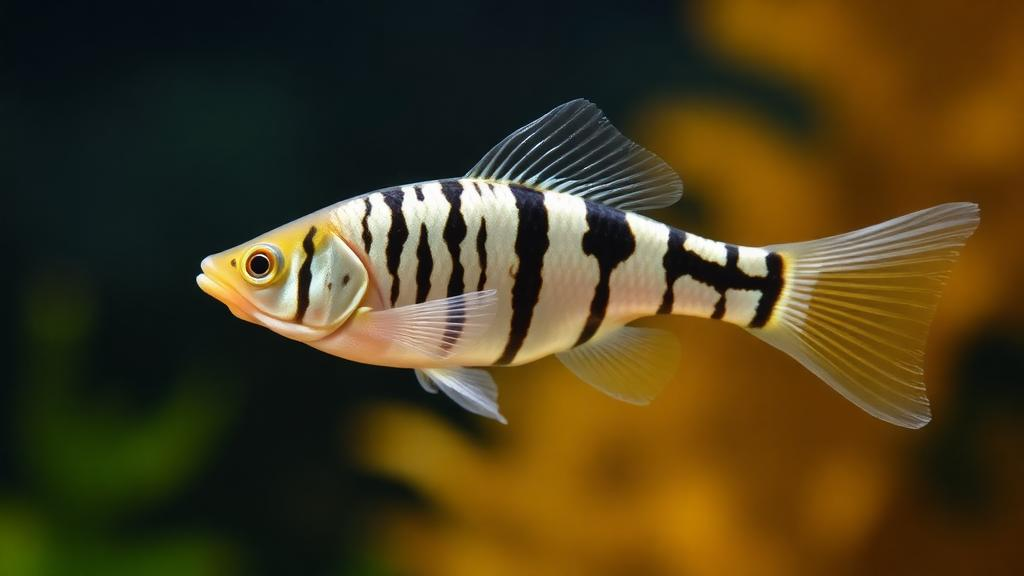
Ammonia is one of the most pervasive pollutants in freshwater ecosystems, entering rivers, ponds and aquaculture ponds from municipal sewage, dairy and fertilizer industries, agricultural runoff and the breakdown of excess protein-rich feed inside fish farms. Because fish are ammonotelic animals that excrete nitrogen largely as ammonia, they are exceptionally vulnerable to any external rise in this compound. A new open-access study published in Discover Toxicology by Nabajit Mondal, Jaspreet Kaur and Anirban Ghosh of Netaji Subhas Open University, India, has now quantified exactly how much un-ionized ammonia adult zebrafish can tolerate under realistic, repeated contamination, and mapped the striking behavioural collapse that precedes death. The work offers aquaculture managers and environmental monitors a simple, non-invasive early warning system: watch what the fish do, not just whether they die.
The chemistry of ammonia in water is central to its toxicity. Total ammonia nitrogen exists in equilibrium between an ionized form, the ammonium ion, and a far more dangerous un-ionized form, NH3, which diffuses readily across the gills and skin. The balance between the two forms is strongly pH dependent: at pH 6 or 7 ammonia is mostly ionized, while at pH 12 or above virtually every molecule becomes un-ionized. The research team exploited this relationship carefully. Using ammonium chloride from Merck as the toxicant source, they calculated the exact salt doses needed to produce target concentrations of un-ionized NH3 at the controlled laboratory conditions of pH 7.8 and 28 degrees Celsius, applying equilibrium equations that link the pKa of ammonia to water temperature. Five nominal concentrations were selected, spanning 0.1 to 10 milligrams of NH3 per litre, corresponding to ammonium chloride doses from 0.0074 to 0.7404 grams per litre.
Crucially, the authors designed the exposure regime to mimic reality rather than a textbook acute test. In natural water bodies and un-aerated culture ponds, ammonia does not arrive as a single pulse; it accumulates daily from sewage outfalls, fertilizer leaching and decomposing feed. Accordingly, adult wild-type zebrafish, 2.5 to 3.5 centimetres long and weighing 250 to 300 milligrams, were acclimatized for twelve days and then exposed repeatedly: ammonium chloride was added every 24 hours for four consecutive days, so that by the fourth day the cumulative dose in the lowest tank reached 0.4 milligrams per litre of NH3 and higher tanks received proportionally more. The tanks held ten fish each in ten litres of seasoned municipal water, were covered with mesh, and were deliberately left without artificial aeration to reproduce the oxygen-limited conditions typical of stagnant ponds. Bioavailable ammonia was verified every 18 hours using Nessler’s colorimetric method, confirming that the toxicant genuinely accumulated despite its volatility; in the 1 milligram per litre tank, measured NH3 climbed from 0.926 to 4.027 milligrams per litre across the four days.
The lethality results were sobering. Probit analysis of the mortality data yielded a median lethal concentration, LC50, of just 0.89 milligrams of NH3 per litre under this repeated-exposure, low-oxygen regime. Kaplan-Meier survival curves told the same story graphically: cumulative survival in the 1 milligram per litre group remained above 0.6 at 72 hours but fell below 0.4 by 96 hours, while all fish exposed to 5 milligrams per litre died within 48 hours and the 10 milligram per litre group was wiped out within 24 hours. No mortality occurred in the control or in the two lowest exposure groups. These values contrast sharply with earlier reports of LC50 figures around 360 milligrams of ammonium for zebrafish embryos and roughly 311 milligrams for adults, a difference the authors attribute to the combination of continuous contamination, the more permeable un-ionized form, and oxygen deprivation. In short, fish in poorly aerated, repeatedly contaminated water are far more fragile than single-dose laboratory benchmarks suggest.
Water chemistry shifted in parallel with the toxicant. Dissolved oxygen dropped in every ammonia-exposed tank, from a control range of 3.4 to 3.7 milligrams per litre down to as low as 1.5 milligrams per litre in contaminated tanks, while pH rose steadily with each daily dose. This matters because hypoxia and elevated pH both push the ammonia equilibrium toward the un-ionized, tissue-permeable form, creating a self-reinforcing spiral of toxicity. Previous work on Japanese flounder has shown that hypoxic conditions amplify ammonia-induced gill damage, reactive oxygen species production and blood cell loss, and the present findings are consistent with that mechanistic picture playing out in a small tropical model fish.
The behavioural component of the study is where the work becomes genuinely novel. The researchers selected seven well-characterized zebrafish behaviours, shoaling, playing, courtship, resting, feeding, aggression and fighting, and stress movement, and quantified them with unusual rigour. Each day was divided into four 90-minute observation windows, two before and two after the afternoon toxicant dose, and each window was subdivided into eighteen 5-minute segments. For every segment the team counted how many individuals displayed each behaviour, producing a cumulative number of individuals, or CNI, score that captures both the breadth and the persistence of each activity. This dense sampling allowed the authors to track behavioural trajectories across the full 96 hours and to separate genuine toxicant effects from normal diurnal rhythms.
The results read like a progressive shutdown of normal fish life. In control tanks, playing dominated the behavioural repertoire, accounting for over 40 percent of afternoon activity and rising to about half of all behaviour in the evening. Under sub-acute exposure of 0.1 and 0.5 milligrams per litre, playfulness declined gradually, from roughly 60 percent to around 30 percent of the behavioural regime. At 1 milligram per litre and above, the collapse was dramatic: evening playfulness that stood at 65.6 percent after the first exposure fell to a mere 1.7 percent after three consecutive days, and by the fourth day stress movements, hyperactive and zig-zag swimming followed by listless floating near the surface, occupied 95 to 100 percent of all observed behaviour. Feeding, which ranged from 12 to 22 percent in controls, dropped below 7 percent in every exposed group, and aggression, normally a marker of social hierarchy, faded from moderate levels to essentially zero at the highest doses as fish became immobilized.
Statistical validation came from Mann-Whitney U tests comparing behaviour distributions across groups, plotted as dot plots with medians in GraphPad Prism. Shoaling, playing, feeding, aggression and stress movement all emerged as significant indicators of ammoniacal stress by the fourth day, with playing showing a highly significant drop at 1 and 5 milligrams per litre, p below 0.001, and stress movement showing the mirror-image significant rise. Interestingly, courtship and resting behaviours, which in controls followed a clear evening rhythm, were suppressed so early and so completely by ammonia that the authors deprioritized them as indicators. The team also noted an appetite-loss signature consistent with hypothalamic signalling and cortisol-driven stress responses documented in earlier zebrafish studies, and an energy-conservation logic in which toxicant-exposed fish abandon costly locomotion to preserve metabolism for basic survival functions.
The practical implications extend well beyond the laboratory. In intensive and semi-intensive aquaculture, undigested protein from overfeeding and fish faeces continuously generate ammonia inside closed systems, and in natural lentic water bodies industrial effluents, agricultural runoff and organic waste do the same, often without any mechanical aeration. The study demonstrates that under exactly those conditions, the tolerance threshold of a sensitive freshwater fish falls to levels below 1 milligram per litre of un-ionized ammonia, far lower than conventional single-dose toxicity values would suggest. Because the behavioural shifts, declining play and shoaling, reduced feeding, fading aggression and rising stress movement, appear progressively as contamination moves from sub-acute to acute, farmers and field biologists could in principle read these signs in real time and intervene before mass mortality occurs, simply by observing the fish.
The authors are careful to frame this as a foundation rather than a conclusion. The behavioural expression observed here is the outward face of neurophysiological change, and the team points toward future work linking the observed pattern shifts to tissue damage, neuroendocrine and haematological alterations, and genetic markers of ammonia stress. Such mechanistic follow-up could turn the behavioural matrix constructed in this study, which maps how each behaviour rises or falls with concentration and exposure duration, into a predictive tool for environmental monitoring. For now, the message is clear and actionable: in oxygen-poor, repeatedly contaminated water, ammonia is deadlier than standard toxicity tables imply, and the fish will tell you so, through their behaviour, long before they die.
Subject of Research: Ammonia toxicity tolerance and behavioural stress responses in zebrafish as a freshwater model
Article Title: Ammonia toxicity tolerance and behavioural response in Zebrafish
Article References: Mondal, N., Kaur, J., & Ghosh, A. (2025). Ammonia toxicity tolerance and behavioural response in Zebrafish. Discover Toxicology, 2(1), Article 13. https://doi.org/10.1007/s44339-025-00028-8
Image Credits: AI Generated
DOI: 10.1007/s44339-025-00028-8
Keywords: zebrafish, ammonia toxicity, LC50, un-ionized ammonia, behavioural indicators, aquaculture, water pollution, ecotoxicology, stress movement, dissolved oxygen, Kaplan-Meier survival, freshwater fish
Cite Scienmag News
Sloane Callahan. (October 2, 2026). Zebrafish Reveal How Low-Level Ammonia Pollution Silences Natural Behaviour. Scienmag. https://scienmag.com/zebrafish-reveal-how-low-level-ammonia-pollution-silences-natural-behaviour/
Sloane Callahan. "Zebrafish Reveal How Low-Level Ammonia Pollution Silences Natural Behaviour." Scienmag, 2 October 2026, https://scienmag.com/zebrafish-reveal-how-low-level-ammonia-pollution-silences-natural-behaviour/. Accessed 4 October 2026.
Sloane Callahan. "Zebrafish Reveal How Low-Level Ammonia Pollution Silences Natural Behaviour." Scienmag. October 2, 2026. https://scienmag.com/zebrafish-reveal-how-low-level-ammonia-pollution-silences-natural-behaviour/


