


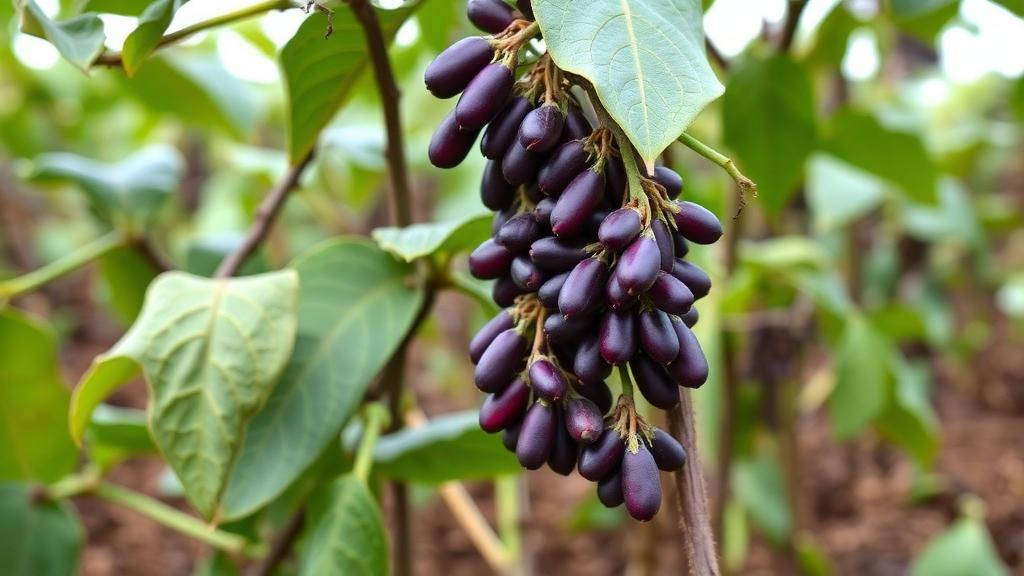
Artificial intelligence has quietly been reshaping everything from medical diagnostics to weather forecasting, and now it is turning its attention to one of humanity’s oldest scientific endeavors: plant breeding. In a study published in the Indian Journal of Genetics and Plant Breeding, a team of Brazilian researchers reports that artificial neural networks can classify common bean genotypes into grain yield categories with an overall accuracy of 70 percent, and with remarkable precision when it comes to identifying the very best and very worst performers. The finding matters because common bean, Phaseolus vulgaris L., is a staple crop of enormous socioeconomic importance across the developing world, and the race to develop higher-yielding varieties has never been more urgent.
The research, led by Luan Tiago dos Santos Carbonari and colleagues at the State University of Santa Catarina (UDESC) in Lages, Brazil, together with a collaborator at the Agricultural Research and Rural Extension Company of Santa Catarina (EPAGRI), tackled a persistent bottleneck in breeding programs. Every season, breeders evaluate hundreds or thousands of candidate genotypes in multi-environment field trials, recording a battery of phenotypic traits in the hope of finding the handful that will deliver exceptional yields to farmers. The final stage of evaluation is expensive, slow, and labor-intensive, and any tool that can reliably flag which genotypes deserve advancement and which should be discarded translates directly into saved time, money, and land.
The team’s approach was fundamentally a classification problem. Rather than asking a neural network to predict an exact yield number in kilograms per hectare, the researchers trained the model to sort genotypes into four discrete grain yield categories: poor, medium, good, and excellent. This framing mirrors the actual decision-making process of a breeding program, where the operative questions are binary and practical. Should this line advance to the next generation of trials? Should it be recommended for release? Or should it be culled before it consumes another season of scarce resources? By encoding yield as ordered classes, the model was designed to speak the language of breeders rather than the language of statisticians.
Under the hood, the architecture relied on the core machinery of artificial neural networks as formalized in the foundational literature of the field. Input nodes received phenotypic variables measured on the genotypes across multiple environments, and these signals propagated through weighted connections into hidden layers, where nonlinear activation functions allowed the network to capture relationships that linear models would miss. Through iterative training, the connection weights were adjusted to minimize classification error, and the trained network was then tested on data it had never seen. This capacity for nonlinear pattern recognition is precisely why neural networks have attracted attention in quantitative genetics, where the relationship between measurable traits and complex outcomes like yield is rarely a simple straight line.
The results were striking in their asymmetry. While the overall accuracy of 70 percent is respectable for a four-class problem, the model’s discriminative power was far greater at the extremes of the distribution. For the excellent and poor classes, the two categories that drive the most consequential decisions in breeding, the area under the receiver operating characteristic curve exceeded 0.90, a level of performance generally considered outstanding in classification tasks. In practical terms, this means the network was highly reliable at distinguishing genotypes that should be promoted from those that should be eliminated, even if it was less certain when adjudicating the crowded middle ground of merely average performers.
That asymmetry is not a flaw so much as a feature aligned with the economics of breeding. A false alarm on a mediocre genotype, one that the model mistakenly calls good, is a recoverable error, because subsequent field trials will eventually reveal its true character. But missing a genuinely excellent genotype, or failing to discard a genuinely poor one early, carries a much higher cost. The high AUC values for the extreme classes suggest the network excels exactly where the stakes are highest. The authors note that this capability enables efficient identification of promising genotypes and elimination of less productive ones during the final field evaluation stage, which is where the bulk of a program’s evaluation budget is spent.
The study builds on a growing body of work applying machine learning to crop improvement. Earlier research demonstrated the value of artificial neural networks for indirect selection in lettuce breeding, for predicting genetic values and selection gains in plants, and for forecasting breeding values in livestock. More recent surveys have documented the explosive growth of deep learning across agriculture generally, from precision farming to yield prediction in maize using deep neural networks and in crops integrating genotype and weather data. In genomic prediction, deep learning architectures with dense layers have been applied to multi-environment trials, and multimodal deep learning methods are increasingly being reviewed as the next frontier for combining genomics, phenomics, and enviromics data.
What distinguishes the Brazilian study is its deliberate use of phenotypic variables rather than molecular markers as model inputs, and its focus on the final evaluation stage rather than early-generation selection. Genomic selection, which predicts breeding values from dense molecular markers, has transformed some breeding programs, but it requires genotyping infrastructure and reference populations that smaller programs, particularly in developing countries where common bean matters most, may not have. A classifier that works directly on the phenotypic data already being collected in routine trials offers a lower-barrier entry point to artificial intelligence, requiring no new laboratory capacity, only a willingness to treat existing trial records as training data.
The implications for food security are considerable. Common bean is a primary source of dietary protein and micronutrients across much of Latin America and Africa, and improving its yield ceiling is a central objective of national and international breeding efforts. The crop’s yield is a quantitative trait shaped by many genes interacting with unpredictable environments, which is why multi-environment trials remain indispensable and why statistical sophistication in analyzing them has evolved from classical mixed models to factor analytic approaches and beyond. Neural networks add another layer to this analytical arsenal, one that can absorb interactions among traits without requiring the analyst to specify them in advance.
The authors are careful to position the tool as a decision-support system rather than a replacement for breeder judgment. With 70 percent overall accuracy, roughly three in ten genotypes will still be misclassified, and the model’s weaker performance in the intermediate classes means that borderline cases will continue to require human scrutiny and conventional analysis. But as a triage mechanism, one that reliably separates the champions from the also-rans before the most expensive phase of evaluation, the network offers something breeding programs have always needed more of: certainty about the extremes, delivered earlier. Supported by CAPES, FAPESC, and UDESC, the work signals that the intersection of computational intelligence and crop genetics is no longer speculative. It is already classifying beans, and the fields of the future may owe part of their abundance to algorithms that learned to read a plant’s phenotype the way a seasoned breeder reads the land.
Subject of Research: Use of artificial neural networks to predict grain yield classes in common bean genotypes for plant breeding decisions
Article Title: Neural Networks Applied to Plant Breeding for Predicting Grain Yield in Common Bean Genotypes
Article References: Carbonari, L. T. D. S., Zacarias Junior, C. J., Souza, M. P. D., Bussolaro, C. B., Djadjo, C. L., Guidolin, A. F., Kavalco, S. A. F., & Coimbra, J. L. M. (2026). Neural Networks Applied to Plant Breeding for Predicting Grain Yield in Common Bean Genotypes. Indian Journal of Genetics and Plant Breeding, 86(1), 54-64. https://doi.org/10.1007/s44489-026-00001-8
Image Credits: AI Generated
DOI: 10.1007/s44489-026-00001-8
Keywords: artificial neural networks, common bean, Phaseolus vulgaris, plant breeding, grain yield prediction, machine learning, phenotypic selection, food security, genotype classification, multi-environment trials, agricultural AI, Brazil
Cite Scienmag News
Alan Morgan. (October 2, 2026). Neural Networks Learn to Spot Champion Bean Varieties Before Farmers Do. Scienmag. https://scienmag.com/neural-networks-learn-to-spot-champion-bean-varieties-before-farmers-do/
Alan Morgan. "Neural Networks Learn to Spot Champion Bean Varieties Before Farmers Do." Scienmag, 2 October 2026, https://scienmag.com/neural-networks-learn-to-spot-champion-bean-varieties-before-farmers-do/. Accessed 2 October 2026.
Alan Morgan. "Neural Networks Learn to Spot Champion Bean Varieties Before Farmers Do." Scienmag. October 2, 2026. https://scienmag.com/neural-networks-learn-to-spot-champion-bean-varieties-before-farmers-do/


