


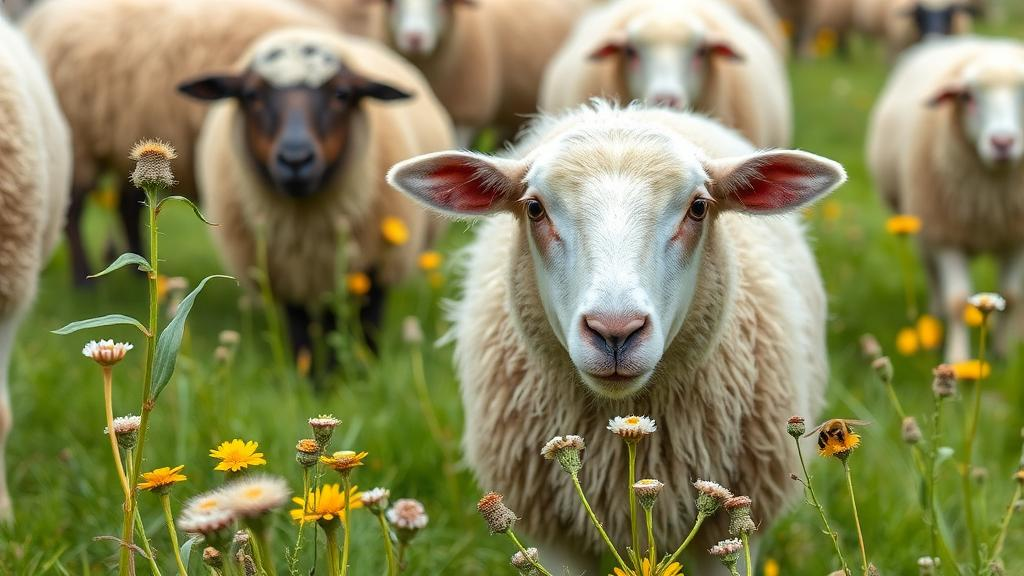
On the heather moorlands of Scotland, one of Europe’s most atmospheric and ecologically precious landscapes, a long-running debate has quietly divided conservationists, beekeepers and land managers: are the commercial honey bee hives that arrive each summer to feast on ling heather crowding out the wild pollinators that belong there? A new study led by researchers at the University of Bristol suggests that the answer may be no, and that the real pressure on bumblebees, butterflies, moths and beetles comes from a far more familiar source, the sheep that graze these uplands in spring.
The research, published in the British Ecological Society’s Journal of Applied Ecology, is among the most comprehensive field investigations yet conducted into competition between managed honey bees and wild pollinators on temperate heathland. Across a full flowering season running from May to September, the team surveyed plant and pollinator communities at 20 moorland sites spread across Scotland. The design deliberately contrasted plots with and without introduced honey bee apiaries, and compared land that was actively grazed and burned using traditional muirburn practices against land left to regenerate naturally. This paired structure allowed the researchers to separate the effects of beekeeping from the effects of routine livestock and vegetation management, something earlier studies had rarely achieved at this scale.
The sheer volume of data collected gives the findings considerable weight. The team recorded more than 1.6 million individual flowers and documented over 5,000 plant-pollinator interactions, spanning 58 plant species and 405 pollinator species. Ten of the study sites hosted commercial apiaries, each averaging 34 hives, which were monitored during the peak of the heather bloom when beekeepers traditionally bring their colonies onto the moors. This is the moment when ling heather erupts into a mass of purple blossom, offering one of the richest nectar resources in the British uplands and producing the famously aromatic heather honey prized by beekeepers across Europe.
Against expectations, the arrival of these hives produced only a modest signal in the ecological data. The presence of honey bees caused a small change to the structure of plant-pollinator networks, the webs of interactions linking flowers to the insects that visit them, but had no measurable effect on the quantity or quality of pollen collected by bumblebees. In other words, the wild bees did not appear to be going hungry, or gathering poorer food, because honey bees were foraging alongside them. For a research community that has grown increasingly concerned about the potential spillover of competition from managed bees onto wild species, the result is striking.
The grazing story was very different. Spring grazing by sheep removed almost two-thirds, 63 percent, of the vital spring nectar available to bumblebees compared with ungrazed sites. This matters because early spring is a bottleneck in the lives of bumblebee queens emerging from winter hibernation. They must find enough nectar and pollen to fuel the founding of new colonies, and the key resource at this time of year is not heather, which flowers later in the summer, but blaeberry, the delicate pink-bellied flowers of bilberry that carpet the moorland floor. When sheep crop the moor in spring, they strip away these flowers along with the grasses and shoots they were intended to eat, effectively removing the fuel station that wild bees depend on at the most vulnerable moment of their annual cycle.
Dr Maisie Brett, the study’s lead author, captured the surprise at the heart of the findings. We expected honey bees to be the main threat to wild bees and other heathland pollinators, she said, but it turns out how we manage these habitats may matter far more. Managing livestock with pollinators in mind could be more impactful than restricting beekeeping. The comment reframes a debate that has often focused narrowly on the ethics and ecology of migratory beekeeping, pointing instead toward the everyday decisions that shape what actually flowers on the moor and when.
The timing of the research gives it particular policy relevance. Scotland’s Wildlife Management and Muirburn Act, passed in 2024, now restricts heather burning, a practice long used to create fresh young shoots for grouse and grazing animals. At the same time, the current Scottish Pollinator Strategy does not currently address the potential impact of managed honey bees on wild pollinators. The new findings suggest that both frameworks may need to look more closely at livestock management, and that the conversation about protecting pollinators on moorland cannot be settled by regulating beekeepers alone. Dr Brett noted that the findings are particularly timely given these recent legislative and strategic developments.
The recommendations that flow from the study are pragmatic rather than punitive. The researchers suggest carefully managing or avoiding sheep grazing on heathland in spring, precisely when blaeberry and other early flowers are in bloom, so that emerging bumblebee queens can access the nectar they need. They also recommend that honey bee hives be introduced only during the peak heather flowering period, when the moor’s nectar supply is at its most abundant and competition pressure is likely to be lowest. Finally, they highlight the value of maintaining a patchwork of habitat types across the landscape, a mosaic that careful grazing can actually help to create, ensuring that different pollinator species find resources throughout the season rather than in a single concentrated burst.
That last point carries an important nuance. Grazing is not inherently harmful to moorland ecosystems; traditional low-intensity grazing has shaped these habitats for centuries and can prevent scrub encroachment while creating the structural variety that many invertebrates require. The problem identified by the Bristol team is one of timing and intensity. Sheep turned onto the moor in spring, when blaeberry is flowering, undo the seasonal nectar supply at its most critical point, whereas grazing patterns adjusted to the flowering calendar could retain the habitat benefits while sparing the pollinators. It is a reminder that in ecology, the question is often not whether a practice should happen, but when and how much.
The study was funded by UKRI and BBSRC and was carried out in collaboration with landowners and beekeepers across east Scotland, a partnership that reflects the practical realities of moorland management. Any change to grazing calendars or apiary siting will require cooperation among farmers, sporting estates, beekeeping associations and conservation bodies. What the research offers all of them is a clearer evidence base: on Scotland’s moorlands, the fate of wild pollinators appears to rest less with the hives that arrive in summer than with the sheep that graze in spring, and with the human choices that determine whether the moor blooms when the bees need it most.
Subject of Research: The impact of sheep grazing and managed honey bee hives on wild pollinator communities in Scottish heathland moorlands
Article Title: Sheep grazing may pose greater threat to Scotland’s wild pollinators than honey bees
Article References: Sheep grazing may pose greater threat to Scotland’s wild pollinators than honey bees. (n.d.). Original publication
Image Credits: AI Generated
DOI: Not provided
Keywords: Scotland, heathland, bumblebees, honey bees, sheep grazing, pollinators, ling heather, muirburn, Journal of Applied Ecology, nectar availability, land management, blaeberry
Cite Scienmag News
Gavin Prescott. (October 2, 2026). Sheep, Not Honey Bees, Emerge as the Hidden Threat to Scotland’s Wild Pollinators. Scienmag. https://scienmag.com/sheep-not-honey-bees-emerge-as-the-hidden-threat-to-scotlands-wild-pollinators/
Gavin Prescott. "Sheep, Not Honey Bees, Emerge as the Hidden Threat to Scotland’s Wild Pollinators." Scienmag, 2 October 2026, https://scienmag.com/sheep-not-honey-bees-emerge-as-the-hidden-threat-to-scotlands-wild-pollinators/. Accessed 4 October 2026.
Gavin Prescott. "Sheep, Not Honey Bees, Emerge as the Hidden Threat to Scotland’s Wild Pollinators." Scienmag. October 2, 2026. https://scienmag.com/sheep-not-honey-bees-emerge-as-the-hidden-threat-to-scotlands-wild-pollinators/


