


Plant proteins have long carried a hidden weakness: although crops such as beans and oilseeds are rich in protein, that protein is rarely complete. Human bodies, and the bodies of livestock, require nine essential amino acids that cannot be synthesized internally and must come from the diet. Most plant-based ingredients fall short in one or more of these building blocks, which limits how much nutritional value can be extracted from every harvest. Now, researchers at the Technical University of Denmark’s National Food Institute and Aarhus University have demonstrated a fermentation strategy that directly rewrites the amino acid profile of plant biomass, enriching it with one of the most commonly limiting essential amino acids and opening a path toward more nutritious plant-based foods and more efficient animal feed.
The study, published in the Journal of Agricultural and Food Chemistry, describes what the authors call a novel and simple fermentation approach for adjusting the amino acid composition of plant biomasses. Rather than relying on synthetic supplements or genetic modification of the crop itself, the method harnesses two well-characterized microorganisms working in sequence. The result is a measurable, multi-fold increase in lysine, the essential amino acid that is most often deficient in cereal and legume diets, achieved inside the plant material itself before it ever reaches a feed trough or a dinner plate.
Associate Professor Christian Solem of the DTU National Food Institute frames the problem plainly. Plant proteins, he explains, do not contain the right amino acids in sufficient quantities to be an ideal source of nutrition for humans. The research team’s answer is to use microorganisms to enrich plant-based foods with essential amino acids and important vitamins. In practice, this means that a greater amount of nutritional value can be extracted from exactly the same quantity of plant-based food or animal feed, a significant gain in a world where plant proteins are expected to shoulder an ever-larger share of global protein demand.
The technical logic behind the process is elegant. In the first stage, faba beans and rapeseed press cake are treated with the bacterium Bacillus subtilis subsp. natto, a microorganism with a long history of use in fermented foods. This bacterium partially breaks down the plant proteins into smaller components and releases various sources of nitrogen that would otherwise remain locked inside complex protein structures. In the second stage, a second microorganism, Corynebacterium glutamicum, is added. This bacterium is a workhorse of industrial biotechnology and is already used commercially to produce amino acids, and here it consumes the liberated nitrogen sources to synthesize lysine directly within the fermenting biomass.
The numbers reported in the study are striking. After fermentation, the lysine content had increased 3.4-fold in faba beans and 3.6-fold in rapeseed meal. The researchers measured 37.5 grams of lysine per kilogram of dry matter in the fermented faba beans and 29 grams per kilogram of dry matter in the fermented rapeseed meal. Because lysine is one of the nine essential amino acids that humans must obtain through their diet, an enrichment of this magnitude could meaningfully shift whether a plant-based ingredient qualifies as a complete or near-complete protein source.
The benefits extend beyond amino acid content alone. Solem notes that the fermentation simultaneously makes plant proteins easier to digest by partially breaking them down, a point of particular importance because many crops contain antinutrients, compounds that make it harder for the human body to absorb the nutrients found in plant-based foods. By degrading protein structures and reducing the digestibility barrier in a single process, the method addresses two of the main obstacles that have historically kept plant proteins from matching animal proteins in nutritional performance. The researchers have demonstrated the principle using lysine and report that solutions for enriching crops with two other essential amino acids are on the way.
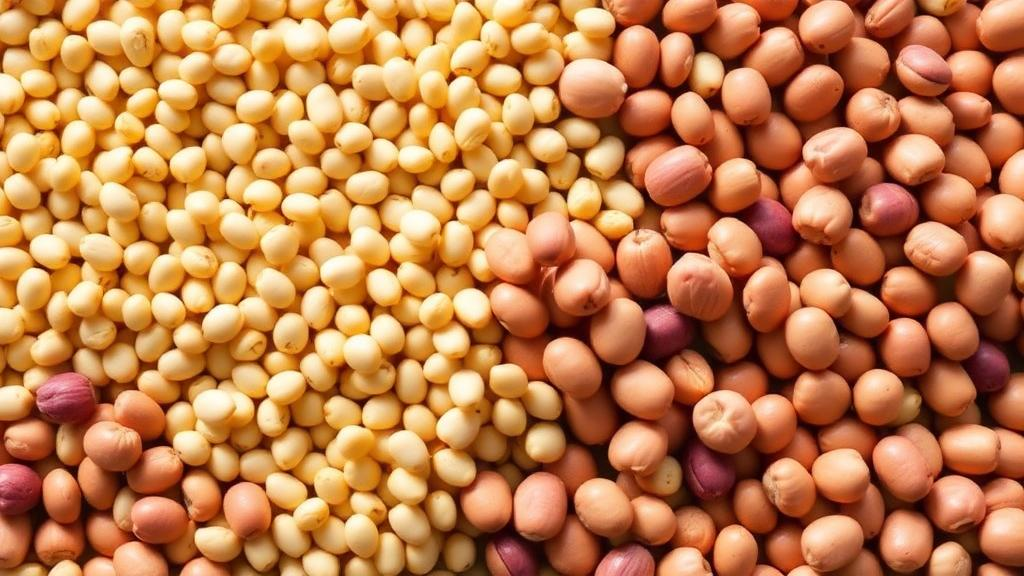
The work forms part of the NextOrganic project, which focuses on animal feed, but the technology developed can also be applied to plant-based foods for human consumption. The researchers have mainly worked with faba beans and rapeseed press cake, both produced in large quantities in Denmark and the rest of Northern Europe. Faba beans are a protein-rich crop used for both animal feed and human food, while rapeseed press cake is the protein-rich material left over once oil has been pressed from rapeseed. Both can serve as alternatives to imported soya in animal feed, and the technology has also been shown to work well with other plant crops, suggesting broad applicability across regional agricultural systems.
For animal nutrition, the implications are environmental as well as economic. A deficiency of essential amino acids in feed means that animals grow more slowly and become ill more readily. In conventional production, the problem is solved either by feeding animals more protein than they actually need or by adding essential amino acids produced through industrial fermentation. But in organic pig and poultry production, synthetic amino acids may not be added to the feed, so overfeeding with protein is the only remaining option. Professor Jan Værum Nørgaard of the Department of Animal and Veterinary Sciences at Aarhus University points out that when animals are given more protein than they can utilize, they excrete more nitrogen via urine and faeces, placing a strain on the environment.
This is where the long-term promise of the fermentation approach becomes clearest. If the composition of feed protein can be improved so that its amino acid profile matches what the animal actually requires, the feed becomes more efficient, waste is reduced, and nitrogen pollution from agriculture declines. Nitrogen emissions from livestock production are a major contributor to waterway eutrophication and greenhouse gas burdens, so a biological method that lets organic producers balance amino acids without synthetic additives could deliver both nutritional and ecological dividends. The researchers also believe the method could help alleviate malnutrition in low-income countries, where diets that are too heavily based on plants often lack sufficient essential amino acids.
What makes the study notable is its simplicity. The two-stage fermentation requires no exotic inputs: a protein-rich plant biomass, a proteolytic bacterium to unlock its nitrogen, and an amino acid-producing bacterium to convert that nitrogen into lysine. The study, carried out in collaboration between the DTU National Food Institute and Aarhus University and funded through the Green Development and Demonstration Programme, demonstrates that microbial fermentation can be used to specifically alter the amino acid composition of plant-based foods rather than merely preserve them. As the team extends the platform to additional essential amino acids, the prospect of crops that are not just protein-rich but genuinely complete, digestible, and environmentally efficient moves from concept toward the farm and the food supply.
Subject of Research: Microbial fermentation to enrich plant biomass with essential amino acids for improved human nutrition and animal feed
Article Title: Bacteria can make plants healthier for humans and animals
Article References: Bacteria can make plants healthier for humans and animals. (n.d.). Original publication
Image Credits: AI Generated
DOI: Not provided
Keywords: fermentation, amino acids, lysine, plant protein, faba beans, rapeseed press cake, animal feed, nutrition, Bacillus subtilis, Corynebacterium glutamicum, nitrogen emissions, organic farming
Cite Scienmag News
Alan Morgan. (October 1, 2026). Fermenting bacteria boost lysine in beans and rapeseed for better food and feed. Scienmag. https://scienmag.com/fermenting-bacteria-boost-lysine-in-beans-and-rapeseed-for-better-food-and-feed/
Alan Morgan. "Fermenting bacteria boost lysine in beans and rapeseed for better food and feed." Scienmag, 1 October 2026, https://scienmag.com/fermenting-bacteria-boost-lysine-in-beans-and-rapeseed-for-better-food-and-feed/. Accessed 1 October 2026.
Alan Morgan. "Fermenting bacteria boost lysine in beans and rapeseed for better food and feed." Scienmag. October 1, 2026. https://scienmag.com/fermenting-bacteria-boost-lysine-in-beans-and-rapeseed-for-better-food-and-feed/


