


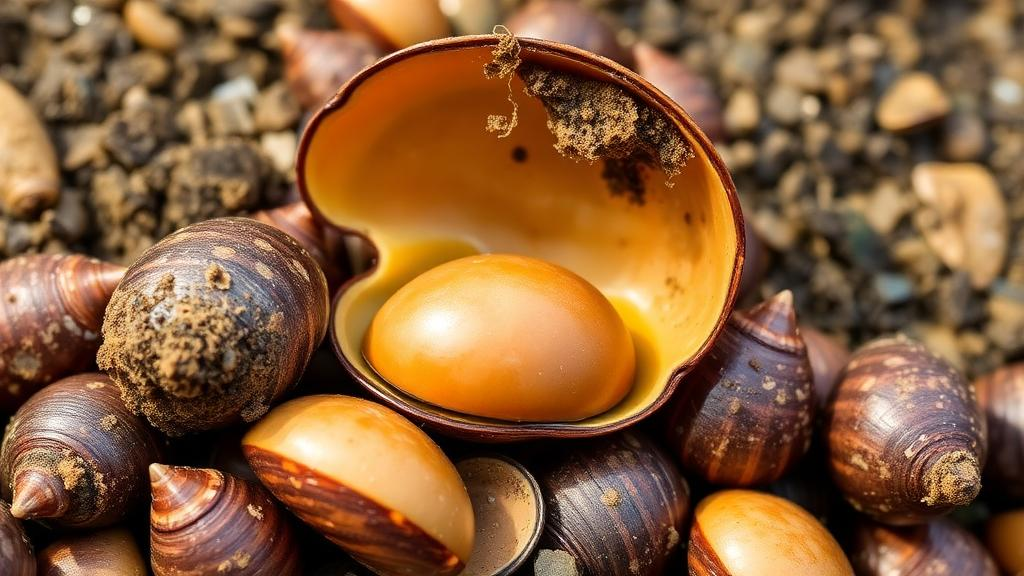
Every ship hull that slips through tropical waters carries an invisible chemical cargo, and a new study suggests that cargo may be quietly damaging marine life far beyond the barnacles it is designed to kill. Researchers in Brazil have shown that dichlofluanid, a widely used antifouling booster biocide, triggers measurable cellular and biochemical damage in two tropical bivalve species at concentrations that actually occur in the environment. The findings, published in the journal Ecotoxicology, raise uncomfortable questions about the safety of the replacement chemicals that entered the market after tributyltin was banned, and they reveal a surprising twist: muddier, more organic-rich sediments make things worse, not better.
The story begins with biofouling, the relentless settlement of organisms on any submerged surface. On commercial vessels, fouling can increase fuel consumption by up to 40 percent, accelerate hull corrosion, and hitchhike invasive species across the globe along shipping routes. To fight it, the shipping industry turned to antifouling paints, first based on copper and zinc oxides, then on organotin compounds such as tributyltin. TBT was devastatingly effective but also devastatingly toxic, inducing imposex in gastropods and wreaking hormonal havoc in ship traffic zones, which led the International Maritime Organization to ban it. The replacements, a new generation of so-called booster biocides including Irgarol, Diuron, DCOIT, chlorothalonil, and dichlofluanid, were assumed to be safer. Whether that assumption holds for tropical ecosystems has remained largely untested.
Dichlofluanid, formally N-dichlorofluoromethythio-N′,N′-dimethyl-N-phenylsulfamide, is a non-metallic organochlorine compound with low water solubility and a strong tendency to associate with particles, reflected in its octanol-water partition coefficient of 3.7. It is also used as a fungicide and has previously been linked to mutagenic and carcinogenic effects in non-target marine invertebrates. Because it degrades rapidly in water, with a half-life of just a few hours and by-products including DMSA and dichloromethane aniline, organisms in ports and marinas are exposed to a shifting cocktail of the parent compound and its transformation products. Yet toxicity data for tropical species, which may be more sensitive to contaminants than their temperate counterparts, have been scarce.
To fill that gap, a team led by Ana Carolina Feitosa Cruz of São Paulo State University designed a two-pronged experiment. In the water-based arm, brown mussels Perna perna, a classic sentinel species sourced from an aquaculture farm at Cocanha Beach, were exposed for 96 hours to five nominal dichlofluanid concentrations ranging from 0.01 to 100 micrograms per liter, a span that brackets measured environmental levels of up to 3.37 micrograms per liter in seawater. Solutions were renewed every 24 hours to mimic the dynamic exposure that rapid degradation creates in nature. In the sediment arm, clams Anomalocardia flexuosa, collected from the Cananéia region, spent 21 days in sediments spiked with 1 to 10,000 nanograms per gram of the biocide. Crucially, the researchers used two sediment types from the protected Cananéia-Iguape Peruíbe Estuarine Complex: one with roughly 4 percent organic matter and another with about 10 percent, to test whether organic carbon changes the story.
The team then read the animals’ biochemical diaries through a battery of biomarkers. In mussels, the neutral red retention time assay revealed that hemocyte lysosomes, the cellular recycling centers whose membrane stability is a frontline indicator of chemical stress, lost integrity at 10 and 100 micrograms per liter after 96 hours. Retention times fell from 97.5 minutes in the acetone control to 33 and 15 minutes respectively, a dose-dependent collapse of lysosomal stability. Notably, the authors point out that TBT produced cytotoxicity in the mussel Mytilus edulis at concentrations above 0.5 micrograms per liter, suggesting dichlofluanid is less acutely cytotoxic than its banned predecessor, though still far from benign.
The biochemical picture in mussels was one of a defense system working overtime. Glutathione S-transferase activity rose in the digestive glands at the highest concentrations, while gills responded with elevated glutathione levels and glutathione peroxidase activity. This makes mechanistic sense: dichlofluanid’s primary mode of action involves reactions with cellular thiols, and glutathione is precisely the sulfhydryl-containing molecule the compound attacks. The pro-oxidant properties of the biocide and its metabolite DMSA can imbalance the glutathione pool and generate reactive oxygen species, which enzymes like GPx then scramble to neutralize. Lipid peroxidation in digestive glands actually dropped below control levels, and no DNA damage or neurotoxicity appeared, suggesting the antioxidant machinery largely kept oxidative damage in check. Principal component analysis, which explained nearly 65 percent of the variance, cleanly separated animals exposed above 0.1 micrograms per liter from controls, indicating a metabolic shift beginning at concentrations well within the environmental range.
The clam results were more alarming, and they overturned the researchers’ initial hypothesis. The team had expected organic matter to bind dichlofluanid and reduce its bioavailability, softening the blow to burrowing bivalves. Instead, clams in the organically richer Ariri sediment fared distinctly worse. In their gills, high-organic sediment triggered increased GST and EROD activities at the top concentration, depleted GSH, and elevated GPx and acetylcholinesterase activities at 100, 1,000, and 10,000 nanograms per gram, alongside lipid peroxidation at concentrations as low as 1 and 10 nanograms per gram. Digestive glands showed enhanced GST at intermediate concentrations, increased EROD and lipid peroxidation at 10,000 nanograms per gram, and DNA damage at just 10 nanograms per gram. In low-organic sediment, most biomarkers barely moved. The pattern suggests that dichlofluanid adsorbed onto organic particles is effectively delivered to filter- and deposit-feeding clams through ingestion, turning the sediment itself into a contamination route.
The integrated biomarker sequence in clams tells a coherent toxicological story: phase I biotransformation via EROD, conjugation via GST, consumption of glutathione, and then, when the antioxidant system proves insufficient, lipid peroxidation and DNA damage. Signs of neurotoxicity also emerged, with altered acetylcholinesterase activity in both tissues, an enzyme whose induction has been linked to cellular apoptosis. These findings echo earlier work in rat hepatocytes, where dichlofluanid induced lipid peroxidation and cytotoxicity above 25 micromolar, and in ascidians, where hemocytes showed apoptosis, shrinkage, and reduced phagocytic activity at 3.33 to 33.3 micrograms per liter. The authors caution that dichlofluanid’s rapid degradation, quantified at 87 percent within six hours at the 1,000 nanograms per gram level, complicates dose-response interpretation, since animals may have experienced transient exposure to the parent compound alongside potentially toxic transformation products.
The bottom line is a regulatory headache. Effects in mussels appeared from 0.1 micrograms per liter in water, comfortably below the maximum measured environmental concentration of 3.37 micrograms per liter, while clam effects began at 1 nanogram per gram in sediment, near the reported environmental maximum of 0.8 micrograms per gram. In scenarios of localized contamination near ports, marinas, and shipyards, ecological risk appears likely, and the authors argue that regulatory action is needed. More broadly, the study demonstrates that the organic content of sediments, a factor often overlooked in toxicity assessments, can amplify exposure to hydrophobic antifouling biocides, just as it does for diuron and TBT. As the shipping industry continues to rely on booster biocides to keep hulls clean, this research delivers a clear early warning: the chemicals replacing TBT are not harmless, and the tropical benthic ecosystems they drift into are paying attention.
Subject of Research: Ecotoxicological effects of the antifouling biocide dichlofluanid on tropical marine bivalves
Article Title: Effects of dichlofluanid in tropical marine bivalves exposed to water and spiked sediments: an assessment of biomarker responses
Article References: Cruz, A. C. F., Gusso-Choueri, P. K., Pauly, G. D. F. E., de Campos, B. G., Perina, F. C., de Castro, Í. B., & de Souza Abessa, D. M. (2026). Effects of dichlofluanid in tropical marine bivalves exposed to water and spiked sediments: an assessment of biomarker responses. Ecotoxicology, 35(8), Article 180. https://doi.org/10.1007/s10646-026-03164-y
Image Credits: AI Generated
DOI: 10.1007/s10646-026-03164-y
Keywords: dichlofluanid, antifouling biocides, marine bivalves, biomarkers, ecotoxicology, Perna perna, Anomalocardia flexuosa, sediment contamination, organic matter, oxidative stress, tropical marine ecosystems, lysosomal stability
Cite Scienmag News
Sloane Callahan. (October 1, 2026). Antifouling Biocide Dichlofluanid Harms Tropical Mussels and Clams at Real-World Levels. Scienmag. https://scienmag.com/antifouling-biocide-dichlofluanid-harms-tropical-mussels-and-clams-at-real-world-levels/
Sloane Callahan. "Antifouling Biocide Dichlofluanid Harms Tropical Mussels and Clams at Real-World Levels." Scienmag, 1 October 2026, https://scienmag.com/antifouling-biocide-dichlofluanid-harms-tropical-mussels-and-clams-at-real-world-levels/. Accessed 1 October 2026.
Sloane Callahan. "Antifouling Biocide Dichlofluanid Harms Tropical Mussels and Clams at Real-World Levels." Scienmag. October 1, 2026. https://scienmag.com/antifouling-biocide-dichlofluanid-harms-tropical-mussels-and-clams-at-real-world-levels/


