


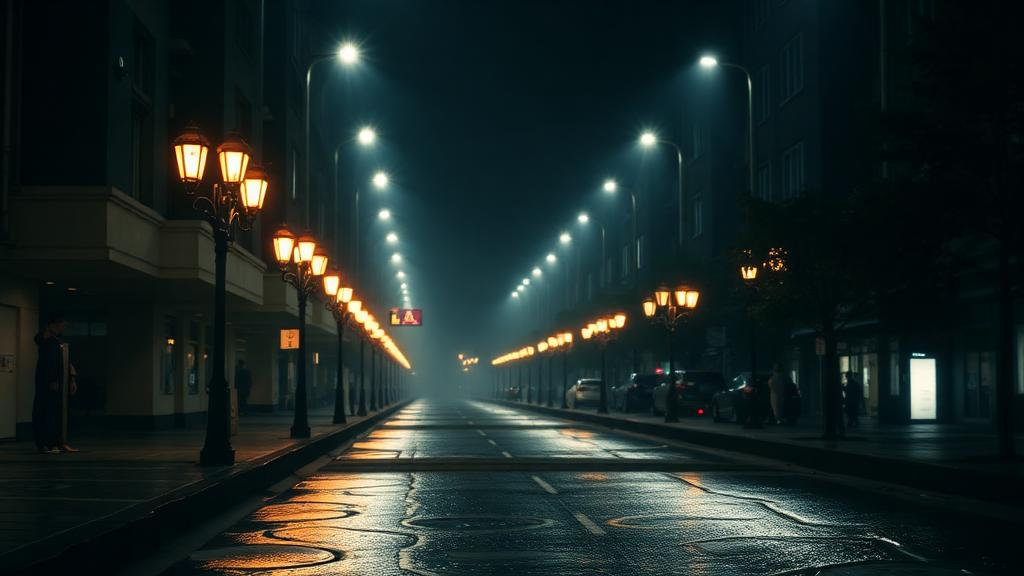
Every night, in lakes and ponds across the Northern Hemisphere, one of the largest migrations on Earth takes place largely unnoticed. Trillions of zooplankton rise from the dark depths toward the surface to graze on algae under the cover of darkness, then sink again before dawn to escape the eyes of visual predators. Now a new study suggests that this ancient choreography is being quietly disrupted by one of the most pervasive yet underappreciated consequences of urbanization: artificial light at night. Researchers at the University of Helsinki found that even modest levels of white LED light, comparable to the glow that hangs over suburban ponds, are enough to stop the water flea Daphnia magna from making its nightly ascent to the surface.
The study, published in BMC Environmental Science by Anu Lehtonen and Ulrika Candolin, set out to answer a question that goes beyond whether light pollution changes animal behavior. The team wanted to know whether populations that have lived with urban glow for roughly a century have evolved to cope with it. Urban environments are increasingly recognized as evolutionary laboratories, where organisms adapt to heat islands, chemical pollution, and altered habitats over surprisingly short timescales. If any organism could evolve a tolerance to nighttime illumination, the argument went, it might be Daphnia, a genus famous for its rapid evolutionary responses to temperature shifts, toxins, and predators.
To test this, the researchers collected water fleas from six ponds in southern Finland: three urban ponds in the Helsinki metropolitan area, where night light levels on the water surface range from 2 to 11 lux, and three rural ponds near Kirkkonummi, where nights remain nearly pristine at less than 0.01 lux. The ponds within each region were separated by at least four kilometers, and all contained invertebrate predators such as gammarids, water boatmen, and phantom midge larvae. In the laboratory, the team established clonal lineages from each population and raised them under standardized conditions for three generations, a critical step designed to wash out any maternal or grandmaternal environmental effects that could masquerade as genetic adaptation.
The experimental design was elegantly simple. From each of the six populations, ten clonal lineages were selected, and from each lineage twelve newborn individuals were divided between jars exposed either to artificial light at night or to complete darkness. The light treatment used vertical white LED illumination at 2.2 lux, with a spectral peak at 449 nanometers, a level chosen because it matches the nighttime light measured in many urban ponds around Helsinki and in urban aquatic ecosystems generally. For context, that is roughly seven times brighter than a full moon, which peaks at about 0.3 lux, yet far dimmer than the 50 lux or more that can occur in heavily lit aquatic habitats, or the 200 lux recorded in directly illuminated places like harbors.
When the fleas reached adulthood, identifiable by the embryos visible in their brood chambers, groups of six were transferred to tall transparent tubes containing water scented with the chemical cues of ninespine sticklebacks, a planktivorous fish. This detail matters: predator kelp in the water is the standard trigger that tells Daphnia that danger lurks near the surface, making the tubes a realistic simulation of the trade-off the animals face every night between feeding and survival. An infrared-sensitive camera and a 940-nanometer infrared light source allowed the researchers to film the animals in darkness without disturbing their behavior, since infrared wavelengths do not influence diel migration. The researchers counted how many individuals occupied the upper 25 centimeters of the water column three hours after nightfall and again three hours after dawn.
The results were unambiguous. Under dark control conditions, the water fleas performed classic diel vertical migration: significantly more of them occupied the upper water column at night than during the day, exactly the pattern expected of animals that feed under cover of darkness and hide by day. But when the LED light was switched on, the number of individuals rising to the upper layer at night dropped sharply. The suppression was statistically significant and, crucially, it was identical across all six populations. The interaction between population origin and light treatment was nonsignificant, with an F value of 0.76 and a P value of 0.38, meaning urban ancestry conferred no measurable protection against the disruptive effect of the artificial glow.
This absence of adaptation is the study’s most provocative finding. A century of exposure to increasing urban light was apparently not enough to produce a population-level shift in how these animals respond to nighttime illumination. The authors offer two main explanations, each with different implications. The first is timing: while urban and rural ponds have differed in overall light exposure for about a hundred years, the transition from older lamp technologies to white LEDs is recent. Zooplankton are known to respond differently to different light spectra, so the urban populations may simply not yet have had time to adapt to the specific spectral signature of modern LEDs, even if they had begun adjusting to the sodium vapor glow of previous decades.
The second explanation is subtler and arguably more interesting: perhaps there was never strong selection for urban populations to change their migration behavior in the first place. Diel vertical migration evolved under natural regimes of moonlight and cloudiness, and full moonlight is already known to reduce the amplitude of zooplankton migrations. The reaction norm that tells a water flea to avoid illuminated surface layers may be just as useful under a streetlight as under a bright moon, because artificial light can attract both fish and invertebrate predators to the surface, raising predation risk exactly where the fleas would otherwise feed. Moreover, in shallow ponds, food availability near the sediment can be high, since sinking phytoplankton and light reaching the bottom sustain primary production there. If the cost of staying deep is low and the benefit of avoiding lit surface water is high, then the same evolutionary logic applies in city ponds and countryside ponds alike, and the ancestral response is maintained.
Whatever the mechanism, the ecological stakes are considerable. Zooplankton form the principal energy pathway from algae to fish and larger invertebrates, and their grazing keeps phytoplankton blooms in check. If light pollution suppresses the nightly ascent of grazers, algae in the surface layers may escape predation for longer each night, potentially shifting the balance toward denser blooms, while predators that rely on migrating prey may find their food supply redistributed. Earlier studies point in the same direction: skyglow from a suburban lake was found to dampen the migration of Daphnia retrocurva, and laboratory work on D. longispina showed that both LED and high-pressure sodium light pushed individuals to greater depths. What the new study adds is evidence that this vulnerability is shared by urban and rural lineages alike, meaning that no population, however long exposed, can currently be assumed to be resilient.
The authors caution that their findings rest on six populations along a single urban-rural gradient, and that responses to other lamp types, spectra, and higher intensities remain unexplored, as does the speed at which Daphnia could adapt if selection favored it. The genetic raw material appears to exist, since genotypes vary in their propensity to migrate, and gene flow in the genus is typically moderate enough to permit local differentiation. But with global light pollution intensifying rapidly as LED adoption spreads, and citizen scientists documenting a dramatic loss of star visibility over the past decade, the window for adaptation may be narrowing faster than evolution can respond. For now, the nightly migration of these tiny crustaceans, a behavior refined over millions of years of moonlit nights, appears to be one more natural rhythm dimmed by the glow of the modern world.
Subject of Research: The effect of artificial light at night on diel vertical migration and urban adaptation in the water flea Daphnia magna
Article Title: Light pollution suppresses diel vertical migration across rural and urban Daphnia magna populations
Article References: Lehtonen, A., & Candolin, U. (2025). Light pollution suppresses diel vertical migration across rural and urban Daphnia magna populations. BMC Environmental Science, 2(1), Article 22. https://doi.org/10.1186/s44329-025-00036-4
Image Credits: AI Generated
DOI: 10.1186/s44329-025-00036-4
Keywords: light pollution, artificial light at night, Daphnia magna, zooplankton, diel vertical migration, urban ecology, evolutionary adaptation, LED lighting, freshwater ecosystems, predation risk, Finland, behavioral ecology
Cite Scienmag News
Gavin Prescott. (October 1, 2026). Streetlights Silence a Nightly Ritual: Urban Glow Stops Water Fleas From Rising to Feed. Scienmag. https://scienmag.com/streetlights-silence-a-nightly-ritual-urban-glow-stops-water-fleas-from-rising-to-feed/
Gavin Prescott. "Streetlights Silence a Nightly Ritual: Urban Glow Stops Water Fleas From Rising to Feed." Scienmag, 1 October 2026, https://scienmag.com/streetlights-silence-a-nightly-ritual-urban-glow-stops-water-fleas-from-rising-to-feed/. Accessed 4 October 2026.
Gavin Prescott. "Streetlights Silence a Nightly Ritual: Urban Glow Stops Water Fleas From Rising to Feed." Scienmag. October 1, 2026. https://scienmag.com/streetlights-silence-a-nightly-ritual-urban-glow-stops-water-fleas-from-rising-to-feed/


