


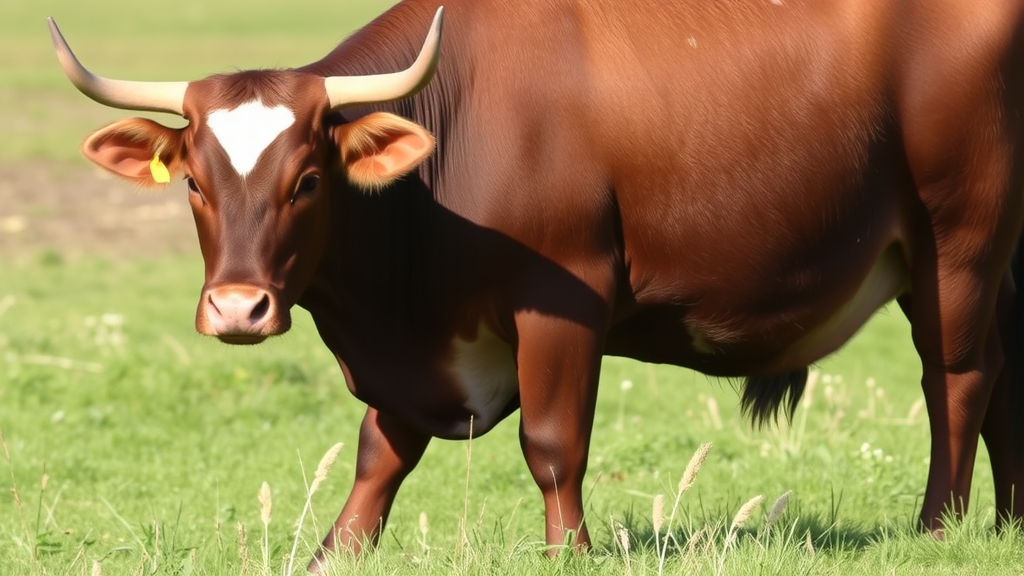
In the high-stakes world of cattle breeding, one of the most valuable traits a bull can possess is not written on its hide or measured in its weight, but hidden inside its testes. A bull with larger testes and robust sperm production can sire far more offspring through artificial insemination, making testicular development a trait of enormous economic consequence. Yet the molecular machinery that separates a highly fertile bull from a mediocre one has remained frustratingly opaque. Now, a team of researchers at Qingdao Agricultural University in Shandong, China, has taken a major step toward changing that, using a powerful combination of genomics, proteomics, and metabolomics to reveal that sugar metabolism—specifically a glycolytic enzyme called PGAM2—may sit at the very heart of what makes some bulls reproductive powerhouses. The study, published in BMC Genomics, offers one of the most comprehensive portraits yet of the biology underlying natural variation in testicular size.
The research team, led by co-first authors Xianzhen Huo and Ruili Liu under the correspondence of Yajuan Dong, worked with Blcattle Black cattle, a Chinese beef breed, and divided the animals into two comparison groups: bulls with notably large testes and bulls with notably small testes. This natural variation provided the perfect experimental canvas. Rather than manipulating genes in a laboratory and hoping the results translate to real animals, the scientists could study genuine biological divergence in a commercially relevant breed, then drill down into the molecular details with an unusually thorough toolkit.
The first layer of evidence came from classical morphology. Under the microscope, the testes of small-testis bulls told a troubling story. The seminiferous tubules—the tightly coiled structures where sperm cells are manufactured—appeared disorganized, with vacuolar, bubble-like disruptions marring the spermatogenic epithelium where developing sperm reside. The distribution of interstitial cells, which produce testosterone, was also reduced. Blood tests reinforced the picture: small-testis bulls had lower circulating levels of the three master reproductive hormones—follicle-stimulating hormone, luteinizing hormone, and testosterone. Large-testis bulls, by contrast, showed larger testicular morphometric measurements, a higher gonadosomatic index (the ratio of testis weight to body weight), more intact tubule architecture, and elevated reproductive hormones across the board.
With the phenotypes firmly established, the researchers launched their multi-omics campaign. Transcriptomic sequencing captured which genes were active, proteomic analysis measured the actual proteins being produced, and metabolomic profiling charted the small molecules flowing through the tissue. This triple-lens approach is critical because gene activity and protein abundance do not always align, and neither fully captures cellular chemistry. When all three layers were overlaid, a striking divide emerged between the two groups of animals.
The small-testis bulls showed a molecular profile dominated by alarm and repair. Their testicular tissue was enriched for immune and inflammatory responses, interferon-related signaling—the body’s antiviral alarm system—oxidative stress pathways, extracellular matrix remodeling, and cytoskeletal regulation. In essence, their testes appeared to be fighting a molecular battle rather than running a sperm factory. The large-testis bulls displayed the opposite signature: their tissue was enriched for spermatogenesis itself, meiosis, the assembly of flagella (the whip-like tails that power sperm), steroidogenesis, and, most importantly, glycolytic energy-metabolism programs—the biochemical pathways that break down glucose to fuel cellular work.
To move from broad pathway patterns to specific molecular culprits, the team integrated their transcriptome and proteome data and constructed protein-protein interaction networks, complemented by weighted gene co-expression network analysis, a statistical method that groups genes whose activity rises and falls together with physical traits. This convergence strategy identified several candidate hub genes: PGAM2, GAPDH, TKTL2, LDHC, AK1, and SIL1. Notably, several of these are familiar players in energy metabolism—GAPDH and LDHC are core glycolysis components, and LDHC is a lactate dehydrogenase long known to be testis-specific in mammals.
One gene rose above the rest. PGAM2, which encodes phosphoglycerate mutase 2, an enzyme that catalyzes a key step in glycolysis, satisfied every criterion the researchers set. Its messenger RNA and protein levels were both elevated in large-testis bulls, confirming concordance between the transcriptomic and proteomic layers. It appeared repeatedly in the enriched glycolysis and gluconeogenesis pathways, it occupied a hub position in the protein-protein interaction network, and it belonged to a co-expression module statistically associated with the testicular phenotypic traits. In short, PGAM2 was not a correlation spotted once in one dataset—it was a signal that persisted across every analytical lens the team applied.
To test whether PGAM2 merely correlates with fertility traits or actively influences them, the researchers turned to functional experiments in primary Sertoli-cell-enriched testicular somatic cell cultures. Sertoli cells are the nursemaids of the testis: they physically support and nourish developing sperm cells, form the blood-testis barrier that protects delicate germ cells from the immune system, and coordinate the entire spermatogenic program. When the team overexpressed PGAM2 in these cells, or knocked it down, a cascade of changes followed. Glycolytic activity shifted, along with markers of proliferation and apoptosis, the expression of genes involved in providing nutrients to germ cells, the organization of F-actin—the structural filaments Sertoli cells use to transport developing sperm—and the expression of genes that maintain the blood-testis barrier. These results suggest PGAM2 is not a passive biomarker but a functional lever that can remodel the very environment in which sperm are built.
The mechanistic picture that emerges is one of metabolic reprogramming with cascading consequences. According to the study’s integrated model, elevated PGAM2 drives increased glycolytic flux and ATP production in Sertoli cells, which in turn supports greater proliferation and differentiation, enhanced nutrient secretion, and reduced cell death. This energized state correlates with increased F-actin assembly and maintained blood-testis barrier integrity, creating a stable microenvironment conducive to spermatogenesis. In large testes, this metabolic program coexists with heightened spermatogenesis, meiosis, and flagellar assembly signatures, alongside elevated testosterone and oxidized glutathione—a marker of active redox metabolism. In small testes, the picture instead features increased immune, inflammatory, and oxidative stress markers, suggesting that when the metabolic engine falters, resources are diverted toward defense rather than reproduction. The authors frame this as a trade-off between reproductive output and immune defense resource allocation, a concept that resonates with ecological theories of life-history trade-offs.
The practical implications extend well beyond basic biology. Testicular size is a moderately heritable trait that cattle breeders can select for, but selection has historically relied on physical measurements taken long after animals reach maturity. A molecular marker such as PGAM2 expression—or genetic variants that regulate it—could potentially allow earlier and more accurate prediction of a bull’s breeding value, accelerating genetic improvement in the industry. The multi-omics resource generated by the study, spanning transcriptomic, proteomic, and metabolomic data from divergent phenotypes, provides a public foundation for such applications. The work was supported by the Shandong Province advantageous characteristic industrial cluster construction project, and was approved by the animal ethics committee of Qingdao Agricultural University. As with any cell-culture study, the next challenge will be validating these mechanisms in living animals and determining whether manipulating PGAM2 or its regulatory networks can genuinely enhance fertility. But for a trait as economically vital as bull fertility, the identification of a single, druggable metabolic hub embedded in the biology of testis development is a discovery that breeders, biologists, and reproductive scientists will be watching closely.
Subject of Research: PGAM2-linked glycolytic energy metabolism in bovine testicular size divergence and spermatogenic potential
Article Title: Multi-omics analyses identify PGAM2-associated energy-metabolism signatures linked to bull testis size divergence and spermatogenic potential
Article References: Huo, X., Liu, R., Wang, X., Bai, X., & Dong, Y. (2026). Multi-omics analyses identify PGAM2-associated energy-metabolism signatures linked to bull testis size divergence and spermatogenic potential. BMC Genomics. https://doi.org/10.1186/s12864-026-13399-y
Image Credits: AI Generated
DOI: 10.1186/s12864-026-13399-y
Keywords: PGAM2, glycolysis, bull fertility, testicular development, spermatogenesis, Sertoli cells, multi-omics, proteomics, metabolomics, transcriptomics, blood-testis barrier, cattle breeding
Cite Scienmag News
Juliet Wilcox. (September 26, 2026). Glycolysis Gene PGAM2 Emerges as Key Driver of Bull Fertility and Testis Size. Scienmag. https://scienmag.com/glycolysis-gene-pgam2-emerges-as-key-driver-of-bull-fertility-and-testis-size/
Juliet Wilcox. "Glycolysis Gene PGAM2 Emerges as Key Driver of Bull Fertility and Testis Size." Scienmag, 26 September 2026, https://scienmag.com/glycolysis-gene-pgam2-emerges-as-key-driver-of-bull-fertility-and-testis-size/. Accessed 26 September 2026.
Juliet Wilcox. "Glycolysis Gene PGAM2 Emerges as Key Driver of Bull Fertility and Testis Size." Scienmag. September 26, 2026. https://scienmag.com/glycolysis-gene-pgam2-emerges-as-key-driver-of-bull-fertility-and-testis-size/


