


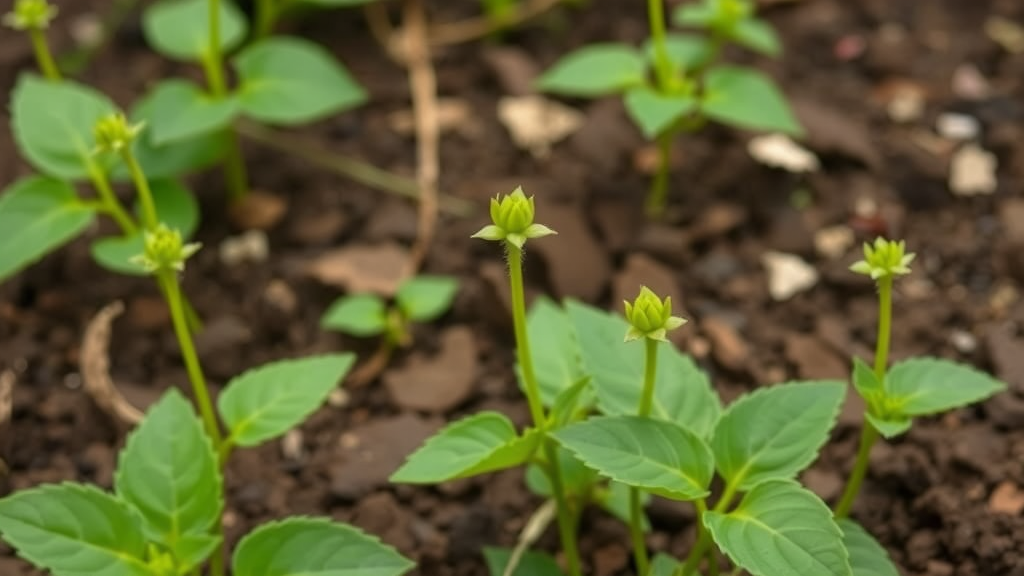
A single bowl of wild vegetable soup was enough to trigger one of the most sobering plant-poisoning investigations published in recent years. In a study released in BMC Pharmacology and Toxicology, a team from the Guizhou Provincial Center for Disease Control and Prevention and collaborating institutions in China describes a fatal familial poisoning incident in which three household members consumed seedlings of Datura stramonium, a plant better known to botanists and toxicologists as jimson weed. The seedlings had been gathered in the wild and mistaken for an edible vegetable, an error that public health experts have long warned about but that real-world investigations rarely document with this level of clinical, botanical and analytical detail. The study reconstructs the entire chain of events, from the epidemiological survey of who ate what and how much, through the morphological and molecular identification of the plant, to the precise quantification of the tropane alkaloids responsible for the poisoning.
The clinical picture that emerged was stark and, in the most heavily exposed patient, relentless. After ingesting the soup, the affected individuals developed classic anticholinergic toxicity, the syndrome produced when plant-derived alkaloids block muscarinic acetylcholine receptors throughout the nervous system. The patient with the greatest exposure spiraled into metabolic acidosis and hyperlactatemia, followed by multiple organ failure, and could not be saved despite intensive emergency care. A second, less heavily exposed household member recovered fully after treatment, an outcome that underlines one of the most clinically important lessons of the incident: in tropane alkaloid poisoning, the dose received, and therefore the amount of contaminated plant consumed, can determine the difference between a survivable intoxication and a fatal one. The investigators emphasize that this kind of dose-dependent outcome, seen within a single family eating the same meal, illustrates the steep toxicity curve of Datura alkaloids.
Identifying the plant behind the poisoning required two independent lines of evidence. The team first examined the suspected seedlings morphologically, comparing their physical characteristics with botanical descriptions of Datura stramonium. They then confirmed the identification using sequence-based molecular analysis, a DNA barcoding approach that removes the ambiguity that sometimes accompanies visual identification of young plants. Seedlings of jimson weed can resemble edible wild greens closely enough to fool foragers, and this resemblance is precisely why the plant is such a persistent hazard in rural communities where wild vegetable collection remains common. The dual identification strategy, combining classical botany with molecular confirmation, is presented by the authors as a model for source attribution in poisoning investigations, providing a defensible link between the plant on the table and the symptoms in the patients.
The quantitative core of the study is arguably its most striking contribution. Using ultra-performance liquid chromatography coupled with tandem mass spectrometry, the researchers measured the concentrations of three major tropane alkaloids, atropine, scopolamine and anisodamine, in different parts of the single plant specimen recovered from the incident. The results revealed dramatic variation across plant structures. Atropine reached its highest concentrations in immature fruits, at approximately 280 milligrams per kilogram, and in flowers, at approximately 160 milligrams per kilogram. Scopolamine peaked in mature fruits at roughly 80 milligrams per kilogram and in flowers at about 60 milligrams per kilogram. Anisodamine was present at lower levels overall, with its maximum in flowers at approximately 19.25 milligrams per kilogram. These figures demonstrate that alkaloid distribution is not uniform within a single plant, and that even seedling material from the same plant can carry very different toxicological burdens.
The analytical method itself was validated to standards suitable for forensic and regulatory work. The UPLC-MS/MS assay exhibited good linearity across its calibration range, with correlation coefficients of at least 0.9982, recoveries ranging from 84.90 percent to 100.9 percent, and relative standard deviations below 7.7 percent. This level of precision matters because the concentrations being measured determine how a poisoning event is interpreted. A laboratory result with poor reproducibility could not reliably support source attribution, whereas the validated performance reported here allows the measured alkaloid levels to be taken as credible evidence that the plant consumed carried potentially lethal quantities of anticholinergic toxins. The assay now stands as a technical reference for any laboratory faced with a suspected Datura poisoning and a plant sample to analyze.
Beyond the incident reconstruction, the researchers ventured into exploratory computational territory, using network toxicology and molecular docking to explore the molecular machinery that tropane alkaloids might disturb in the nervous system. By integrating databases of toxin targets and neurotoxicity-related genes, the team identified 360 overlapping targets associated with the neurotoxic effects of atropine, scopolamine and anisodamine. Enrichment analyses pointed toward oxidative stress processes and kinase-related biological functions, as well as signaling pathways including PI3K-Akt and ErbB. These pathways are central to cell survival, growth and signaling cascades in neurons, and their appearance in the analysis suggests that the neurotoxicity of tropane alkaloids may not be limited to the well-characterized blockade of muscarinic receptors but could involve secondary molecular responses triggered downstream of receptor inhibition.
Molecular docking, a computational technique that predicts how small molecules fit into the binding pockets of proteins, added another layer to this hypothesis-generating exercise. The docking experiments suggested theoretical binding compatibility between all three alkaloids and several of the predicted core targets, with the strongest predicted interactions involving AKT1 and PIK3CA, two key components of the PI3K-Akt signaling axis. The authors are careful to frame these findings appropriately: computational predictions of binding do not demonstrate biological effect, and the entire computational component is presented as exploratory rather than conclusive. Nevertheless, by nominating specific kinases and pathways for future laboratory validation, the analysis provides a roadmap for experimental work that could clarify whether antioxidant strategies or pathway-targeted interventions might eventually complement the supportive care that currently defines anticholinergic poisoning treatment.
The investigators are equally candid about the limitations of their source attribution. Because no toxicological measurements were carried out in the patients’ biological specimens, the study cannot confirm internal exposure to the alkaloids directly. The chain of evidence is therefore epidemiological and botanical rather than forensic in the strictest sense: the patients ate the soup, the soup contained the identified plant, and the plant contained measurable quantities of the toxins expected to cause the observed syndrome. This is a strong circumstantial case, and the authors argue that the combined epidemiological, botanical and plant-analytical findings support the attribution, but they do not claim direct toxicological confirmation. Their transparency on this point offers a practical lesson for incident response teams worldwide: securing biological samples early in a suspected plant poisoning investigation can materially strengthen the evidentiary chain.
What makes this study resonate far beyond the village where the poisoning occurred is the light it sheds on a recurring global hazard. Datura species grow across temperate and tropical regions of the world, and cases of mistaken foraging appear regularly in the medical literature, often involving young children or foragers unfamiliar with the plant’s seedling stage. The fact that a whole family was exposed through a single meal, with outcomes ranging from full recovery to death depending on the dose consumed, compresses the entire dose-response relationship of tropane alkaloid toxicity into one tragic event. The detailed alkaloid distribution data published here give poison control centers concrete numbers to work with when assessing the risk posed by different plant parts, rather than relying on qualitative warnings that jimson weed is simply dangerous.
The study’s integration of disciplines is its defining feature. Epidemiology established who was exposed and how; morphological and molecular botany identified the culprit; validated analytical chemistry quantified the poison in the plant; and computational biology sketched the possible molecular sequelae of exposure. Each element alone would be familiar, but their combination in a single real-world fatal poisoning investigation is rare, and it demonstrates a template that other public health authorities could follow when confronting plant-related toxic emergencies. As wild foraging continues to grow in popularity in many countries, and as climate and land-use changes alter where toxic plants appear, investigations of this kind serve as both a warning and a methodological resource. The Guizhou team’s work transforms a family tragedy into a body of evidence, one that should sharpen vigilance among foragers, clinicians and toxicologists alike.
Subject of Research: Fatal familial Datura stramonium poisoning: plant identification, tropane alkaloid quantification and computational neurotoxicity analysis
Article Title: Clinical and toxicological investigation of a fatal familial poisoning incident associated with Datura stramonium: plant identification, tropane alkaloid quantification and exploratory computational analysis
Article References: Wu, A., Yang, S., Qu, Q., Zhou, Q., Zuo, P., Yang, L., Lei, Y., Guo, H., Pan, R., & Zou, L. (2026). Clinical and toxicological investigation of a fatal familial poisoning incident associated with Datura stramonium: plant identification, tropane alkaloid quantification and exploratory computational analysis. BMC Pharmacology and Toxicology. https://doi.org/10.1186/s40360-026-01230-z
Image Credits: AI Generated
DOI: 10.1186/s40360-026-01230-z
Keywords: Datura stramonium, poisoning, tropane alkaloids, atropine, scopolamine, anisodamine, UPLC-MS/MS, network toxicology, molecular docking, neurotoxicity, anticholinergic toxicity, food safety
Cite Scienmag News
Ophelia Keating. (September 25, 2026). Deadly case of mistaken identity: how jimson weed seedlings turned a family meal fatal. Scienmag. https://scienmag.com/deadly-case-of-mistaken-identity-how-jimson-weed-seedlings-turned-a-family-meal-fatal/
Ophelia Keating. "Deadly case of mistaken identity: how jimson weed seedlings turned a family meal fatal." Scienmag, 25 September 2026, https://scienmag.com/deadly-case-of-mistaken-identity-how-jimson-weed-seedlings-turned-a-family-meal-fatal/. Accessed 25 September 2026.
Ophelia Keating. "Deadly case of mistaken identity: how jimson weed seedlings turned a family meal fatal." Scienmag. September 25, 2026. https://scienmag.com/deadly-case-of-mistaken-identity-how-jimson-weed-seedlings-turned-a-family-meal-fatal/


