


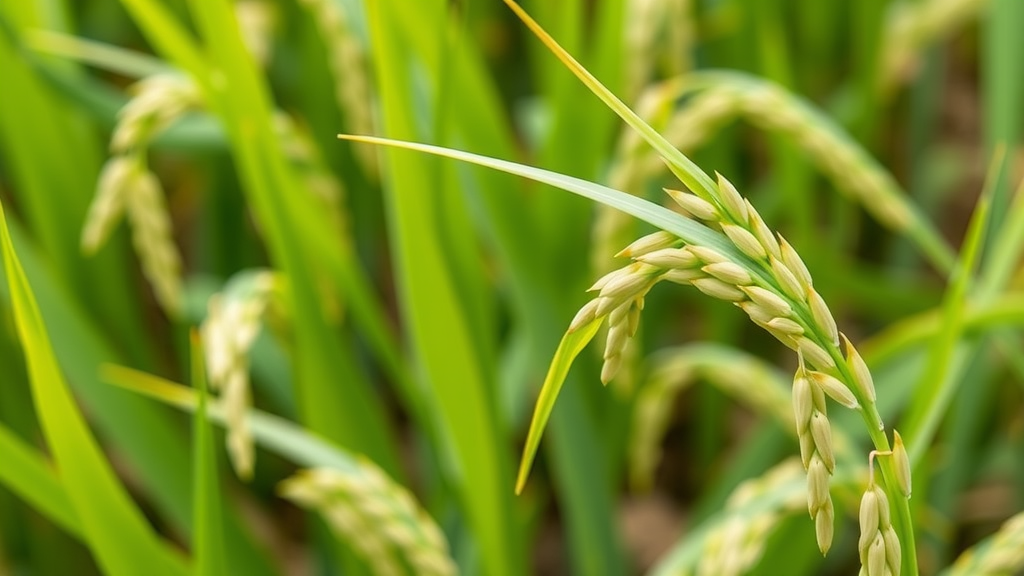
Rice farmers and quarantine inspectors may soon have a powerful new weapon against one of the world’s most destructive rice diseases. A research team in China has developed two rapid diagnostic platforms—a dot-enzyme-linked immunosorbent assay (Dot-ELISA) and a colloidal gold immunochromatographic strip (CGICS)—that can detect Burkholderia glumae and Burkholderia plantarii, the primary bacterial agents behind rice bacterial panicle blight (RBPB). Remarkably, both serological techniques proved more sensitive than conventional polymerase chain reaction (PCR), the current gold standard in molecular diagnostics, while requiring no expensive laboratory equipment. The work, published in the journal Crop Health, addresses a long-standing gap: until now, no serological tools existed for detecting these quarantine-significant pathogens.
Rice bacterial panicle blight was first documented in Japan in the 1950s and has since spread to rice-growing regions across Africa, Asia, North America, and South America. The disease typically causes yield losses of around 15 percent, but a severe outbreak in Vietnam in 1992 demonstrated its devastating potential, with recorded losses reaching as high as 75 percent. The pathogens behind the disease are Gram-negative bacteria of the Burkholderia genus, with B. glumae acting as the dominant causal agent. Surveys of diseased rice plants in the United States found that B. glumae, B. gladioli, B. multivorans, and B. plantarii together accounted for 90 percent of isolated Burkholderia strains, underscoring the central role these species play in the disease.
Diagnosing RBPB in the field is notoriously difficult. Typical symptoms include browning of the flag leaf sheath and ligule, death of the panicle, and a sharp demarcation between diseased and healthy grains—the upper portion of infected grains appears water-soaked, grayish-white, or yellowish-brown while the lower part remains normal. Yet other pathogens and abiotic stresses can produce similar symptoms, making symptom-based diagnosis inaccurate and untimely. Complicating matters further, the bacteria are seed-borne and can persist in a dormant state within seedlings, only triggering disease later in the growing season, from booting through heading. Warm, humid conditions favor outbreaks: the optimal growth temperature for B. glumae sits between 30 and 35 degrees Celsius, making tropical and subtropical regions particularly vulnerable.
Existing diagnostic approaches have significant drawbacks. Conventional methods rely on pathogen isolation and cultivation, pathogenicity analysis, Biolog microbial identification, and fatty acid profiling—all labor-intensive procedures. Molecular approaches based on PCR target genomic loci such as the internal transcribed spacer between the 16S and 23S rRNA genes and the gyrB gene, but they demand thermal cyclers, electrophoresis equipment, trained technicians, and multiple handling steps. One multiplex PCR assay designed to detect B. plantarii in rice seeds exhibited a sensitivity of only 1.0 × 10⁸ colony-forming units (CFU) per milliliter, insufficient for low-concentration samples. Serological techniques, by contrast, offer simplicity, speed, low cost, and suitability for high-throughput screening at ports and in the field.
The research team, led by Jie Dong and Jianxiang Wu of Zhejiang University, began by generating monoclonal antibodies against the two target pathogens. They used formaldehyde-inactivated cells of B. glumae strain Os48 and B. plantarii strain ZJ171 as immunogens, injecting them into BALB/c mice emulsified with Freund’s adjuvant. Spleen lymphocytes from the mice with the highest serum titers were fused with Sp2/0 myeloma cells using polyethylene glycol, and hybridoma lines were screened by indirect ELISA and cloned by limiting dilution. This process yielded two hybridoma lines secreting antibodies against B. glumae, designated 4A7 and 8C5, and two secreting antibodies against B. plantarii, designated 12B5 and 14B3. All four monoclonal antibodies were identified as IgG1 with kappa light chains and exhibited high titers of 10⁻⁷.
The high antigenic similarity among Burkholderia species makes antibody specificity a formidable challenge, since cross-reactivity between closely related species is a common pitfall. The team’s specificity testing, however, delivered striking results. The Dot-ELISAs built on antibodies 4A7 and 8C5 detected all five tested B. glumae strains while showing no cross-reaction with B. plantarii, B. gladioli, B. vietnamiensis, B. ambifaria, B. cenocepacia, B. pyrrocinia, B. cepacia, or control bacteria including Xanthomonas oryzae and Acidovorax oryzae. Similarly, the antibodies 12B5 and 14B3 recognized all three tested B. plantarii strains without reacting with any of the thirteen non-target organisms. This clean discrimination across the notoriously slippery Burkholderia genus is one of the study’s most significant achievements.
Sensitivity figures were equally impressive. The Dot-ELISAs detected B. glumae or B. plantarii at concentrations as low as 1.96 × 10⁴ CFU per milliliter—roughly two to four times more sensitive than the conventional PCR assays run in parallel, which detected the pathogens only down to 3.91 × 10⁴ and 7.81 × 10⁴ CFU per milliliter respectively. In infected rice grain homogenates, the Dot-ELISAs produced positive results at dilutions of 1:7680, twice the sensitivity of PCR, which reached only 1:3840. The assay procedure is straightforward: ground rice grain samples are homogenized in phosphate-buffered saline, spotted onto nitrocellulose membranes, and probed with the monoclonal antibody followed by an enzyme-conjugated secondary antibody. A purple dot signals infection within roughly two hours.
For true on-site testing, the team engineered colloidal gold immunochromatographic strips—lateral-flow devices similar in principle to at-home pregnancy tests. Thirty-nanometer gold nanoparticles were synthesized by citrate reduction and conjugated with the monoclonal antibodies. After systematic optimization of capture antibody concentration, gold-labeled antibody loading, and pH adjustment with potassium carbonate, the finished strips delivered results in just five to ten minutes from a drop of sample on the pad. Two red lines indicate a positive result; a single control line indicates a negative one. The strips detected both pathogens at concentrations as low as 9.78 × 10³ CFU per milliliter, making them four to eight times more sensitive than conventional PCR, and they matched the Dot-ELISA’s 1:7680 detection limit in infected grain homogenates.
Field validation sealed the case. The researchers collected fourteen rice samples suspected of RBPB infection from paddies in Yunnan Province, Zhejiang Province, and Chongqing Municipality during the 2025 growing season. Both serological platforms identified nine samples infected with B. glumae and five with B. plantarii, with samples six and eleven harboring both pathogens simultaneously. Every result matched conventional PCR exactly. In a separate test of six rice leaf samples from Zhejiang, the assays again agreed with PCR, correctly identifying one leaf co-infected with both bacteria. The ability to detect coinfections is particularly valuable, as simultaneous infection by B. glumae and B. gladioli is known to complicate disease control.
The implications extend beyond agronomy. B. glumae has been shown to pose a threat to human health: in 2007, researchers reported a case of chronic granulomatous disease in a child’s lungs caused by B. glumae, revealing the bacterium’s cross-species pathogenic potential. Reliable, rapid quarantine tools are therefore needed not only to protect rice yields but also to ensure the safe global circulation of certified pathogen-free rice seed. The authors note that further work remains, including testing how storage conditions affect assay performance, evaluating detection of coinfections at extremely low bacterial loads, and assessing the influence of operator subjectivity in visually reading results. Still, with four ultra-sensitive monoclonal antibodies and two field-ready platforms in hand, the study delivers practical instruments for epidemiological surveillance and quarantine inspection—tools that could help curb the international spread of two of rice’s most dangerous bacterial enemies.
Subject of Research: Development of monoclonal antibody-based serological assays for detecting the rice bacterial panicle blight pathogens Burkholderia glumae and Burkholderia plantarii
Article Title: Highly specific and super-sensitive Dot-ELISA and colloidal gold immunochromatographic strips for the detection of Burkholderia glumae and Burkholderia plantarii of Rice bacterial panicle blight
Article References: Dong, J., Mao, W., Zhang, C., Li, B., An, Z., Luo, J., & Wu, J. (2026). Highly specific and super-sensitive Dot-ELISA and colloidal gold immunochromatographic strips for the detection of Burkholderia glumae and Burkholderia plantarii of Rice bacterial panicle blight. Crop Health, 4(1), Article 5. https://doi.org/10.1007/s44297-026-00067-6
Image Credits: AI Generated
DOI: 10.1007/s44297-026-00067-6
Keywords: rice bacterial panicle blight, Burkholderia glumae, Burkholderia plantarii, monoclonal antibody, Dot-ELISA, colloidal gold immunochromatographic strip, plant disease diagnostics, PCR, quarantine, rice, serological detection, seed-borne pathogens
Cite Scienmag News
Alan Morgan. (September 25, 2026). New Antibody Tests Outperform PCR in Detecting Devastating Rice Panicle Blight Pathogens. Scienmag. https://scienmag.com/new-antibody-tests-outperform-pcr-in-detecting-devastating-rice-panicle-blight-pathogens/
Alan Morgan. "New Antibody Tests Outperform PCR in Detecting Devastating Rice Panicle Blight Pathogens." Scienmag, 25 September 2026, https://scienmag.com/new-antibody-tests-outperform-pcr-in-detecting-devastating-rice-panicle-blight-pathogens/. Accessed 25 September 2026.
Alan Morgan. "New Antibody Tests Outperform PCR in Detecting Devastating Rice Panicle Blight Pathogens." Scienmag. September 25, 2026. https://scienmag.com/new-antibody-tests-outperform-pcr-in-detecting-devastating-rice-panicle-blight-pathogens/


