


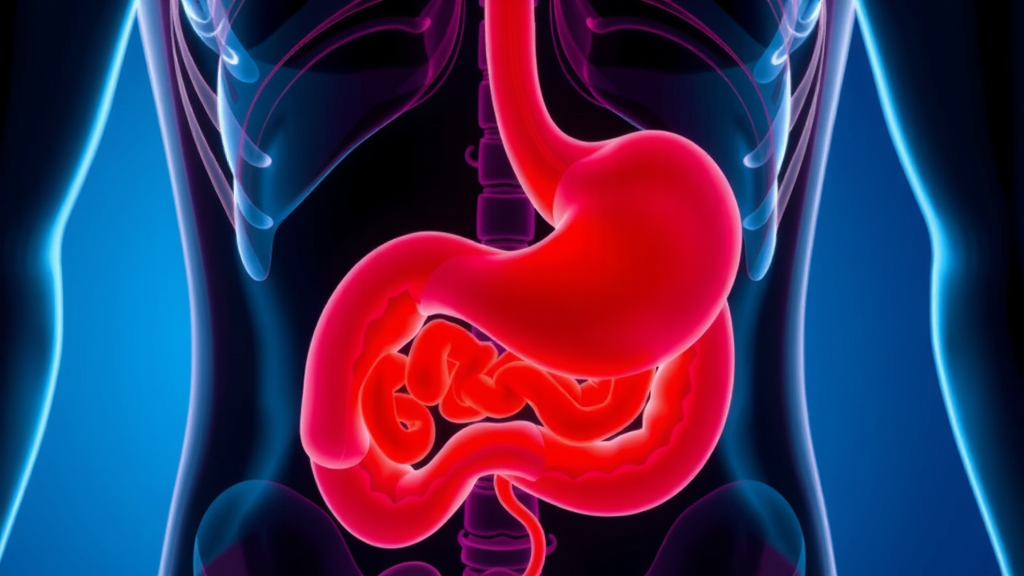
For patients with diffuse large B-cell lymphoma that takes root in the gastrointestinal tract, the first rounds of chemotherapy are meant to be the turning point. These aggressive tumors, which arise from B lymphocytes and lodge themselves in the stomach or intestines, often respond well to modern immunochemotherapy. But the gut is an unforgiving place for a shrinking tumor. As malignant cells die under the pressure of treatment, ulcers can deepen, vessels can rupture, and the very therapy designed to save a life can precipitate a life-threatening hemorrhage. A new study published in Annals of Hematology by Hui Li, Yue Shen, Suzhen Jia, Fanhuan Xu, Bin Xue, and Haige Ye now provides some of the clearest evidence yet that gastrointestinal bleeding after first-line chemotherapy is not merely a complication to be managed, but a powerful signal of poor prognosis.
The research team, drawn from Wenzhou People’s Hospital, the First Affiliated Hospital of Wenzhou Medical University, and Shanghai Tongji Hospital, set out to answer a deceptively simple question: do patients who experience gastrointestinal bleeding during first-line chemotherapy for gastrointestinal diffuse large B-cell lymphoma fare worse than those who do not? The challenge in answering such questions retrospectively is confounding. Patients who bleed may differ systematically from those who do not in age, disease stage, tumor biology, or overall fitness, and any of those differences could explain an apparent survival gap. To address this, the investigators turned to propensity score matching, a statistical technique borrowed from epidemiology that attempts to recreate the balance of a randomized trial using observational data.
The mechanics of the analysis are worth understanding, because they underpin the credibility of the findings. The team assembled a cohort of 79 patients with gastrointestinal diffuse large B-cell lymphoma treated with first-line chemotherapy. Within that group, nine patients developed gastrointestinal bleeding after treatment. Each bleeding patient was matched with two controls who did not bleed, producing a 1:2 matched design. The matching variables were chosen with care: gender, clinical stage, Hans classification, which is a widely used immunohistochemical scheme that stratifies diffuse large B-cell lymphoma into germinal center B-cell-like and activated B-cell-like subtypes, and Eastern Cooperative Oncology Group performance status, a standard measure of a patient’s functional fitness. By balancing these key determinants of outcome across the two groups, the researchers could isolate the effect of bleeding itself with far greater confidence than a crude comparison would allow.
The results were striking. Patients who suffered gastrointestinal bleeding after chemotherapy had significantly worse overall survival, with a P value of 0.006, and significantly worse progression-free survival, with a P value of 0.011. Survival curves, however, only tell part of the story. The researchers also examined how the lymphoma responded to treatment, and here the differences were dramatic. The complete response rate, which reflects the proportion of patients whose disease vanished entirely on imaging and clinical assessment, was just 11.11 percent in the bleeding group compared with 66.67 percent in the matched controls, a difference that reached statistical significance at P equals 0.013. The objective response rate, which combines complete and partial responses, was 66.67 percent among bleeders versus 100.00 percent among controls, with a P value of 0.029. In other words, patients who bled were far less likely to achieve a deep remission, and none of the matched controls escaped treatment without at least a partial response.
Perhaps the most forward-looking element of the study is its use of metabolic imaging to predict who will bleed. All of the patients in the cohort underwent baseline fluorine-18 fluorodeoxyglucose positron emission tomography combined with computed tomography, the workhorse of modern lymphoma staging. This technique exploits the fact that rapidly dividing cancer cells consume glucose voraciously; the radioactive glucose analog accumulates in tumor tissue, allowing clinicians to measure not just where disease sits but how metabolically active it is. The researchers focused on parameters specific to the gastrointestinal involvement: the gastrointestinal metabolic tumor volume, abbreviated GI-MTV, which quantifies the physical volume of metabolically active tumor in the gut, and the gastrointestinal total lesion glycolysis, or GI-TLG, which integrates tumor volume with glucose uptake intensity to estimate the total metabolic burden carried by the intestinal disease.
Both parameters proved predictive. Patients who went on to bleed had significantly higher baseline GI-MTV, with a P value of 0.002, and significantly higher GI-TLG, with a P value of 0.004. The biological interpretation is intuitive: bulky, metabolically ravenous tumors in the gastrointestinal wall inflict more local destruction, erode deeper into the mucosa and muscularis layers, and leave behind larger ulcerated craters when chemotherapy begins to kill the malignant cells. When that necrotic tissue sloughs away, exposed blood vessels in the gut wall can hemorrhage. The finding suggests that a routine pre-treatment PET/CT scan, which nearly every lymphoma patient already receives, contains actionable information about bleeding risk that has largely gone unexploited.
The survival analysis within the matched cohort added further texture. High Eastern Cooperative Oncology Group performance status, indicating a patient with significant functional impairment, was associated with poorer overall survival at P equals 0.032 and poorer progression-free survival at P equals 0.008. Whole-body metabolic tumor volume, or Wb-MTV, and total lesion glycolysis, or Wb-TLG, which capture the entire systemic tumor burden rather than just the gastrointestinal component, were each linked to worse overall survival, at P equals 0.012 and P equals 0.038 respectively. The international prognostic index, a composite clinical score incorporating age, stage, performance status, serum lactate dehydrogenase, and the number of extranodal disease sites, was associated with poorer progression-free survival at P equals 0.027. Together, these findings paint a coherent picture in which both the global burden of disease and the patient’s physiological reserve shape outcomes, with bleeding acting as a clinical marker of tumors that were already the most formidable.
One of the more reassuring aspects of the study concerns management. Gastrointestinal bleeding in this setting sounds catastrophic, and it can be, but the majority of events were handled without invasive intervention. Conservative medical therapy, which typically includes acid suppression, bowel rest, transfusion support, and careful monitoring, succeeded in 77.78 percent of the bleeding cases. The remaining 22.22 percent required endoscopic hemostasis, in which a flexible camera is passed into the digestive tract and bleeding vessels are cauterized, clipped, or injected with vasoconstrictive agents. None of the reported events in the matched analysis apparently demanded emergency surgery in the data presented, which is notable given that perforation and hemorrhage in the gut have historically been among the most feared complications of treating gastrointestinal lymphoma. The message for clinicians is twofold: vigilance is essential, but a calibrated, stepwise response beginning with medical management is often sufficient.
The broader significance of this work lies in how it reframes a familiar complication. Gastrointestinal bleeding after chemotherapy has long been treated as an unpredictable accident, a bolt from the blue that clinicians could only react to. This study suggests otherwise. The bleeding events clustered among patients with high metabolic tumor burden in the gut, and those patients also had the worst responses to therapy and the shortest survival. Bleeding, in this framing, is less a random event than a clinical manifestation of aggressive, bulky disease that chemotherapy is struggling to control. That reframing has practical consequences. Patients with high baseline GI-MTV and GI-TLG could be flagged for intensified surveillance during the first treatment cycles, with a low threshold for endoscopic evaluation if any sign of bleeding emerges. They might also be candidates for closer monitoring of hemoglobin and fecal occult blood, or for prophylactic gastroprotective strategies, though the study does not test such interventions directly.
Cautions remain. The study is retrospective and small, with only nine bleeding patients, and propensity score matching can only balance the confounders that are measured and included; unmeasured differences in tumor location, depth of invasion, or treatment details could still contribute. The researchers appropriately note that the work was approved by the ethics committee of the First Affiliated Hospital of Wenzhou Medical University and conducted under the principles of the Helsinki Declaration, with informed consent waived for the retrospective design but patient privacy protected. The research was supported by the Zhejiang Provincial Natural Science Foundation of China. Even with those limitations, the convergence of evidence is compelling: worse survival, worse response rates, and higher baseline metabolic burden all point in the same direction. For a disease that affects the digestive tract of thousands of patients worldwide each year, the ability to look at a pre-treatment PET/CT scan and identify who is most likely to bleed, and to understand that bleeding marks a population in need of heightened attention, represents a meaningful step toward safer and more personalized lymphoma care. The study is published open access, allowing clinicians everywhere to examine the data in full.
Subject of Research: Gastrointestinal bleeding as a prognostic factor after first-line chemotherapy in gastrointestinal diffuse large B-cell lymphoma
Article Title: Outcomes of gastrointestinal bleeding events after first-line chemotherapy in gastrointestinal-diffuse large B-cell lymphoma: a propensity-score matched analysis
Article References: Li, H., Shen, Y., Jia, S., Xu, F., Xue, B., & Ye, H. (2026). Outcomes of gastrointestinal bleeding events after first-line chemotherapy in gastrointestinal-diffuse large B-cell lymphoma: a propensity-score matched analysis. Annals of Hematology. https://doi.org/10.1007/s00277-026-07272-x
Image Credits: AI Generated
DOI: 10.1007/s00277-026-07272-x
Keywords: diffuse large B-cell lymphoma, gastrointestinal bleeding, chemotherapy, PET/CT, metabolic tumor volume, propensity score matching, prognosis, overall survival, progression-free survival, endoscopic hemostasis, Annals of Hematology, hematology
Cite Scienmag News
Nathaniel Bowman. (September 25, 2026). When Chemotherapy Triggers Bleeding: A Warning Sign in Gut Lymphoma. Scienmag. https://scienmag.com/when-chemotherapy-triggers-bleeding-a-warning-sign-in-gut-lymphoma/
Nathaniel Bowman. "When Chemotherapy Triggers Bleeding: A Warning Sign in Gut Lymphoma." Scienmag, 25 September 2026, https://scienmag.com/when-chemotherapy-triggers-bleeding-a-warning-sign-in-gut-lymphoma/. Accessed 4 October 2026.
Nathaniel Bowman. "When Chemotherapy Triggers Bleeding: A Warning Sign in Gut Lymphoma." Scienmag. September 25, 2026. https://scienmag.com/when-chemotherapy-triggers-bleeding-a-warning-sign-in-gut-lymphoma/


