


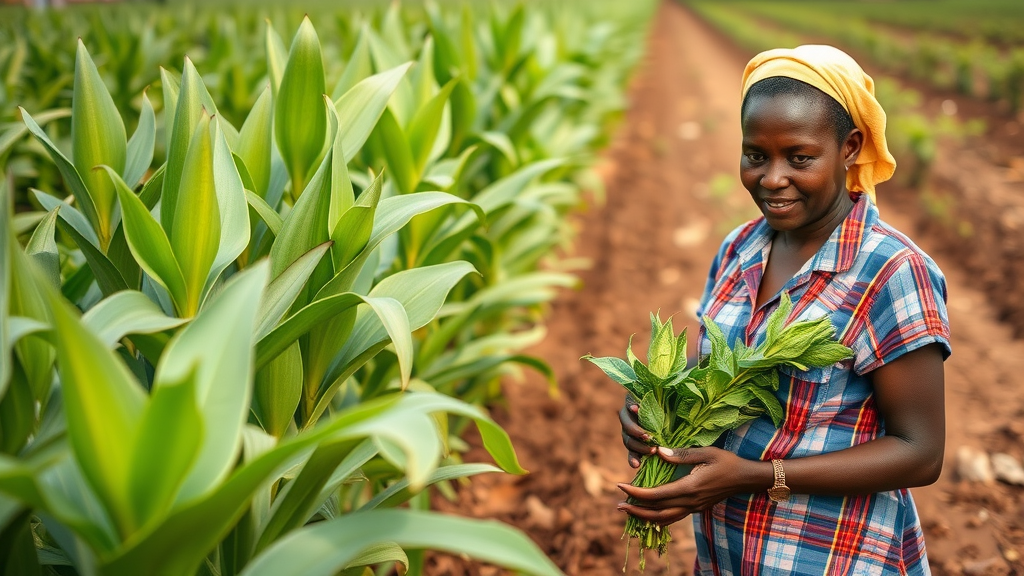
In a finding that could reshape how agricultural knowledge reaches some of the world’s poorest farmers, a new study from Malawi reports that more than 86 percent of smallholder farmers are willing to pay for agricultural extension and advisory services that have historically been delivered free of charge by the state. The research, conducted across the districts of Mzimba, Lilongwe, and Zomba, offers some of the most detailed evidence yet that farmers in a low-income country may be prepared to share the cost of the advice they receive, provided the payment and delivery systems match their economic realities. The results arrive at a critical moment, as chronic underfunding and institutional inefficiencies continue to erode the reach and quality of public extension systems across the developing world.
The study, published in BMC Agriculture, surveyed 351 randomly selected smallholder farmers using an open-ended contingent valuation method, a technique designed to estimate what people would pay for goods and services that are not traded in conventional markets. Rather than presenting farmers with preset price ranges, which can anchor responses and inflate or distort valuations, the researchers asked respondents to freely state the maximum amount they would pay for each individual service. This methodological choice matters: because Malawi’s Department of Agricultural Extension Services has never established standard pricing for paid public extension, any close-ended survey would have struggled to identify unbiased reference prices. The resulting estimates therefore offer an unusually candid window into how farmers themselves value the advice they receive.
The pattern of demand that emerged is strikingly practical. Disease control topped the list, with 40.17 percent of farmers expressing willingness to pay, followed by crop husbandry at 23.37 percent and pest control at 22.79 percent. Livestock breeding, manure making and utilization, and livestock feed and feeding rounded out the most sought-after services. The researchers interpret this hierarchy as a reflection of farmers prioritizing support that delivers immediate, tangible benefits to productivity. With 75.5 percent of surveyed households cultivating plots of one acre or less, and 77.78 percent describing their farming as primarily subsistence-oriented, the emphasis on quick, affordable improvements in output makes economic sense. Services addressing acute threats to yield, such as pests and animal disease, command attention because losses can be catastrophic for households with no buffer.
Yet demand and valuation are not the same thing, and the study reveals a fascinating divergence between the two. The highest average willingness-to-pay amounts went not to the most demanded services but to those perceived as transformational investments. Farm mechanization led the list at an average of 9,730.77 Malawian kwacha, followed by livestock breeding at 7,065.85 kwacha and farm map production at 6,400 kwacha. At the time of the study, the exchange rate stood at roughly 1,735 kwacha to the US dollar, making these substantial sums for subsistence households. By contrast, high-demand services such as disease control and crop husbandry attracted only moderate average valuations between about 2,600 and 4,000 kwacha, suggesting farmers view them as routine or incremental rather than premium offerings.
The statistical analysis of what drives willingness to pay yielded equally revealing results. Using Ordinary Least Squares regression with robust standard errors, corrected for heteroscedasticity after a Breusch-Pagan/Cook-Weisberg test rejected constant variance, the researchers identified seven significant determinants. Male-headed households reported willingness to pay about 617 kwacha more than female-headed households, a disparity the authors link to gendered control over farm decision-making and financial resources in a country where both matrilineal and patrilineal systems shape access to productive assets. Married farmers showed significantly higher willingness to pay than single farmers, likely reflecting household stability and joint investment decisions. Each additional acre of land increased willingness to pay by 378.26 kwacha, while each additional household member reduced it by 237.23 kwacha, a negative effect the authors attribute to the resource constraints facing larger families.
Perhaps the most counterintuitive finding concerns education. Farmers with only primary education expressed significantly higher willingness to pay than those with no formal schooling, yet secondary and tertiary education showed no significant effect. The authors suggest that basic literacy and numeracy enable farmers to appreciate the value of extension advice, but more advanced education may open alternative channels of agricultural knowledge, from digital platforms to private advisory services, reducing reliance on the public system. This echoes earlier findings from Ethiopia, where better-educated farmers gravitated toward mobile-based services. Equally notable was the strong premium that integrated crop-livestock farmers placed on extension: they were willing to pay significantly more than crop-only or livestock-only producers, presumably because mixed systems offer multiple synergies, such as feeding crop residues to animals and returning manure to the soil, that expert advice can help optimize while spreading risk across income sources.
The design preferences farmers expressed for a cost-sharing model are just as consequential as the amounts they would pay. Payment preferences split almost evenly between individual and collective approaches, but the channels of payment clustered around convenience and direct accountability: 45 percent preferred handing cash directly to agricultural extension workers and 40 percent favored mobile money transfers. Traditional banking, payments at extension planning area offices, and routing money through traditional authorities or government agents attracted minimal support, likely because farmers perceive such channels as bureaucratic and complex. The mobile money result is particularly significant in a country where mobile financial services have expanded rapidly, offering a ready-made infrastructure for collecting user fees at scale.
Delivery preferences were equally emphatic. Nearly half of farmers wanted individual face-to-face consultations, while another 38.7 percent preferred group-based sessions; radio, SMS, magazines, and television attracted only marginal interest, and email none at all. This preference for in-person interaction is reinforced by the study’s finding of a striking gap between physical access and actual service: although 64.95 percent of farmers live within 10 kilometers of an extension office, 68.95 percent received only one or no visits from an extension officer in the previous year. With 72.93 percent of farmers having only primary education, the limited capacity to engage with digital platforms makes direct, personalized interaction not merely a preference but a practical necessity. The data suggest that any cost-sharing system built around remote or digital delivery would miss the majority of its intended clientele.
One of the most sobering details in the study is that 61.54 percent of farmers were unaware of Malawi’s cost-sharing policy direction, despite the country’s 2000 policy framework, titled Agricultural Extension in the New Millennium, having explicitly endorsed pluralistic, demand-driven services under the principle that those who benefit pay. That farmers still expressed strong willingness to pay despite this awareness gap points, the authors argue, to a deeper intrinsic demand for relevant, responsive advisory services. The finding aligns closely with earlier Malawian research that reported an almost identical 86 percent support for participatory, demand-led extension. It also stands in sharp contrast to studies from elsewhere in Africa, including one from eastern Ethiopia where only 10.5 percent of farmers were willing to pay, underscoring how context-specific these dynamics are and why localized evidence is essential for policy design.
The policy implications are considerable. The authors recommend tiered pricing or targeted subsidies for services with high to moderate demand, gender-sensitive pricing and awareness campaigns to improve uptake among women-headed households, and continued free provision for less-valued services with broader community benefits, such as environmental management, HIV/AIDS awareness, and farmer organization development, which farmers appear to regard as public goods that should remain publicly funded. They also caution that the study’s cross-sectional design leaves room for further research into additional socio-economic and institutional factors, and that the actual costing of extension services in Malawi remains to be established. Still, the core message is clear: Malawi’s smallholder farmers are not passive recipients waiting for free advice. They are discerning customers who know which services they value, how they want to pay, and how they want to be reached, and any reform that ignores those preferences risks repeating the inefficiencies the cost-sharing model was designed to fix.
Subject of Research: Smallholder farmers' willingness to pay for cost-shared agricultural extension and advisory services in Malawi
Article Title: Smallholder farmers’ willingness to pay for agricultural extension and advisory services in Malawi: Case of Mzimba, Lilongwe, and Zomba districts
Article References: Jere, Z. M., Magombo, J. H., Chawinga, K., Mvula, W., Banda, S., Jere, M., Nkumba, S., Kamwambeni, S., & Nkhata, L. (2026). Smallholder farmers’ willingness to pay for agricultural extension and advisory services in Malawi: Case of Mzimba, Lilongwe, and Zomba districts. BMC Agriculture, 2(1), Article 8. https://doi.org/10.1186/s44399-025-00027-5
Image Credits: AI Generated
DOI: 10.1186/s44399-025-00027-5
Keywords: Malawi, smallholder farmers, agricultural extension, willingness to pay, cost-sharing, contingent valuation, agricultural economics, food security, mobile money, extension policy, sub-Saharan Africa, farm advisory services
Cite Scienmag News
Alan Morgan. (September 24, 2026). Malawi’s Smallholder Farmers Are Ready to Pay for Farm Advice, Landmark Survey Finds. Scienmag. https://scienmag.com/malawis-smallholder-farmers-are-ready-to-pay-for-farm-advice-landmark-survey-finds/
Alan Morgan. "Malawi’s Smallholder Farmers Are Ready to Pay for Farm Advice, Landmark Survey Finds." Scienmag, 24 September 2026, https://scienmag.com/malawis-smallholder-farmers-are-ready-to-pay-for-farm-advice-landmark-survey-finds/. Accessed 24 September 2026.
Alan Morgan. "Malawi’s Smallholder Farmers Are Ready to Pay for Farm Advice, Landmark Survey Finds." Scienmag. September 24, 2026. https://scienmag.com/malawis-smallholder-farmers-are-ready-to-pay-for-farm-advice-landmark-survey-finds/


