


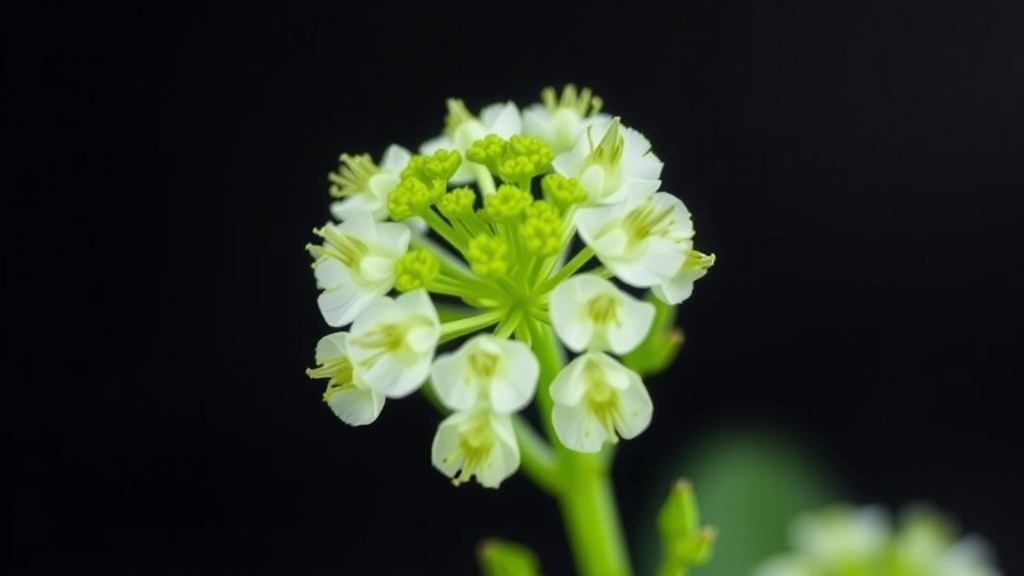
Alfalfa, the queen of forage crops, feeds hundreds of millions of livestock around the world, yet its flowering behavior has long frustrated breeders. When a plant flowers early, it can escape drought and heat, but it often sacrifices biomass; when it flowers late, it produces more stems and leaves but risks running out of season. Now a team of researchers at Lanzhou University, working with colleagues at the National Technology Innovation Center for Prataculture in China, has peeled back one more layer of this agronomic puzzle. In a study published in BMC Plant Biology, they systematically catalogued the FT-INTERACTING PROTEIN (FTIP) family in alfalfa and demonstrated that one member, MsFTIP1, acts as a positive regulator of early flowering. The work, led by Jun Pu and corresponding author Qiang Zhou, offers the first comprehensive portrait of this gene family in the alfalfa genome and pins down a molecular interaction that could reshape how breeders control flowering time in one of the planet’s most important crops.
The story begins with florigen, the mysterious flowering signal that botanists chased for more than seventy years before identifying it as the protein FLOWERING LOCUS T, or FT. FT is manufactured in leaves and travels through the phloem to the shoot apex, where it triggers the genetic cascade that converts vegetative meristems into floral ones. But FT cannot make that journey alone. It needs chaperones and trafficking partners, and among the most important of these are the FT-INTERACTING PROTEINS, members of a broader family called MCTPs, which stands for multiple C2 domain and transmembrane region proteins. These proteins combine lipid-binding C2 domains with transmembrane segments, positioning them at membranes where they can ferry or stabilize cargo. In Arabidopsis, FTIP1 was shown years ago to escort FT from the endoplasmic reticulum toward its destination, and loss of FTIP1 delays flowering. Whether alfalfa, an outcrossing tetraploid relative of Medicago with a much larger and more complex genome, possessed a comparable system was an open question.
To answer it, the team mined the alfalfa genome using the Multi-omics Database of Medicago sativa and related resources, hunting for sequences that resembled known FTIP genes from Arabidopsis and other species. The search yielded 23 distinct MsFTIP genes, a sizable family that reflects the polyploid heritage of cultivated alfalfa. With the gene inventory in hand, the researchers subjected it to the full battery of modern comparative genomics. They computed physicochemical properties of the encoded proteins, including molecular weight, aliphatic index, and grand average of hydropathicity, and built phylogenetic trees that sorted the 23 genes into six clades. They mapped each gene to its chromosomal location, dissected exon-intron architecture, catalogued conserved protein motifs, and modeled protein tertiary structures. Gene duplication analysis revealed how the family expanded, while scans of promoter regions uncovered cis-acting regulatory elements responsive to light, hormones, and stress, hinting that FTIP genes in alfalfa do more than simply relay the flowering signal.
That hint was borne out by expression profiling. The team examined tissue-specific expression patterns across alfalfa organs and then challenged plants with three major abiotic stresses: drought, salinity, and cold. Transcriptional responses varied across the family, with individual MsFTIP genes showing distinct patterns of induction or repression depending on the tissue and the stress imposed. This layered regulation suggests that the FTIP family in alfalfa is not a single-purpose flowering module but a collection of genes whose activities are tuned by developmental stage and environmental conditions. For breeders, that complexity is both a warning and an opportunity: manipulating one family member may affect flowering without disturbing stress responses handled by its relatives, but the redundancy and cross-talk within the family mean that any engineering strategy must be grounded in precise functional data.
Precision is exactly what the team pursued next, focusing on MsFTIP1, the closest alfalfa homolog of Arabidopsis FTIP1. The first question was where the protein resides inside the cell, because localization often reveals function. Subcellular localization assays showed that MsFTIP1 is targeted to the endoplasmic reticulum, the same membrane system where Arabidopsis FTIP1 operates and a logical waystation for a protein involved in moving florigen through the secretory and trafficking pathways. This ER localization, conserved across hundreds of millions of years of evolution separating alfalfa from Arabidopsis, strengthened the hypothesis that MsFTIP1 plays a similar escort role in the flowering pathway of forage legumes.
The decisive test came from moving the gene into a fast, tractable host. When the researchers overexpressed MsFTIP1 in Arabidopsis, the transgenic plants flowered significantly earlier than wild-type controls under long-day conditions. Early flowering was accompanied by a measurable shift in the underlying gene regulatory network. Real-time quantitative PCR revealed that transcript levels of four key flowering-promoting genes were significantly upregulated in the transgenic lines: AtSOC1, the integrator gene that converges multiple flowering pathways; AtAP1, an identity gene that marks the transition of floral meristems; AtFT, the florigen itself; and AtLFY, the master transcription factor that commits tissue to flower formation. Together, these results show that MsFTIP1 does not act as a passive passenger but actively amplifies the flowering program when it is present in excess, positioning it as a genuine positive regulator rather than a neutral structural component.
Of course, overexpression in a heterologous species can sometimes produce artifacts, so the researchers sought direct biochemical evidence that MsFTIP1 and the alfalfa florigen MsFT physically interact in their native context. They deployed three complementary techniques. Yeast two-hybrid assays, which test for protein interaction by reconstituting a transcription factor split across two candidate proteins, gave a positive signal. Bimolecular fluorescence complementation, in which two halves of a fluorescent protein fused to the candidates reassemble only if the proteins meet inside a plant cell, confirmed the interaction in vivo. Finally, luciferase complementation imaging, a sensitive luminescence-based assay widely used in plant molecular biology, provided independent confirmation. Three orthogonal methods converging on the same result leave little doubt: MsFTIP1 binds MsFT directly, recreating in alfalfa the escort partnership first described in Arabidopsis.
Why does this matter beyond the laboratory? Flowering time is a pivotal agronomic trait in alfalfa because it determines forage yield, quality, and environmental adaptability all at once. Alfalfa is grown on tens of millions of hectares worldwide, and its value lies in repeated harvests of vegetative tissue. Delaying flowering extends the productive window and keeps forage digestible, since flowering stems become lignified and less nutritious. Conversely, in short-season or stress-prone environments, the ability to flower and set seed quickly can secure a crop where a late-flowering variety would fail. A gene like MsFTIP1, which sits upstream of the flowering commitment and can be tuned by natural variation or genome editing, gives breeders a handle on this trade-off. Marker-assisted selection could track favorable alleles of MsFTIP1 through breeding populations, while CRISPR-based editing could adjust its expression to match local growing conditions.
The study also carries broader scientific significance. Alfalfa is a tetraploid outcrosser, which makes genetic analysis notoriously difficult; most flowering-time work has been done in diploid model plants such as Arabidopsis and rice. By systematically characterizing an entire gene family in a polyploid forage legume, the Lanzhou team has built a reference framework that other researchers can now use to explore how flowering control scales up from simple models to complex crop genomes. The finding that the FTIP-FT interaction is conserved across such distant species also reinforces a central theme of modern plant biology: the core logic of the florigen transport system is ancient and shared, while the fine-tuning that adapts it to each species’ life history is layered on top through gene family expansion, duplication, and divergent regulation.
The authors note that their findings provide a solid foundation for elucidating the molecular mechanisms underlying flowering-time regulation and for supporting molecular breeding in alfalfa. The work was funded by China’s National Technology Innovation Center for Prataculture, the National Natural Science Foundation of China, Gansu Provincial Science and Technology Major Projects, and the State Key Laboratory of Herbage Improvement and Grassland Agro-ecosystems at Lanzhou University, and it is published open access. The next steps are clear: testing whether modulating MsFTIP1 expression in alfalfa itself shifts flowering time and forage yield under field conditions, and exploring whether other members of the 23-gene family hold complementary or antagonistic roles. If those experiments succeed, the humble escort protein that helps florigen catch its ride could become one of the most valuable tools in the effort to breed alfalfa that flowers exactly when farmers need it to, no sooner and no later.
Subject of Research: FTIP gene family characterization and flowering-time regulation in alfalfa
Article Title: Comprehensive analysis of the alfalfa FTIP family reveals MsFTIP1 as a positive regulator of early flowering
Article References: Pu, J., Wang, M., Li, M., Jia, C., Wang, Z., Liu, Z., & Zhou, Q. (2026). Comprehensive analysis of the alfalfa FTIP family reveals MsFTIP1 as a positive regulator of early flowering. BMC Plant Biology. https://doi.org/10.1186/s12870-026-09988-4
Image Credits: AI Generated
DOI: 10.1186/s12870-026-09988-4
Keywords: alfalfa, FTIP family, MsFTIP1, flowering time, florigen transport, Medicago sativa, MCTP proteins, endoplasmic reticulum, molecular breeding, Arabidopsis overexpression, abiotic stress, plant molecular biology
Cite Scienmag News
Juliet Wilcox. (September 23, 2026). Scientists Discover the Gene Switch That Makes Alfalfa Flower Early. Scienmag. https://scienmag.com/scientists-discover-the-gene-switch-that-makes-alfalfa-flower-early/
Juliet Wilcox. "Scientists Discover the Gene Switch That Makes Alfalfa Flower Early." Scienmag, 23 September 2026, https://scienmag.com/scientists-discover-the-gene-switch-that-makes-alfalfa-flower-early/. Accessed 23 September 2026.
Juliet Wilcox. "Scientists Discover the Gene Switch That Makes Alfalfa Flower Early." Scienmag. September 23, 2026. https://scienmag.com/scientists-discover-the-gene-switch-that-makes-alfalfa-flower-early/


