


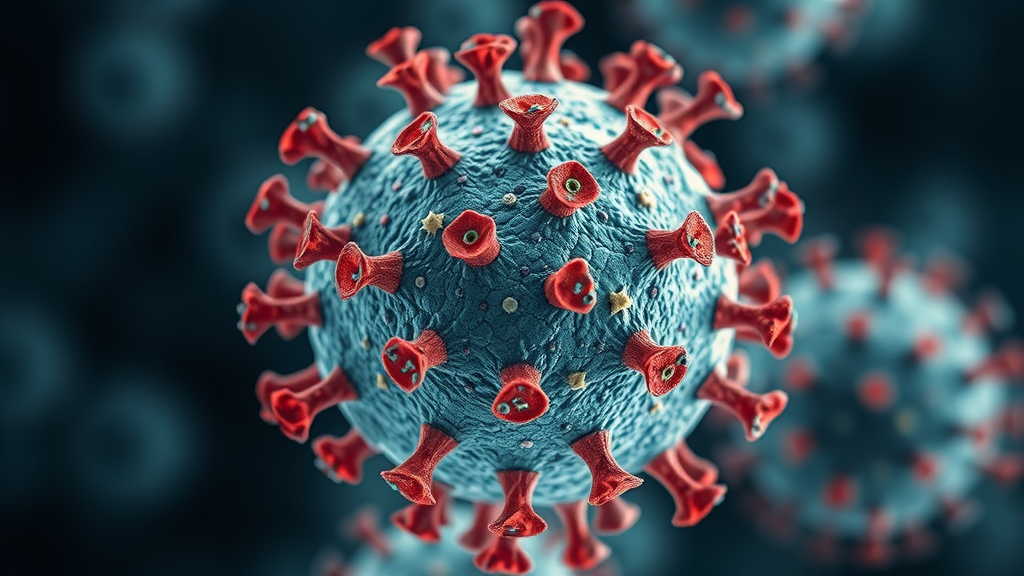
An engineered oncolytic vaccinia virus that displays the interleukin-15 receptor alpha chain on the surface of infected tumor cells has shown striking ability to reshape the tumor microenvironment and drive systemic antitumor immunity in preclinical models, according to a study published in Cancer Immunology, Immunotherapy. The work, led by researchers at Nagoya University’s Cancer Immune Therapy Research Center together with collaborators in Japan and Egypt, addresses one of the central challenges of oncolytic virus therapy: turning a locally injected lytic agent into a vaccine-like stimulus that recruits and sustains the cytotoxic lymphocytes capable of eliminating cancer cells far beyond the injection site.
Oncolytic viruses occupy a distinctive niche in cancer immunotherapy. Unlike checkpoint inhibitors or cytokine drugs, they combine direct tumor killing with in situ immunization, releasing tumor-associated antigens and damage-associated molecular patterns as they replicate within malignant cells. Vaccinia virus has long been considered one of the most attractive platforms for this approach because it replicates efficiently in tumor tissue, carries a large genome that tolerates the insertion of therapeutic transgenes, and has an extensive clinical safety record from its use as a smallpox vaccine. Yet the immune contexture of many tumors, particularly notoriously immunologically cold malignancies such as pancreatic ductal adenocarcinoma, resists this strategy. Tumors are dominated by suppressive cells, including regulatory T cells and M2-like tumor-associated macrophages, and the cytokine signals that would expand cytotoxic lymphocytes are weak or absent.
Interleukin-15 has emerged as one of the most compelling cytokine candidates to fill that gap. Unlike its structural relative interleukin-2, which expands both effector and regulatory T cell populations and can provoke systemic toxicity, IL-15 selectively promotes the activation, survival, and persistence of natural killer cells and CD8-positive T cells. Critically, IL-15 biology depends on trans-presentation: the cytokine must be produced by one cell, bound by the high-affinity interleukin-15 receptor alpha chain on that same cell, and then presented in membrane form to neighboring immune cells expressing the beta and gamma receptor chains. Soluble IL-15 delivered as a drug has struggled clinically because it lacks this spatially restricted, membrane-associated presentation, leading to short half-life and off-target effects. The Nagoya team reasoned that the ideal way to deliver IL-15 trans-presentation would be to force the tumor cells themselves, as they are being lysed by the virus, to display IL-15Rα loaded with IL-15 on their surface.
To achieve this, the researchers exploited an unusual feature of vaccinia virology. Vaccinia virus encodes A56, a fusion regulatory protein that works with its partner K2 to control cell-to-cell spread and superinfection exclusion, and the related A56 extracellular domain had previously been used in fusogenic oncolytic designs. The team engineered a novel virus, designated IL15Rα-VV, in which the extracellular domain of A56 was replaced with the extracellular domain of IL-15Rα, while the virus simultaneously expressed IL-15. The result is a chimeric membrane protein that anchors IL-15Rα to the surface of infected cells through the viral fusion machinery, coupling localized IL-15 trans-presentation directly to the fusogenic oncolysis program of the virus. In essence, every tumor cell the virus infects becomes a display platform for the cytokine-receptor complex that stimulates nearby killer lymphocytes.
In vitro characterization confirmed that the engineering did not compromise the virus’s core fitness. IL15Rα-VV maintained replication kinetics comparable to the parental vaccinia strain while driving robust surface expression of IL-15Rα on infected tumor cells. Infected cultures showed enhanced cell fusion and increased cytotoxicity, indicating that the A56-anchored design preserved, and in some respects amplified, the fusogenic lytic phenotype. These experiments established that the immunomodulatory payload and the oncolytic engine could be integrated without sacrificing either function, a balance that has frustrated many previous attempts to arm oncolytic viruses with cytokines.
The decisive tests came in bilateral subcutaneous syngeneic pancreatic tumor models, a stringent setting that measures not only local tumor control but also the generation of systemic immunity against untreated, anatomically distant lesions. When IL15Rα-VV was injected intratumorally into one tumor, growth of both the injected and the non-injected contralateral tumors was significantly suppressed compared with animals treated with the parental virus or with an IL-15-secreting vaccinia virus lacking the anchored receptor. This abscopal effect is the hallmark of a therapy that has converted tumor lysis into productive immunity, and it outperformed the strategy of simply flooding the tumor with soluble IL-15, validating the trans-presentation hypothesis at the heart of the design.
Deep immunophenotyping of the treated tumors revealed the mechanism. IL15Rα-VV remodeled the tumor microenvironment by increasing infiltration of natural killer cells and activated CD8-positive T cells while simultaneously reducing the populations that normally shield the tumor: regulatory T cells and M2-like macrophages. The shift is significant because it reverses the suppressive myeloid and regulatory architecture that characterizes pancreatic tumors rather than merely adding effector cells to a hostile milieu. The cytokine signal, delivered in membrane-bound form at the site of viral lysis, appears to act locally where it is needed while avoiding the systemic expansion of undesirable populations that has limited systemic IL-15 and IL-2 therapies.
Immune effects extended well beyond the tumor itself. Tumor-draining lymph nodes from treated animals showed expansion of activated, effector, central memory, and progenitor exhausted CD8-positive T cells, along with increased dendritic cells. The expansion of progenitor exhausted T cells, or Tpex populations, is particularly intriguing, as these self-renewing cells are considered the reservoir from which durable antitumor responses can be reactivated. Consistent with this, although PD-L1 expression increased within treated tumors, a predictable consequence of inflammatory cytokine signaling, IL15Rα-VV reduced the overall frequency of exhausted CD8-positive T cells, and the therapy showed enhanced antitumor efficacy when combined with PD-L1 blockade. This positions the virus as a rational partner for checkpoint inhibitors, with the virus generating and replenishing the T cell pool that checkpoint blockade reinvigorates.
The study demonstrates that A56-mediated surface display of IL-15Rα is a viable strategy to couple fusogenic oncolysis with localized IL-15 trans-presentation, amplifying oncolytic virus-mediated antitumor immunity in models of a cancer type that has proven remarkably resistant to immunotherapy. By engineering the virus to commandeer the trans-presentation axis rather than simply secreting the cytokine, the researchers have created a system in which tumor cell death and immune activation are mechanistically linked at the same membrane. The work, funded in part by the Japan Grant-in-Aid for Scientific Research and KM Biologics, and performed under approved animal protocols at Nagoya University, suggests a path toward oncolytic vaccines that not only kill tumors but actively reprogram their immunological surroundings into an environment in which cytotoxic lymphocytes can be primed, expanded, and sustained.
Subject of Research: An A56-anchored IL-15Rα fusogenic oncolytic vaccinia virus engineered to reprogram the tumor microenvironment and enhance antitumor immunity.
Article Title: A56-anchored IL-15Rα arms a fusogenic oncolytic vaccinia virus to reprogram the tumor microenvironment and enhance antitumor immunity
Article References: Aboalela, M. A., Abdelmoneim, M., Orikono, Y., Matsumura, S., Bustos-Villalobos, I., Takido, Y., Muramatsu, Y., Sibal, P. A., Saito, R., & Kasuya, H. (2026). A56-anchored IL-15Rα arms a fusogenic oncolytic vaccinia virus to reprogram the tumor microenvironment and enhance antitumor immunity. Cancer Immunology, Immunotherapy. https://doi.org/10.1007/s00262-026-04558-x
Image Credits: AI Generated
DOI: 10.1007/s00262-026-04558-x
Keywords: oncolytic virus, vaccinia virus, IL-15, IL-15Rα, cancer immunotherapy, pancreatic cancer, tumor microenvironment, CD8 T cells, natural killer cells, PD-L1 blockade, trans-presentation, fusogenic oncolysis
Cite Scienmag News
Kristina Jarvis. (September 22, 2026). Engineered fusogenic vaccinia virus arms IL-15 to reprogram tumors and boost antitumor immunity. Scienmag. https://scienmag.com/engineered-fusogenic-vaccinia-virus-arms-il-15-to-reprogram-tumors-and-boost-antitumor-immunity/
Kristina Jarvis. "Engineered fusogenic vaccinia virus arms IL-15 to reprogram tumors and boost antitumor immunity." Scienmag, 22 September 2026, https://scienmag.com/engineered-fusogenic-vaccinia-virus-arms-il-15-to-reprogram-tumors-and-boost-antitumor-immunity/. Accessed 22 September 2026.
Kristina Jarvis. "Engineered fusogenic vaccinia virus arms IL-15 to reprogram tumors and boost antitumor immunity." Scienmag. September 22, 2026. https://scienmag.com/engineered-fusogenic-vaccinia-virus-arms-il-15-to-reprogram-tumors-and-boost-antitumor-immunity/


