


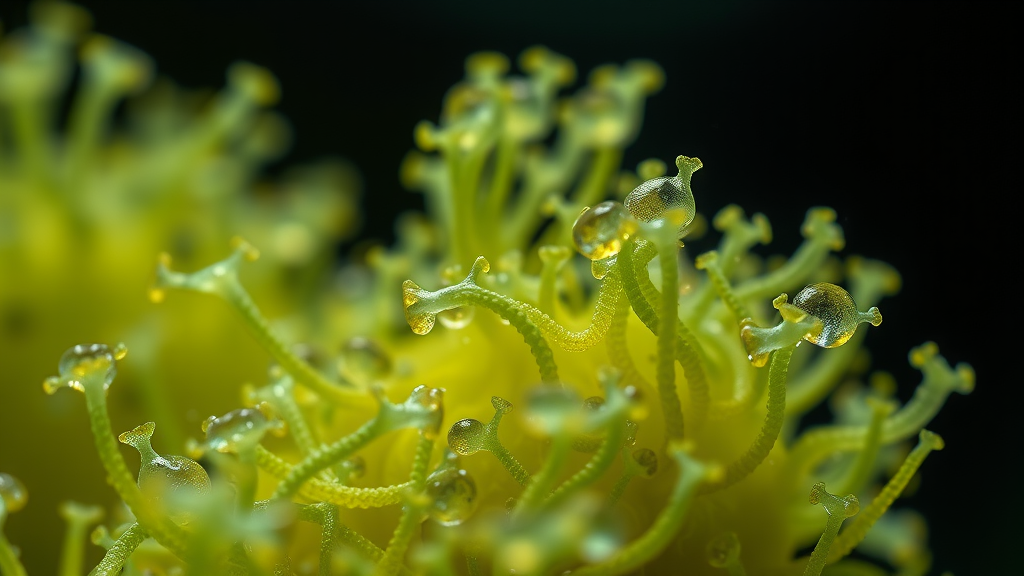
Cyanobacteria are among the most durable photosynthetic organisms on Earth, having colonized nearly every sunlit environment over billions of years. Now, researchers at the University of Turku in Finland have discovered how these microbes manage to stay photosynthetically active for months after being locked inside an artificial solid material, a finding that could transform the emerging field of photosynthetic living materials. The study, published in the journal Biotechnology for Biofuels and Bioproducts, provides the most detailed molecular picture yet of what happens inside cyanobacterial cells when they are entrapped in a hydrogel, and it explains why these engineered living materials behave less like fragile cell cultures and more like robust, self-sustaining biocatalysts.
Photosynthetic living materials are a class of engineered composites in which living photosynthetic microorganisms are embedded within a solid or semi-solid matrix, such as an alginate hydrogel. Unlike conventional biocatalysts that rely on purified enzymes, these materials keep whole cells alive, allowing them to harvest sunlight, fix carbon dioxide, and produce useful chemicals over extended periods. The promise is enormous: solar-powered platforms that generate fuels, commodity chemicals, or biofertilizers with minimal inputs. The practical challenge has been understanding why immobilized cells perform so well. When the model cyanobacterium Synechocystis sp. PCC 6803 is trapped inside thin calcium-alginate films, it can sustain active photosynthesis and chemical production for months, a level of longevity that suspension-grown liquid cultures simply cannot match.
To find out what underpins this resilience, the research team led by Henna Mustila, Elia Marelli, Sergey Kosourov, and Yagut Allahverdiyeva compared the physiological behavior of immobilized cells with that of cells grown in standard liquid suspension over a period of three weeks. The results were striking. The entrapped cyanobacteria maintained a relatively stable photosystem II photochemical efficiency throughout the entire period, even though their biomass accumulation was strongly restricted by the physical confines of the hydrogel. In contrast, the suspension cultures showed a progressive decline in the connectivity of their phycobilisomes, the light-harvesting antenna complexes, and a steady drop in photosystem II photochemical yield as the prolonged cultivation wore on. In other words, the cells trapped in the gel kept their photosynthetic machinery in better working order than their free-floating counterparts.
The real breakthrough came from the molecular level. The team applied comparative label-free proteomics, a technique that quantifies thousands of proteins simultaneously, to map how the entire protein inventory of the cells changed after immobilization. The analysis revealed extensive and time-dependent proteome remodeling. Far from being a passive response to being squeezed into a gel, the adaptation was a coordinated, program-wide reorganization of cellular priorities. Proteins involved in photoprotection, alternative electron sinks, and respiratory terminal oxidases progressively increased in abundance, indicating that the immobilized cells had built up an enhanced capacity to dissipate excess excitation energy and balance their internal redox state, the delicate equilibrium of electron carriers that keeps photosynthesis running smoothly.
This makes physical sense. Inside a thin hydrogel film, cells cannot dilute absorbed light by growing and dividing the way suspension cells can. Light that would be shared among an expanding population instead falls on a fixed number of cells, creating a persistent risk of photodamage to photosystem II, the water-splitting engine of oxygenic photosynthesis. By ramping up photoprotective proteins and alternative electron outlets, the immobilized cells effectively install safety valves that channel excess electrons away from vulnerable reaction centers. The increased abundance of respiratory terminal oxidases suggests the cells were also using respiration as a parallel route to consume surplus reducing power, a strategy cyanobacteria are known to deploy when photosynthetic electron transport outpaces downstream demand.
Just as revealing was what decreased. Ribosomal proteins, molecular chaperones, and subunits of Rubisco, the enzyme that fixes carbon dioxide, all broadly declined in abundance following immobilization. At the same time, the stringent-response regulator SpoT increased. Together, these shifts point to a regulated downshift in growth-related metabolism and a deliberate reallocation of cellular resources toward maintenance rather than multiplication. The stringent response is a well-known bacterial stress program that, when triggered by nutrient limitation or other hardships, suppresses growth machinery and activates survival pathways. In the hydrogel-entrapped cells, this program appears to have been engaged as part of a longevity strategy: by spending less on growth and more on upkeep, the cells preserve their photosynthetic apparatus and extend their functional lifespan.
The proteomic data also captured the consequences of life in a crowded, diffusion-limited space. Proteins belonging to inorganic carbon uptake systems increased in abundance, consistent with the cells working harder to acquire carbon dioxide in an environment where diffusion through the gel matrix limits its supply. Cell-surface proteins and pilus-associated proteins also rose, suggesting acclimation to spatial confinement and to the high local cell density within the hydrogel. Perhaps most intriguingly, toxin–antitoxin modules became more abundant. These genetic systems, which can arrest cell growth under stress, are often associated with biofilm lifestyles and programmed responses to crowding, and their upregulation reinforces the idea that immobilized cyanobacteria enter a state resembling that of cells in a natural microbial mat.
Indeed, the authors conclude that the maintenance-oriented physiological state induced by hydrogel entrapment shares key features with natural cyanobacterial biofilms, the structured surface-associated communities in which these organisms typically live in nature. This biofilm-like character appears to be the secret of the material’s robustness. Rather than fighting the constraints of the gel, the cells embrace them, shifting into a longevity phenotype in which photosynthetic activity is protected even as growth is throttled back. For engineers of living materials, this reframes the hydrogel not merely as a passive scaffold but as an active trigger that programs the cells into a durable, biocatalytically useful state.
The implications reach well beyond basic biology. Long-lived photosynthetic living materials could serve as robust platforms for the solar-driven production of chemicals and fuels, and the new study identifies concrete molecular levers, photoprotection, redox balancing, carbon-concentrating machinery, and growth-maintenance trade-offs, that could be tuned to optimize performance. The work was supported by the European Commission through the Solar to Butanol project and by the Jane and Aatos Erkko Foundation through the PhotoFactory project, reflecting a broader European push to turn artificial photosynthesis concepts into practical technology. As the field of engineered living materials matures, understanding the cellular logic of resilience will be essential for designing materials that remain productive not for days, but for months, and this study provides the blueprint for how cyanobacteria achieve exactly that.
Subject of Research: Proteomic mechanisms of cyanobacterial resilience in hydrogel-based photosynthetic living materials
Article Title: Unravelling the mechanisms of cyanobacterial resilience in photosynthetic living materials
Article References: Mustila, H., Marelli, E., Kosourov, S., & Allahverdiyeva, Y. (2026). Unravelling the mechanisms of cyanobacterial resilience in photosynthetic living materials. Biotechnology for Biofuels and Bioproducts. https://doi.org/10.1186/s13068-026-02823-w
Image Credits: AI Generated
DOI: 10.1186/s13068-026-02823-w
Keywords: cyanobacteria, Synechocystis sp. PCC 6803, photosynthetic living materials, hydrogel, alginate, proteomics, photosystem II, photoprotection, stringent response, biofilm, engineered living materials, immobilized cells
Cite Scienmag News
Drew Townsend. (September 20, 2026). Trapped Cyanobacteria Reveal How Photosynthetic Living Materials Stay Alive for Months. Scienmag. https://scienmag.com/trapped-cyanobacteria-reveal-how-photosynthetic-living-materials-stay-alive-for-months/
Drew Townsend. "Trapped Cyanobacteria Reveal How Photosynthetic Living Materials Stay Alive for Months." Scienmag, 20 September 2026, https://scienmag.com/trapped-cyanobacteria-reveal-how-photosynthetic-living-materials-stay-alive-for-months/. Accessed 20 September 2026.
Drew Townsend. "Trapped Cyanobacteria Reveal How Photosynthetic Living Materials Stay Alive for Months." Scienmag. September 20, 2026. https://scienmag.com/trapped-cyanobacteria-reveal-how-photosynthetic-living-materials-stay-alive-for-months/

