


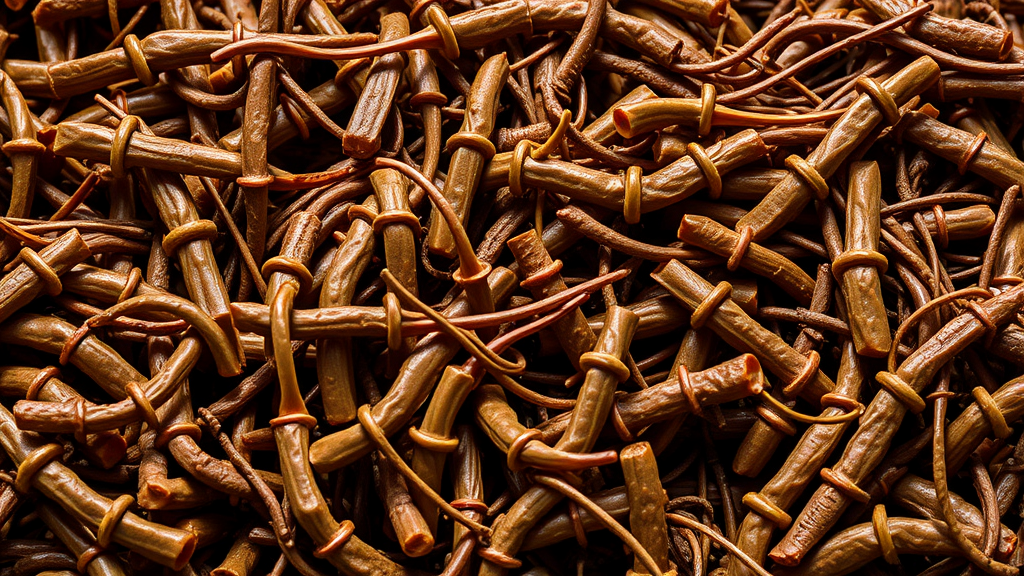
Diabetes has become one of the defining health burdens of the twenty-first century, with the International Diabetes Federation estimating that hundreds of millions of people now live with the disease and that this figure will keep climbing over the coming decades. The most common form, type 2 diabetes, is tightly linked to the way the body handles dietary carbohydrates, and one of the most successful drug strategies against it has been to slow the digestive enzymes that break starch and sugars down into glucose. Now, a team of Moroccan, Turkish and Saudi researchers has turned to an unlikely place for the next generation of such enzyme inhibitors: the rocky shallows of the sea, where a humble brown alga called Cladostephus spongiosus may be hiding chemical weapons against high blood sugar.
In a study published in the journal Plant Biosystems, Youssra Aalilou of Mohammed V University in Rabat and her colleagues report the first comprehensive laboratory and computational evaluation of the antidiabetic potential of C. spongiosus, a branching brown seaweed of the family Cladostephaceae. The work combined classic enzyme inhibition assays with a battery of modern computational tools, including molecular docking, binding interaction analysis, molecular dynamics simulations and ADMET predictions, to ask a deceptively simple question: can this marine organism, and the nine small molecules previously identified in its extracts, meaningfully block the two key enzymes that drive post-meal glucose spikes?
The experimental design followed a logic that medicinal chemists have refined over decades. The researchers prepared five extracts of the alga using solvents of increasing polarity, a technique that separates the plant’s chemical inventory into fractions rich in different classes of compounds, from nonpolar lipids to highly polar phenolics and sugars. Each extract was then tested for its ability to inhibit alpha-glucosidase and alpha-amylase, the two carbohydrate-hydrolyzing enzymes of the human digestive tract whose blockade is the pharmacological basis of widely prescribed antidiabetic drugs such as acarbose. Inhibiting these enzymes delays the conversion of complex carbohydrates into absorbable glucose, flattening the blood sugar curve that follows a meal and easing the chronic metabolic stress that damages blood vessels, nerves and organs in diabetic patients.
The results were striking. Among all five extracts, the ethanol extract emerged as the clear standout, delivering the strongest dual inhibition of both enzymes. In quantitative terms, the ethanol extract inhibited alpha-glucosidase at 4.28 mmol acarbose equivalents per gram of extract, a standard measure expressing potency relative to the clinical drug acarbose. Against alpha-amylase, it recorded 0.54 mmol acarbose equivalents per gram in the iodine assay and, in the more sensitive DNSA colorimetric assay, an IC50 value of just 9.73 micrograms per millilitre, meaning that a very small concentration of the extract was enough to halve the enzyme’s activity. Values in this range, particularly for a crude, unfractionated natural extract, suggest a rich reservoir of inhibitory molecules working in concert.
But crude extracts are chemical black boxes, and the Moroccan-led team wanted to open it. Drawing on nine compounds that their earlier phytochemical work had already identified in C. spongiosus extracts, the researchers ran a full computational workup on each molecule to see which of them could plausibly account for the enzyme inhibition measured in the test tube. Molecular docking was used to computationally fit each compound into the active sites of alpha-glucosidase and alpha-amylase and to estimate binding energies, while binding interaction analysis mapped the specific hydrogen bonds, hydrophobic contacts and other forces holding each ligand in place at the atomic scale.
Docking alone can be misleading, however, because enzymes are not rigid sculptures. To test whether the predicted complexes would survive in a more realistic, dynamic environment, the team turned to molecular dynamics simulations, in which the protein-ligand complexes are allowed to move and flex in a simulated watery solution over time. Compounds whose binding falls apart in such simulations are usually artifacts of static docking; those that remain stably wedged in the active site are far more credible drug leads. In this study, several molecules displayed favorable interactions and stable binding profiles throughout the analyses, with four compounds standing out from the crowd: loliolide, isololiolide, herniarin and a monocrotaline isomer.
These four molecules make an intriguing chemical cast. Loliolide and isololiolide are structurally related carotenoid degradation products, small oxygenated lactones that have attracted growing attention in marine and plant natural products research for antioxidant and pharmacological properties. Herniarin is a simple methoxylated coumarin, a compound class with a long medicinal pedigree, and coumarin derivatives have previously been reported to show antidiabetic activity in other marine and coastal plants. The monocrotaline isomer represents a pyrrolizidine alkaloid scaffold, though the authors note that the toxicology of this class warrants careful attention, which is precisely why the study did not stop at binding predictions.
That attention came in the form of ADMET prediction, a computational screening step that estimates how a candidate molecule would behave in the human body across absorption, distribution, metabolism, excretion and toxicity. Using graph-based pharmacokinetic prediction tools, the researchers assessed whether their top-scoring enzyme inhibitors possessed drug-like properties or carried red flags that would disqualify them from further development. The integration of this pharmacokinetic layer with docking and dynamics data reflects a broader shift in natural products research, where the question is no longer simply whether a compound binds a target, but whether it could ever become a usable medicine.
The broader context makes the findings timely. Marine ecosystems remain dramatically underexplored compared with terrestrial biodiversity, yet seaweeds are already known to produce an extraordinary diversity of bioactive molecules, from phlorotannins and sulfated polysaccharides to carotenoids and terpenes, with reported activities spanning antioxidant, antimicrobial, anti-inflammatory and antihyperglycemic effects. Brown macroalgae in particular have accumulated a growing body of evidence supporting functional food and pharmaceutical applications. C. spongiosus itself has been the subject of seasonal volatile and antioxidant profiling in earlier studies, and the current work builds directly on the same team’s prior phytochemical characterization of the species, completing a pipeline that runs from specimen collection in the marine ecosystem to validated biological application.
For now, the results remain at the preclinical, exploratory stage: enzyme assays in vitro and simulations in silico, not human trials. The authors are careful to frame the work as identifying C. spongiosus as a promising marine source of bioactive compounds with potential applications in antidiabetic drug discovery, rather than as a ready-made therapy. Yet the convergence of strong dual enzyme inhibition in the ethanol extract, a shortlist of compounds with stable predicted binding to both therapeutic targets, and preliminary drug-likeness profiling gives the field exactly what early-stage natural product discovery needs: a prioritized set of molecules and a mechanistic hypothesis worth testing in the wet lab. If follow-up studies confirm that loliolide, isololiolide, herniarin or their algal companions inhibit carbohydrate digestion as potently in living systems as the computations suggest, the modest tufted seaweed clinging to Atlantic and Mediterranean rocks may yet contribute to the global fight against diabetes.
Subject of Research: Antidiabetic activity of the brown alga Cladostephus spongiosus evaluated through in vitro enzyme inhibition and computational molecular analysis
Article Title: First comprehensive in vitro and in silico investigations of the antidiabetic activity of Cladostephus spongiosus (Cladostephaceae): from marine ecosystem to biological application
Article References: Aalilou, Y., Qostal, M., Karfi, W. E., Rossafi, B., Mortada, S., Hassoun, M., Moussa, H., Zengin, G., Ak, G., Ullah, R., Alotaibi, A., Chtita, S., Bouyahya, A., Meddah, B., & Faouzi, M. E. A. (2026). First comprehensive in vitro and in silico investigations of the antidiabetic activity of Cladostephus spongiosus (Cladostephaceae): from marine ecosystem to biological application. Plant Biosystems, 160(5), Article 253. https://doi.org/10.1007/s44473-026-00264-9
Image Credits: AI Generated
DOI: 10.1007/s44473-026-00264-9
Keywords: Cladostephus spongiosus, brown algae, antidiabetic, alpha-glucosidase, alpha-amylase, molecular docking, molecular dynamics, ADMET, loliolide, herniarin, marine natural products, type 2 diabetes
Cite Scienmag News
Alan Morgan. (September 12, 2026). Brown Seaweed From Moroccan Coast Shows Striking Antidiabetic Power in Lab Tests. Scienmag. https://scienmag.com/brown-seaweed-from-moroccan-coast-shows-striking-antidiabetic-power-in-lab-tests/
Alan Morgan. "Brown Seaweed From Moroccan Coast Shows Striking Antidiabetic Power in Lab Tests." Scienmag, 12 September 2026, https://scienmag.com/brown-seaweed-from-moroccan-coast-shows-striking-antidiabetic-power-in-lab-tests/. Accessed 12 September 2026.
Alan Morgan. "Brown Seaweed From Moroccan Coast Shows Striking Antidiabetic Power in Lab Tests." Scienmag. September 12, 2026. https://scienmag.com/brown-seaweed-from-moroccan-coast-shows-striking-antidiabetic-power-in-lab-tests/


