


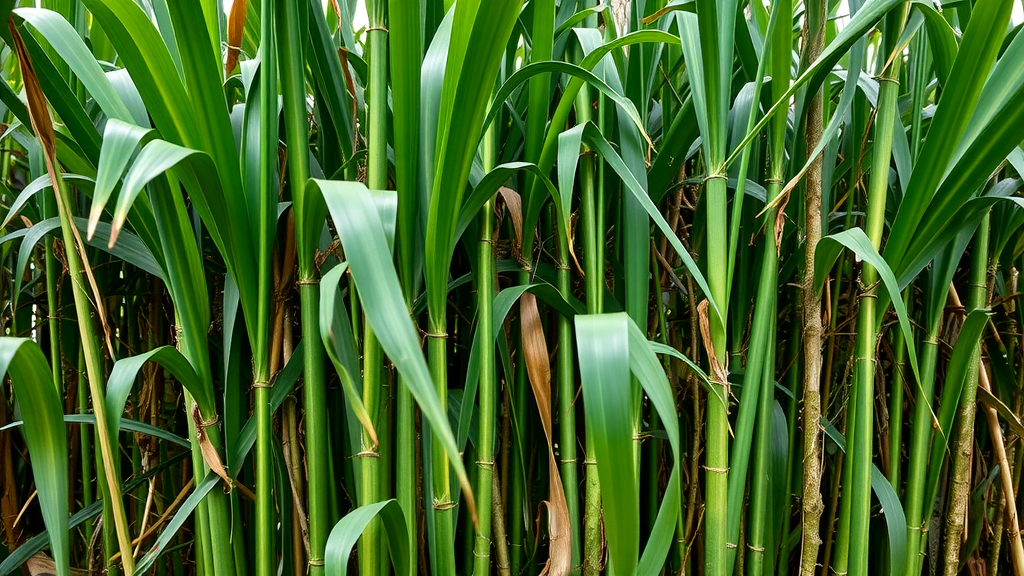
Brazil sits at the heart of the global bioethanol economy, cultivating more than eight million hectares of sugarcane to supply renewable fuel for domestic consumption and export markets. As worldwide demand for low-carbon energy intensifies, researchers face a pressing question: can the world’s largest sugarcane industry keep expanding its productivity while simultaneously protecting the health of the tropical soils beneath its fields? A comprehensive review published in Discover Soil argues that the answer depends largely on how farmers manage soil organic matter, the carbon-rich material that governs fertility, water retention, and microbial life in agricultural land.
Soil organic matter, or SOM, has long been recognized as a fundamental indicator of soil quality because it underpins the physical, chemical, and biological processes that keep agroecosystems functioning. In sugarcane cultivation, however, the same field can behave either as a source of atmospheric carbon dioxide or as a carbon sink, depending on edaphoclimatic conditions and, crucially, on the management choices made by growers. The new review, led by Rose Luiza Moraes Tavares of the Universidade de Rio Verde together with colleagues at the University of São Paulo, synthesizes decades of evidence to identify which practices tip that balance toward sequestration rather than loss.
The single most influential shift documented in the review is the transition from burned cane to green cane harvesting. Under the traditional system, fields are burned to strip leaves from the stalks before manual harvest, sending carbon skyward and leaving the soil exposed. Green cane harvesting uses machines and leaves a thick mulch of straw residues on the surface instead. Compiled data show that unburned sugarcane raises soil carbon by roughly 1.87 megagrams per hectare per year in clayey soils and 1.02 in sandy soils, whereas burned fields accumulate only 0.32 and 0.01 respectively. By comparison, soybean and corn rotations in no-till systems gain about 0.40 megagrams per hectare per year under Cerrado conditions, making residue-bearing sugarcane one of the most effective carbon-sequestering crops in Brazilian agriculture.
The numbers behind this transition are striking. One cited study found that soil carbon stocks under green cane management were 43 percent higher than under burned management, and a synthesis of ten independent studies revealed a median advantage of approximately 20 megagrams of organic carbon in the top ten centimeters of soil where cane was harvested unburned. Modeling of these gains suggests that converting burned to green cane across the roughly 2.4 million hectares of sugarcane grown on Oxisols could sequester on the order of 2.9 teragrams of carbon annually, while the remaining 9.2 percent of the 2022/2023 harvest still cut by hand offers an additional sequestration potential of about 1.14 teragrams per year if fully mechanized.
Quality matters alongside quantity. Burning accelerates the decomposition of labile carbon pools, depleting the physical fractions of SOM that feed soil microbes and drive nutrient cycling. In green cane systems, light and particulate organic fractions increase after successive crop cycles, providing readily available carbon that sustains microbial communities and nutrient turnover. Intriguingly, fields managed under green cane for more than nineteen years show a higher degree of humification, a process that stabilizes carbon in the soil and increases carboxylic and phenolic groups capable of enhancing nutrient acquisition by plants. The review therefore frames green cane not merely as a residue strategy but as a long-term investment in the biochemical architecture of the soil.
Yet the review also delivers a sobering caveat: no amount of surface residue can compensate for what happens when fields are renovated. Sugarcane is replanted every five to six years, and this renewal stage is by far the most damaging operation for soil carbon. Intensive mechanized tillage breaks apart macroaggregates, exposing previously protected organic matter to microorganisms that rapidly mineralize it into carbon dioxide. Research cited in the review shows that conventional soil preparation during field renovation in Oxisols can mineralize approximately 80 percent of the carbon accumulated over an entire crop cycle in just 44 days, with total losses reaching around 3.5 megagrams of carbon per hectare per year as CO2.
The remedy, the authors argue, is to minimize disturbance at replanting. Conventional preparation combining heavy harrowings with subsoiling produces carbon dioxide losses that are 34 percent higher than reduced preparation systems, 39 percent higher than minimum tillage using herbicide and subsoiling, and 40 percent higher than a no-till approach that opens only the planting furrow. Restricting cultivation to the sowing row alone spared an additional 315.4 kilograms of CO2 per hectare over a twelve-day monitoring window compared with broader disturbance. The best results came from pairing minimum tillage with cover crops, which cut daily emissions to 63 kilograms of carbon per hectare compared with 78 kilograms under minimum tillage without ground cover. Emerging technologies push this logic further, including the transplantation of sugarcane seedlings and interrotational strip planting with legumes such as soybeans and peanuts, which fix nitrogen while keeping the soil vegetated and undisturbed between cycles.
A third pillar of carbon-smart management is deciding how much straw to leave on the field. The sugar and ethanol industry increasingly removes mulch to burn for energy or to feed second-generation ethanol production, but indiscriminate removal risks undoing decades of sequestration gains. Experiments show that removing 75 percent of harvest straw reduced soil carbon stocks by 14 percent, while removing half the straw cut stocks by 9 percent. Straw removal also boosted CO2 emissions directly, adding roughly 165 to 253 kilograms per hectare over short periods by stripping away the physical barrier that mulch provides against gas diffusion. Soil texture strongly modulates these outcomes: clay particles bind organic matter through organomineral interactions that protect it from mineralization, so clayey soils can accumulate carbon even with full straw removal, whereas sandy soils suffer steep depletion. The authors conclude that straw removal should be avoided in the sandy tropical regions of Brazil, and they note that the optimal retention rate for most fields remains poorly defined, an open question that also intersects with nitrous oxide emissions and the greenhouse gas balance of straw-derived biofuels.
Beyond the field, the review highlights opportunities to close nutrient loops and cut input costs. By-products of sugar and ethanol production, including vinasse and filter cake, carry substantial fertilizing value: a vinasse application of 150 cubic meters per hectare supplies nitrogen, potassium, and calcium equivalent to conventional fertilization, while filter cake can satisfy crop demand for phosphorus, calcium, and sulfur. Organomineral fertilizers, which blend fast-acting mineral nutrients with slow-release organic sources, further improve efficiency; one study found that 130 kilograms per hectare of organomineral phosphate matched the stalk yield of 160 kilograms per hectare of mineral P2O5, an 18.8 percent saving. Indices such as the carbon management index and the carbon conservation index offer growers and researchers practical tools to monitor whether these strategies are genuinely stabilizing soil carbon over time.
Taken together, the evidence paints a clear roadmap for low-carbon sugarcane: adopt green cane harvesting, minimize tillage at replanting, and maintain permanent soil cover throughout the cycle. Each practice is effective on its own, but the review stresses that only their combination guarantees sustained carbon stocks, because conversion to green cane alone cannot offset the losses inflicted by aggressive field renovation. As Brazil positions sugarcane ethanol as a pillar of the global energy transition, the authors argue that preserving soil organic matter is not merely an environmental courtesy but a strategic move that lowers production costs, shrinks the crop’s carbon footprint, and strengthens the case for biofuels as a genuine replacement for fossil fuels.
Subject of Research: Management practices controlling soil organic matter dynamics and carbon sequestration in Brazilian sugarcane cultivation
Article Title: Management of soil organic matter in sugarcane cultivation in Brazil
Article References: Tavares, R. L. M., de Castro Dias, R., das Dores, V. D. F. A. S., Cruvinel, A. G., Cantão, V. C. G., Boldrin, P. F., & Santos, G. O. (2026). Management of soil organic matter in sugarcane cultivation in Brazil. Discover Soil, 3(1), Article 149. https://doi.org/10.1007/s44378-026-00300-2
Image Credits: AI Generated
DOI: 10.1007/s44378-026-00300-2
Keywords: sugarcane, soil organic matter, carbon sequestration, green cane harvesting, Brazil, no-till, soil carbon stocks, CO2 emissions, straw retention, bioethanol, minimum tillage, soil health
Cite Scienmag News
Alan Morgan. (September 12, 2026). Green Cane Harvesting Emerges as Brazil’s Key Weapon for Soil Carbon. Scienmag. https://scienmag.com/green-cane-harvesting-emerges-as-brazils-key-weapon-for-soil-carbon/
Alan Morgan. "Green Cane Harvesting Emerges as Brazil’s Key Weapon for Soil Carbon." Scienmag, 12 September 2026, https://scienmag.com/green-cane-harvesting-emerges-as-brazils-key-weapon-for-soil-carbon/. Accessed 12 September 2026.
Alan Morgan. "Green Cane Harvesting Emerges as Brazil’s Key Weapon for Soil Carbon." Scienmag. September 12, 2026. https://scienmag.com/green-cane-harvesting-emerges-as-brazils-key-weapon-for-soil-carbon/


