


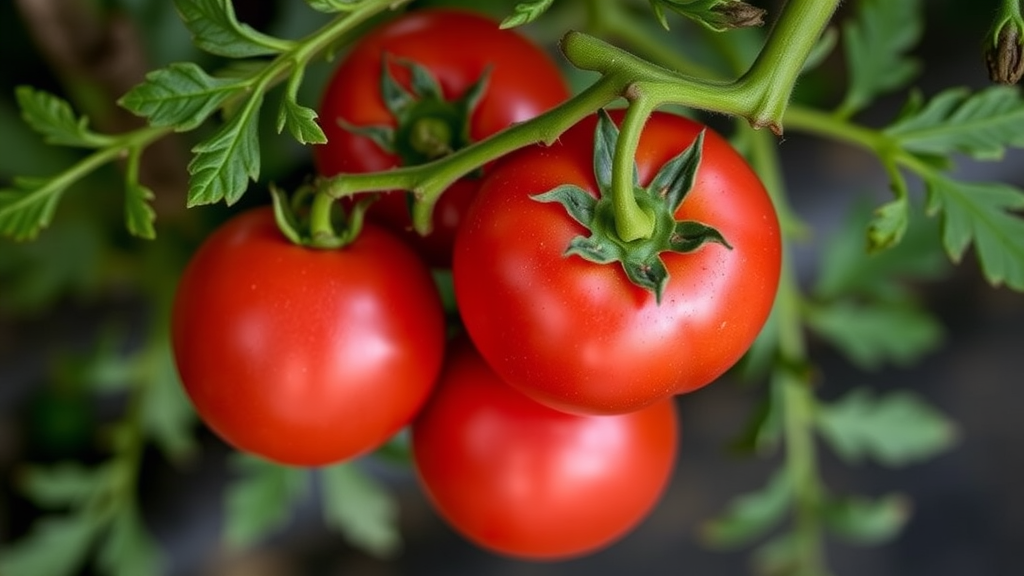
The supermarket tomato has long been accused of tasting like little more than red water, and a new study explains why the genetic instructions governing flavor may have been quietly lost on the road to domestication. Researchers at the Boyce Thompson Institute and Cornell University, working with colleagues at the U.S. Department of Agriculture, have produced one of the most detailed maps to date of how gene regulation diverges between cultivated tomato, Solanum lycopersicum, and its wild relatives. Their findings, published in Genome Biology, show that the regulatory machinery controlling fruit development, nutrition, and flavor is far more complex, and far more context-dependent, than earlier work had suggested.
The team tackled a deceptively simple question: when two tomato species look and taste different, how much of that difference comes from the genes themselves versus the molecular switches that control them? To find out, they exploited a clever property of F1 hybrids. When a cultivated tomato is crossed with a wild relative, every cell contains one chromosome set from each parent. Because the two parental copies of each gene sit side by side in the same cellular environment, exposed to identical transcription factors and signaling molecules, any difference in how strongly the two copies are expressed can be attributed to sequences on or near the gene itself. This phenomenon, known as allele-specific expression, allows scientists to separate cis-regulatory effects, which act locally on DNA elements such as promoters and enhancers, from trans-regulatory effects, which arise from diffusible factors encoded elsewhere in the genome.
The scale of the analysis sets the study apart. Rather than examining a single cross at a single moment, the researchers generated hybrids between cultivated tomato and three wild relatives spanning a gradient of evolutionary distances: Solanum pimpinellifolium, the closest wild ancestor; Solanum neorickii at an intermediate distance; and the more distantly related Solanum pennellii. They then profiled gene expression across three distinct fruit tissues and multiple developmental stages, from early cell division through ripening. To support the work, the team assembled new genome sequences and annotations for the parental lines, ensuring that sequencing reads from each hybrid could be assigned accurately to the maternal or paternal copy of every gene.
The resulting dataset delivers an unambiguous headline: cis-regulatory divergence is the dominant force shaping expression differences between tomato species. Across tissues, developmental stages, and levels of relatedness, local regulatory changes consistently explained a larger share of parental expression differences than trans effects. This makes evolutionary sense. Cis-regulatory mutations tend to affect a single gene or small set of genes, allowing fine-tuned changes without catastrophic collateral damage, whereas mutations in trans-acting factors can perturb hundreds of downstream targets simultaneously and are more likely to be deleterious. Natural selection, the authors argue, has repeatedly favored regulatory variants that adjust individual genes without breaking the broader network.
Yet the study also shows how much this simple dichotomy oversimplifies reality. The majority of cis-regulatory effects proved to be tissue-specific, stage-specific, or both. A gene whose wild allele dominates expression in the fruit pericarp may show no such bias in the placenta, or at a different point in ripening. The researchers catalogued genes classified as cis-only, cis-plus-trans, and cis-by-trans, where a cis difference is itself modulated by trans-regulation depending on context. This last category is particularly intriguing, because it implies that local regulatory variants do not act in isolation; their effects can be amplified, suppressed, or reversed depending on the trans environment supplied by the other parent and by the developmental program of the tissue.
Evolutionary distance emerged as a second organizing principle. In hybrids with S. pimpinellifolium, the closest relative, regulatory divergence between the two alleles was comparatively modest and trans effects retained a noticeable share of the action. As the wild parent became more distantly related, cis-regulatory contributions grew progressively larger. The inheritance patterns of expression levels shifted in parallel, indicating that the architecture of regulatory variation is not static across the tomato clade but accumulates and reorganizes over evolutionary time. For crop scientists, this is an encouraging message: the more exotic the germplasm, the greater the reservoir of independent regulatory variants available for breeding.
The practical payoff lies in the pathways the team traced. They found extensive cis-regulatory divergence in genes governing carotenoid biosynthesis, the source of lycopene and beta-carotene that give ripe tomatoes their color and contribute provitamin A; in the phenylpropanoid and flavonoid pathways, which produce antioxidants linked to human health; and in steroidal glycoalkaloid metabolism, which influences bitterness and toxicity in wild fruit. Genes controlling sugar accumulation, a decisive factor in perceived sweetness, and volatile organic compounds, which shape aroma, likewise showed strong allele-specific patterns. In several cases, the wild allele carried regulatory variants that boosted expression of biosynthetic genes in specific tissues or stages, suggesting concrete targets for reintroducing flavor and nutrition into elite cultivars without disrupting yield-related traits.
Among the individual genes highlighted are SlKLUH, a cytochrome P450 involved in fruit growth whose cis-regulation proved strikingly tissue-specific, and ZDS, a key enzyme in the carotenoid pathway. The promoter analysis added a mechanistic layer: a substantial number of differently regulated genes carried structural variations of 30 base pairs or more in the two-kilobase region upstream of the gene, pointing to insertions, deletions, and rearrangements as frequent sources of cis-regulatory novelty. Such structural variants are often invisible to standard SNP-based studies, which may explain why genome-wide association work has undersold the regulatory component of fruit quality variation.
For breeders, the message is that wild tomato relatives are not merely a source of disease-resistance genes but a deep library of regulatory alleles that can tune when, where, and how strongly the fruit’s metabolic genes operate. Because cis-regulatory variants tend to be narrowly scoped, introgressing a wild promoter behind a domesticated gene could, in principle, enhance a specific flavor compound without dragging along the yield penalties that have historically made wild germplasm unattractive. The study’s high-resolution map of which genes are cis-regulated, in which tissue, and at which stage, offers a direct roadmap for such precision breeding, whether through marker-assisted selection or genome editing of regulatory regions.
The work also carries a broader evolutionary lesson about the domestication bottleneck. Decades of selection for size, uniformity, and shelf life narrowed the genetic diversity of cultivated tomato, and with it the diversity of regulatory variants shaping flavor chemistry. By quantifying how much regulatory divergence separates the crop from its wild cousins, and by showing that this divergence concentrates in exactly the pathways that define fruit quality, the study reframes wild relatives as the key to restoring what domestication left behind. As sequencing costs fall and allele-specific analysis becomes routine in crop genomics, the tomato map is likely to become a template for dissecting regulatory variation in other fruits, from pepper to melon, where the difference between a memorable harvest and a forgettable one often comes down to the switches, not the genes.
Subject of Research: Allele-specific gene expression and regulatory divergence between cultivated and wild tomato species
Article Title: Allele-specific expression reveals complex regulatory divergence underlying fruit phenotypic differences between cultivated and wild tomato species
Article References: Zhao, J., Nicolas, P., Xu, Y., Vrebalov, J., Giovannoni, J., Fei, Z., & Catala, C. (2026). Allele-specific expression reveals complex regulatory divergence underlying fruit phenotypic differences between cultivated and wild tomato species. Genome Biology. https://doi.org/10.1186/s13059-026-04279-5
Image Credits: AI Generated
DOI: 10.1186/s13059-026-04279-5
Keywords: tomato, allele-specific expression, cis-regulatory variation, wild relatives, fruit development, flavor, carotenoids, flavonoids, F1 hybrids, gene regulation, Solanum pennellii, crop breeding
Cite Scienmag News
Juliet Wilcox. (September 12, 2026). Wild Tomatoes Reveal Hidden Genetic Switches Behind Fruit Flavor and Nutrition. Scienmag. https://scienmag.com/wild-tomatoes-reveal-hidden-genetic-switches-behind-fruit-flavor-and-nutrition/
Juliet Wilcox. "Wild Tomatoes Reveal Hidden Genetic Switches Behind Fruit Flavor and Nutrition." Scienmag, 12 September 2026, https://scienmag.com/wild-tomatoes-reveal-hidden-genetic-switches-behind-fruit-flavor-and-nutrition/. Accessed 12 September 2026.
Juliet Wilcox. "Wild Tomatoes Reveal Hidden Genetic Switches Behind Fruit Flavor and Nutrition." Scienmag. September 12, 2026. https://scienmag.com/wild-tomatoes-reveal-hidden-genetic-switches-behind-fruit-flavor-and-nutrition/


