


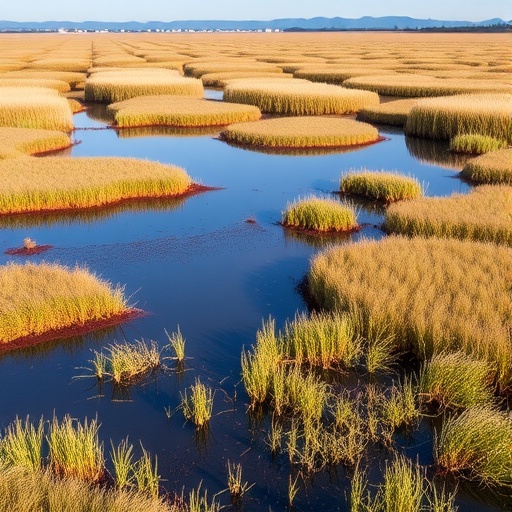
Peatlands have long been celebrated as some of the planet’s most formidable carbon vaults, locking away vast quantities of organic matter over millennia. But new research published in Nature Communications is rewriting how scientists understand the fragile relationship between these waterlogged ecosystems and a warming climate. An international research team led by the University of Münster has assembled and analyzed the largest dataset ever compiled on the carbon dioxide budgets of northern peatlands, and its central finding carries a stark warning: the water level in a peatland does not merely influence how much CO₂ it emits — it determines how sensitive that peatland is to temperature in the first place. The lower the water table drops, the more violently CO₂ emissions surge in response to rising temperatures. Conversely, keeping water levels high can act as a natural buffer, damping the thermal trigger that would otherwise accelerate carbon loss.
The implications extend far beyond the academic. Peatlands cover roughly three percent of the global land surface yet store an estimated 30 percent of the world’s soil carbon, an extraordinary concentration built up over thousands of years in conditions where waterlogged, oxygen-poor soils slow decomposition to a near standstill. Dead plant material accumulates faster than it can be broken down, layer upon layer, forming the deep peat deposits that define these ecosystems. But when peatlands are drained — for agriculture, forestry, grazing or peat extraction — air floods into the formerly anaerobic peat column. Oxygen becomes abundant, microbial communities awaken from their slow-motion metabolism, and the ancient organic matter begins to decompose rapidly, releasing CO₂ into the atmosphere. Drained peatlands, despite their small footprint, are now recognized among the largest terrestrial sources of carbon dioxide emissions in many temperate countries.
Nicolas Behrens, first author of the study and a researcher at the Institute of Landscape Ecology at the University of Münster, emphasizes that the traditional way of thinking about peatland carbon dynamics has been incomplete. “Water level has long been recognised as an important factor controlling the CO₂ balance of peatlands,” he explains. “Our analyses show, however, that its importance cannot be considered independently of temperature.” In other words, water table depth and temperature are not two separate dials controlling peatland carbon losses — they are locked in a dynamic interplay, one that amplifies or moderates the other depending on the state of the ecosystem. In a warming world, this interaction may be the single most important variable determining whether peatlands continue to function as carbon sinks or collapse into carbon sources.
The study rests on an unprecedented foundation of observational data. The research team compiled measurements from 276 site-years — a unit referring to one year of continuous monitoring at a single location — spanning 114 peatlands across temperate and boreal regions of the Northern Hemisphere. The sites included in the analysis stretch across Germany, Estonia, France, the United Kingdom and North America, providing a geographically diverse portrait of northern peatland behavior. Crucially, the dataset was not limited to pristine ecosystems. The researchers examined natural fens and bogs alongside croplands, grasslands and former peat extraction sites, capturing the full spectrum of human influence on these landscapes. This breadth matters because most of the world’s peatlands have been altered by human activity in one way or another, and any realistic assessment of future emissions must account for that reality.
Analyzing such a dataset posed a methodological challenge. The relationships between CO₂ fluxes, water table depth and temperature are strongly non-linear, meaning that the effect of a one-centimeter drop in water level depends on where the water table already sits, and the effect of warming depends on both the season and the prevailing hydrology. Additional confounders — vegetation composition, solar radiation, land-use history — further complicate any simple statistical treatment. To cut through this complexity, the team turned to explainable machine learning, a class of algorithms designed to reveal patterns in data without imposing predefined mathematical relationships. This approach allowed the interactions between annual CO₂ budgets, water table depth and temperature to emerge organically from the measurements themselves, offering a degree of objectivity that traditional regression-based studies of peatland emissions have often struggled to achieve.
The annual-scale analysis produced a strikingly clear picture of where the greatest gains from rewetting lie. CO₂ emissions decline most dramatically when water tables are raised from very low levels — specifically, to less than 60 to 75 centimeters below the peatland surface. Below that threshold, even modest rises in the water table yield substantial reductions in carbon losses. To minimize CO₂ emissions as far as possible, the study identifies water tables at 20 centimeters below the surface or higher as the target — a level at which the peat remains saturated enough to suppress aerobic decomposition almost entirely. But the annual budgets also revealed a second, more ominous pattern: at deep water tables, CO₂ emissions increase considerably more under warmer conditions. The annual data, in other words, hinted at an interaction between water level and temperature that averaged-out yearly numbers could not fully resolve.
To interrogate that interaction directly, the team turned to a second dataset of higher temporal resolution: 113 site-years with daily CO₂ flux measurements. Daily data capture something annual averages never can — the way a peatland responds, hour by hour and day by day, to fluctuations in temperature across the seasons. The result was the study’s most consequential finding. “Using the daily data, we were able to show for the first time across many peatland sites that higher water tables reduce the effect of high temperatures on CO₂ emissions,” Behrens says. When the water table sits high, warm days do not trigger proportionally large pulses of CO₂; the saturated peat is essentially insulated against thermal stimulation of decomposition. When the water table is low, by contrast, the influence of temperature intensifies sharply — each warm spell extracts a larger toll of carbon from the exposed peat. The daily-scale analysis thus independently confirmed, at a completely different level of observation, what the annual budgets had already suggested.
Taken together, the findings provide a crucial piece of the puzzle in understanding carbon–climate feedbacks — the loops through which climate change alters natural processes that, in turn, modify greenhouse gas emissions and further shape the climate. Northern peatlands contain enormous stores of carbon that have been accumulating since the last ice age. If warming accelerates decomposition in these systems, the released CO₂ will add to atmospheric warming, which in turn accelerates decomposition further — a positive feedback loop with potentially global consequences. The new study shows that the strength of this feedback is not fixed: it depends on hydrology. Wet peatlands are resilient to warming; drained ones are exquisitely vulnerable to it. As climate change progressively alters temperature regimes across boreal and temperate latitudes, the processes within peatlands will shift accordingly, and those shifts will feed back into the global carbon cycle.
For conservation policy, the message is unusually direct. Rewetting drained peatlands — raising water tables through blocked drainage ditches, re-saturation of extraction sites and conversion of drained agricultural land back to wet conditions — has long been championed as a climate mitigation strategy. This study adds urgency to that effort, demonstrating that rewetting is not merely a static reduction in emissions but a dynamic defense against warming itself. As temperatures continue to climb, a high water table becomes progressively more valuable, slowing the temperature-driven increase in CO₂ emissions that would otherwise grip drained peatlands. In effect, restoring hydrology builds in a buffer that grows more important with every increment of warming.
The researchers are careful to note the boundaries of their work. The study concentrated exclusively on carbon dioxide; a complete climate balance of peatlands must also account for other greenhouse gases, notably methane and nitrous oxide, whose emissions can change in complex — and sometimes counterintuitive — ways following rewetting. Wet conditions favor methane-producing microbes, meaning that some rewetted peatlands may emit more methane even as their CO₂ losses fall, a trade-off that land managers and policymakers must weigh carefully. Still, the central conclusion stands unshaken: across the largest peatland CO₂ dataset yet assembled, water level emerges not as one factor among many, but as the master variable that determines how fiercely warming will tax these ecosystems. In the race to slow climate change, the humble water table may prove to be one of humanity’s most powerful levers.
Cite Scienmag News
Sloane Callahan. (September 10, 2026). Warming threat to peatlands hinges on water levels. Scienmag. https://scienmag.com/warming-threat-to-peatlands-hinges-on-water-levels/
Sloane Callahan. "Warming threat to peatlands hinges on water levels." Scienmag, 10 September 2026, https://scienmag.com/warming-threat-to-peatlands-hinges-on-water-levels/. Accessed 10 September 2026.
Sloane Callahan. "Warming threat to peatlands hinges on water levels." Scienmag. September 10, 2026. https://scienmag.com/warming-threat-to-peatlands-hinges-on-water-levels/


