


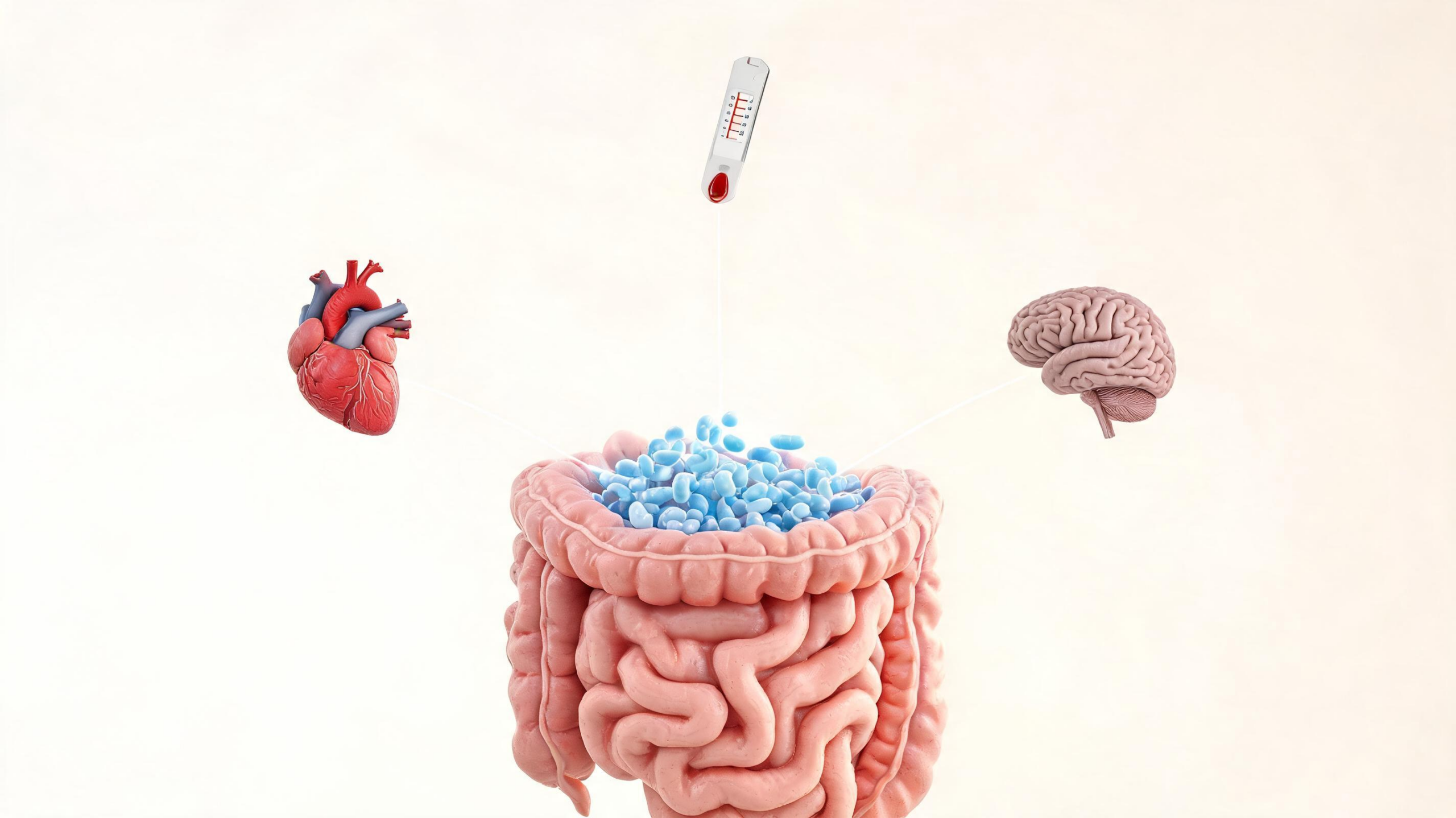
Deep inside the human intestine lives an ecosystem so vast that its genetic repertoire dwarfs our own genome by roughly an order of magnitude. More than one hundred trillion microbes, spanning bacteria, archaea, fungi and viruses, occupy the gastrointestinal tract, and a sweeping new review published in Discover Biotechnology argues that this community, often described as a virtual organ, is not a passive passenger but an active regulator of human physiology with direct consequences for metabolic, neurodegenerative, cardiovascular and gastrointestinal disease. The synthesis, led by Deepak Joshi and Komal Chauhan of the National Institute of Food Technology Entrepreneurship and Management in India together with colleagues, consolidates recent meta-analyses and clinical studies into a unified framework of gut-organ axes and the therapeutic strategies that could exploit them.
The scale of the microbial contribution is difficult to overstate. The intestinal microbiota contains a gene pool approximately 150 times larger than the human genome, dominated by four major phyla: Bacteroides, Firmicutes, Proteobacteria and Actinomycetes. The ratio of Firmicutes to Bacteroidetes has emerged as a recurring biomarker of microbial imbalance, or dysbiosis, across conditions ranging from obesity to hypertension. In health, the community operates in eubiosis, a balanced state in which microbes signal to host cells, train the immune system, protect against pathogens and regulate nutrient metabolism. When that balance collapses, the review finds, the consequences ripple far beyond the gut wall.
Technically, the microbiota’s influence flows through a small set of chemically well-defined metabolites. Fermentation of undigested carbohydrates by saccharolytic bacteria such as Bifidobacteria, Bacteroides, Faecalibacterium and Roseburia yields the short-chain fatty acids acetate, propionate and butyrate. These molecules bind G-protein-coupled receptors including GPR41, GPR43 and GPR109A on enteroendocrine and immune cells, triggering cAMP/PKA signaling that drives secretion of the satiety hormones GLP-1 and PYY, and inhibiting histone deacetylases to promote anti-inflammatory regulatory T cells. Bile acids, deconjugated in the colon by organisms such as Bacteroides intestinalis, signal through the nuclear receptor FXR and the membrane receptor TGR5 to regulate lipid metabolism and glucose homeostasis. Meanwhile, microbial metabolism of choline, carnitine and betaine generates trimethylamine, which the liver converts to trimethylamine N-oxide, or TMAO, a compound now firmly linked to cardiovascular risk.
The cardiovascular findings are among the most striking. Hypertensive patients show significant decreases in microbial diversity and richness and a markedly elevated Firmicutes-to-Bacteroidetes ratio, and a meta-analysis of eighteen observational studies found blood TMAO concentrations associated with hypertension risk in a dose-dependent manner. Mechanistically, TMAO activates the PERK unfolded-protein response in endothelial cells, provoking NF-κB-mediated inflammation and vascular dysfunction, while in macrophages it drives foam cell formation through CD36 upregulation. Animal experiments reinforce causality: transplanting stool from hypertensive patients into germ-free mice raises blood pressure, and antibiotic-mediated restoration of the Bacteroidetes-to-Firmicutes ratio relieves hypertension in rats. Microbial hydrogen sulfide adds another layer, since deficiency of this vasorelaxant gas precedes the onset of high blood pressure in spontaneously hypertensive rats.
Atherosclerosis tells a parallel story. Bacterial DNA has been recovered from atherosclerotic plaques, indicating that microbes or their products can reach the vessel wall, and a metagenome-wide association study found Enterobacter aerogenes significantly enriched in patients with atherosclerosis. Dysbiosis increases intestinal permeability, allowing lipopolysaccharide to enter the circulation and fuel vascular inflammation. Elevated TMAO accelerates macrophage-to-foam-cell conversion, impairs endothelial function and promotes platelet reactivity and thrombosis, while a second microbial metabolite, phenylacetylglutamine, enhances clotting through adrenergic G-protein-coupled receptors. Counterbalancing these harmful pathways, bile acids activate FXR to suppress inflammatory cytokine expression in monocytes and macrophages, and short-chain fatty acids promote vasorelaxation through cAMP-dependent signaling in the vascular endothelium.
The gut-brain axis occupies perhaps the most provocative territory in the review. In Parkinson’s disease, patients consistently show depletion of butyrate-producing genera such as Prevotella, Faecalibacterium and Butyricicella alongside expansions of Bifidobacteria and Enterococcus. Reduced short-chain fatty acid and ghrelin signaling appears to promote alpha-synuclein aggregation and overactivation of microglia, the brain’s resident immune cells. In a landmark germ-free mouse experiment, fecal microbiota transplanted from Parkinson’s patients worsened alpha-synuclein-driven motor deficits more than transplants from healthy donors, providing some of the strongest causal evidence that gut microbes can shape neurodegeneration. Alzheimer’s disease follows a similar logic: dysbiosis elevates pro-inflammatory taxa such as Escherichia and Shigella, and accumulation of microbial-derived phenylalanine and isoleucine expands pro-inflammatory Th1 cells that inflame the central nervous system.
Experimental interventions in Alzheimer’s models are particularly encouraging. APPPS1 mice raised germ-free show markedly reduced beta-amyloid deposition and microglial activation compared with conventionally raised animals, and transferring healthy microbiota into Alzheimer’s model mice improves amyloid and tau pathology, cognitive performance and glial reactivity. The prebiotic R13 has been shown to restrain amyloid aggregation in the gastrointestinal tract by modulating the C/EBPβ-AEP pathway, while the drug sodium oligomannate, or GV-971, remodels gut flora to prevent peripheral amino acid buildup and reduce neuroinflammation. The authors caution, however, that most human studies in Parkinson’s and Alzheimer’s are cross-sectional, confounded by medication such as levodopa, and marked by inconsistent findings across cohorts, so longitudinal and standardized studies remain essential.
Metabolic disease occupies the largest share of the evidence. In obesity, the microbiota of affected individuals shows reduced diversity with losses of Akkermansia muciniphila, Bacteroides and Faecalibacterium prausnitzii, and germ-free mice receiving obese-donor microbiota gain more fat than those receiving lean-donor communities. Short-chain fatty acids counter obesity through two routes: stimulating GLP-1 and PYY release to suppress appetite, and upregulating thermogenic and lipid-oxidation proteins including PPARγ, PGC1α, UCP1 and CPT-1. In diabetes, both type 1 and type 2 forms are associated with diminished microbial diversity, and microbiota-derived metabolites such as lipopolysaccharide and flagellin disrupt epithelial tight junctions and fuel insulin resistance. Non-alcoholic fatty liver disease completes the picture through the gut-liver axis, in which increased intestinal permeability permits endotoxin and even microbially produced endogenous ethanol to reach the liver, while butyrate activates the AMPK pathway to curb hepatic lipogenesis.
On the gastrointestinal front, inflammatory bowel disease features a characteristic collapse of Firmicutes and expansion of Proteobacteria, with fungal overgrowth also documented in Crohn’s disease, and transfer of dysbiotic microbes into germ-free mice reproduces colitis. In colorectal cancer, organisms such as Peptostreptococcus anaerobius and Fusobacterium nucleatum activate oncogenic signaling and suppress anti-tumor immunity, while microbial gallic acid can even flip mutant p53 between tumor-suppressive and cancer-promoting behavior depending on gut location. The review closes with a therapeutic roadmap: personalized probiotics guided by metagenomic sequencing, polyphenol- and fiber-rich diets to boost short-chain fatty acid production, narrow-spectrum antimicrobials that spare beneficial taxa, and fecal microbiota transplantation, which already cures recurrent Clostridium difficile infection and is being explored for obesity, inflammatory bowel disease and metabolic syndrome. The authors argue that integrating bioinformatics, organoid models and artificial intelligence will be the key to translating this microbial science from correlation into clinical practice.
Beyond the disease-specific findings, the review underscores how malleable the gut ecosystem is across a human lifetime. Composition shifts from birth through aging, and population studies consistently identify diet, geography, systemic illness and pharmaceutical exposure as dominant determinants of which taxa flourish. Antibiotic overuse emerges as a particular concern, since broad-spectrum agents can destabilize the eubiotic equilibrium and predispose the host to systemic disease, whereas a nutritious diet rich in fermentable substrates sustains communities that benefit the host.
The metabolic versatility of the resident microbes is central to this story. Colon-dwelling organisms preferentially consume carbohydrates that escape digestion in the upper tract, and when those substrates run short, bacteria switch to alternative energy sources that generate potentially harmful metabolites. This substrate-dependence explains why dietary pattern, not merely caloric intake, shapes the chemical signals reaching host tissues. The archaeon Methanobrevibacter smithii illustrates the ecosystem’s complexity: by converting hydrogen produced through bacterial fermentation into methane, it fine-tunes the fermentation environment in ways that influence overall energy harvest.
Microbes also participate in processing compounds the host cannot handle alone, including xenobiotics and drugs, a capacity with direct pharmacological implications. The review notes that microbial enzymes can alter drug metabolism, which may partly explain inter-individual variation in therapeutic response and adverse effects, an area the authors suggest deserves deeper integration into personalized medicine.
Methodologically, the field has had to overcome substantial obstacles. Early estimates of intestinal species richness were undercounts, driven by the difficulty of culturing many obligate anaerobes outside the body. Molecular and metagenomic approaches have since revealed the true diversity, and the authors argue that combining bioinformatics with organoid systems and machine learning will be essential to move from associative observations toward mechanistic, predictive models of microbe-host interaction.
On translation, the review strikes a measured tone. Fecal microbiota transplantation already stands as the clearest clinical success, effectively curing recurrent Clostridium difficile infection, while narrower applications for metabolic syndrome and inflammatory bowel disease remain under investigation. Personalized probiotics selected through sequencing, prebiotic fibers that feed beneficial saccharolytic taxa, polyphenol-rich diets, and narrow-spectrum antimicrobials designed to spare commensals together form a therapeutic toolkit that the authors believe could eventually shift clinical practice from treating dysbiosis after it appears toward maintaining eubiosis preventively, provided that rigorous longitudinal human studies validate the causal pathways suggested by animal work.
Subject of Research: Roles of the human gut microbiota and its metabolites in metabolic, neurodegenerative, cardiovascular and gastrointestinal diseases
Article Title: Roles of human gut microbiota in metabolic, neurodegenerative, cardiovascular and gastrointestinal diseases
Article References: Joshi, D., Chauhan, K., Oberoi, H. S., Kumar, D., & Taneja, N. K. (2026). Roles of human gut microbiota in metabolic, neurodegenerative, cardiovascular and gastrointestinal diseases. Discover Biotechnology, 3(1), Article 8. https://doi.org/10.1007/s44340-026-00053-2
Image Credits: AI Generated
DOI: 10.1007/s44340-026-00053-2
Keywords: gut microbiota, dysbiosis, short-chain fatty acids, TMAO, gut-brain axis, Parkinson's disease, Alzheimer's disease, hypertension, atherosclerosis, obesity, diabetes, fecal microbiota transplantation
Cite Scienmag News
Cassandra Pierce. (September 10, 2026). Gut Microbes Emerge as Central Players in Diabetes, Heart and Brain Disease. Scienmag. https://scienmag.com/gut-microbes-emerge-as-central-players-in-diabetes-heart-and-brain-disease/
Cassandra Pierce. "Gut Microbes Emerge as Central Players in Diabetes, Heart and Brain Disease." Scienmag, 10 September 2026, https://scienmag.com/gut-microbes-emerge-as-central-players-in-diabetes-heart-and-brain-disease/. Accessed 10 September 2026.
Cassandra Pierce. "Gut Microbes Emerge as Central Players in Diabetes, Heart and Brain Disease." Scienmag. September 10, 2026. https://scienmag.com/gut-microbes-emerge-as-central-players-in-diabetes-heart-and-brain-disease/


