


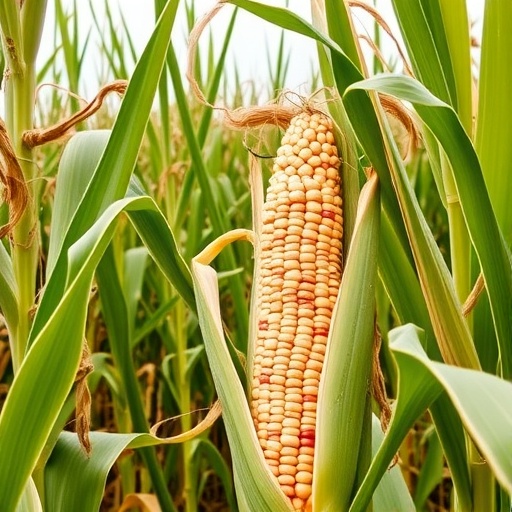
Maize feeds the world. It is the backbone of global food, feed and industrial systems, and its cultivation has expanded so dramatically that production has climbed nearly six-fold over the past six decades. Yet this extraordinary agricultural success has come with an environmental price tag that can no longer be ignored. Reactive nitrogen losses from maize fields have risen by a magnitude similar to the yield gains themselves, polluting waterways, degrading soils and pumping greenhouse gases into the atmosphere. A new study published in Science Bulletin argues that the next chapter of maize improvement must be written with two pens at once: one that raises yields and another that slashes environmental costs. The research, led by Xiangyuan Wan and Xun Wei of the University of Science and Technology Beijing, with collaborators from China Agricultural University, Zhejiang University, Wageningen University & Research and the International Maize and Wheat Improvement Center, offers the most comprehensive assessment to date of how “green and efficient” maize varieties could reshape global agriculture in alignment with the United Nations Sustainable Development Goals.
The premise of the study is deceptively simple but carries profound implications. Breeding higher-yielding maize, the authors contend, is no longer sufficient on its own. The crop must simultaneously become more efficient in its use of nutrients and more resilient to the mounting pressures of climate change, resource scarcity and the pollution associated with intensive fertilizer application. To translate this vision into a concrete breeding agenda, the research team classified 48 green-and-efficient maize traits into four functional categories: biotic stress resistance, abiotic stress tolerance, ideal plant morphology and architecture, and efficient nutrient use. These traits span a remarkable biological range, from insect resistance and drought and heat tolerance to nitrogen use efficiency and the compact plant architecture that allows farmers to plant at higher densities without sacrificing productivity. By grouping traits in this way, the researchers created a framework that breeders, geneticists and policymakers can use to prioritize which combinations of characteristics will deliver the greatest combined benefit for food production and environmental protection.
The genetic groundwork for this framework came from an ambitious data integration effort. The team compiled 27,516 quantitative trait nucleotides and 3,272 quantitative trait loci from across the published literature and condensed them into 691 QTN clusters and 386 QTL clusters. When they mapped these clusters against the four trait categories, they identified 293 common genomic regions shared across traits. Among 524 previously reported genes associated with green-and-efficient traits, 227 fell within just 98 of these common clusters. The authors interpret these 98 regions as priority genomic hotspots: tractable entry points for fine mapping, gene editing, multi-omics profiling and molecular design breeding. In practical terms, this means that instead of chasing thousands of scattered genetic signals, breeders now have a curated shortlist of genomic neighborhoods where a single intervention could plausibly improve multiple desirable traits at once. It is exactly the kind of roadmap that multi-trait crop improvement has historically lacked, and it could dramatically accelerate the pace at which laboratory discoveries become field-ready varieties.
To understand how much of this potential has already been realized, the researchers compiled a global inventory of 539 maize varieties that carry one or more green-and-efficient traits. The picture that emerged was revealing. Most of these varieties were developed through hybrid breeding or genetic modification, and the current portfolio is heavily dominated by traits that are technically straightforward to deliver, such as insect resistance and herbicide tolerance. More complex characteristics, including nitrogen use efficiency, cold tolerance and salt tolerance, remain conspicuously underrepresented. This imbalance matters because the traits that are hardest to breed are often the ones with the greatest environmental payoff. Nitrogen use efficiency in particular sits at the heart of the sustainability challenge: a maize plant that produces more grain per unit of absorbed nitrogen directly reduces the fertilizer burden that farmers must apply, and by extension the nitrogen that escapes into rivers, aquifers and the atmosphere.
Quantifying the real-world performance of existing varieties required a different analytical tool. The team conducted a meta-analysis of 1,709 field observations drawn from 96 studies, and the results were encouraging with an important caveat. Green-and-efficient maize varieties increased yield by 10.1 percent overall, rising to 12.7 percent after trim-and-fill adjustment for potential publication bias. The magnitude of the yield benefit varied by continent, breeding technology and trait type, with varieties that combined insect resistance and drought tolerance showing particularly large gains in the compiled studies. The nitrogen findings, however, told a more nuanced story. On the positive side, the improved varieties boosted nitrogen utilization efficiency, the conversion of absorbed nitrogen into grain yield, by 16.7 percent. On the cautionary side, nitrogen uptake efficiency, the ability of roots to acquire nitrogen from the soil, declined by 13 percent in the available dataset. The authors emphasize that this decline highlights a central breeding challenge: improving yield and aboveground nitrogen use without weakening the root-based nitrogen acquisition that ultimately determines how much fertilizer a crop actually needs.
The most striking numbers in the study come from its forward-looking global projections. To estimate future potential, the researchers applied random forest models to 561,359 gridded soil and climate observations spanning the world’s maize-growing regions. Under a full-adoption scenario for ideal green-and-efficient varieties, the models projected an 18.1 percent increase in global maize yield, equivalent to 145.78 teragrams of additional grain per year, alongside a 26.6 percent reduction in reactive nitrogen losses, equivalent to 1.49 teragrams less reactive nitrogen released annually. These figures represent an upper bound on biological potential, the ceiling of what genetically improved maize could achieve under ideal conditions. When the modelled gains are scaled down to realistic near-term adoption levels in regions with low current efficiency, the benchmark becomes roughly a 9 percent yield increase and a 13 percent reduction in reactive nitrogen losses. Even this more conservative scenario would translate into millions of additional tonnes of grain and a substantial dent in agriculture’s nitrogen footprint, making the case for investment in these varieties hard to dismiss.
Yet between the genomic hotspots and the global projections lies a formidable implementation gap, which the authors dissect into three stages. First, research has not yet produced commercial varieties that reliably combine three or more green-and-efficient traits, meaning that the most valuable genetic packages remain aspirational rather than available. Second, many varieties that have been reported in the scientific literature have never reached commercial production, and this translation failure is most severe precisely in the regions where the expected benefits would be highest. Third, even deployed varieties only achieve their full value when paired with appropriate agronomic conditions, including suitable fertilization regimes, planting densities, pest control strategies and market access. A drought-tolerant, nitrogen-efficient hybrid planted without adequate soil management or a functioning seed supply chain will underperform its genetic potential, and the study makes clear that these systemic barriers are as consequential as the biology itself.
The path forward, according to the authors, demands coordinated action across genetics, breeding, regulation, seed systems and crop management. Emerging technologies could play a decisive role in assembling the beneficial allele combinations that single-trait breeding has struggled to deliver. AI-based genomic selection can sift through vast genetic datasets to predict which allele combinations will perform best across environments. Gene editing offers precision tools for tailoring the genomic hotspots identified in the study, while synthetic biology and multi-environment field trials can ensure that laboratory designs survive contact with real-world conditions. But technology alone will not close the gap. The researchers argue that policy interventions and market mechanisms are equally essential to ensure that improved varieties actually reach farmers in high-need regions, where the dual goals of food security and environmental protection hang in the balance.
The timing of this analysis could hardly be more significant. Global agriculture faces the converging pressures of a growing population, a changing climate and the urgent need to reduce the nutrient pollution that has pushed planetary nitrogen cycles far beyond safe operating limits. Maize, as the world’s most widely produced cereal, sits at the epicenter of this challenge, and the study’s finding that yield and sustainability goals can be pursued simultaneously, rather than traded off against each other, offers a genuinely hopeful message. The six-decade history of maize improvement proved that breeding can transform a crop; the next six decades, the authors suggest, must prove that it can do so while healing rather than straining the environment. Whether the 98 genomic hotspots, 539 existing varieties and teragrams of avoided nitrogen pollution described in this study become reality will depend on choices made now in laboratories, regulatory agencies, seed companies and farm fields around the world.
News Publication Date: 3-Sep-2026
Web References: Not provided
References: Wan, X., & Wei, X., et al. (2026). Green and efficient maize varieties synergize global yield and nitrogen sustainability. Science Bulletin. https://doi.org/10.1016/j.scib.2026.08.082
Cite Scienmag News
Alan Morgan. (September 4, 2026). Efficient maize varieties could boost global yields and cut nitrogen losses. Scienmag. https://scienmag.com/efficient-maize-varieties-could-boost-global-yields-and-cut-nitrogen-losses/
Alan Morgan. "Efficient maize varieties could boost global yields and cut nitrogen losses." Scienmag, 4 September 2026, https://scienmag.com/efficient-maize-varieties-could-boost-global-yields-and-cut-nitrogen-losses/. Accessed 4 September 2026.
Alan Morgan. "Efficient maize varieties could boost global yields and cut nitrogen losses." Scienmag. September 4, 2026. https://scienmag.com/efficient-maize-varieties-could-boost-global-yields-and-cut-nitrogen-losses/


