

Monday, August 31, 2026
Science
No Result
View All Result
  • Login
  • HOME
  • SCIENCE NEWS
  • CONTACT US
  • HOME
  • SCIENCE NEWS
  • CONTACT US
No Result
View All Result
Scienmag
No Result
View All Result
Home Science News Marine

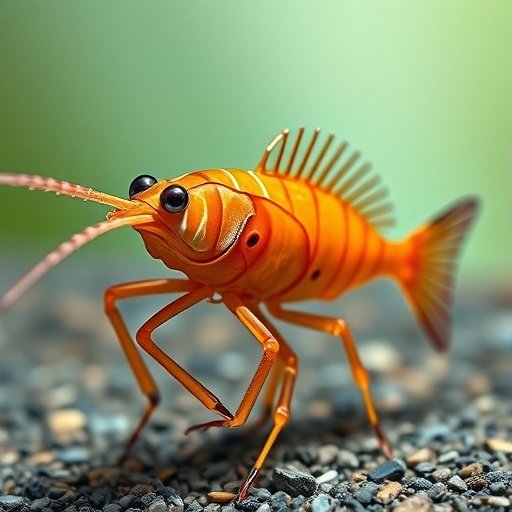
Fish-prawn hybrid observed walking backward for the first time

August 31, 2026
in Marine
Violet Maxwell
By Violet Maxwell Scienmag Editorial Profile - Natural Hazards
Reading Time: 4 mins read
0
Fish-prawn hybrid observed walking backward for the first time

Fish-prawn hybrid observed walking backward for the first time

65
SHARES
587
VIEWS
Share on FacebookShare on Twitter
ADVERTISEMENT

StackRSS Canonical Source Context

Original Article Title: Fish-prawn hybrid observed walking backward for the first time

Journal or Source Feed: Eurekalert | Marine Science

Original Publication Date: Not provided

Canonical Source URL:

Canonical DOI: Not provided

Context Rule: These fields identify the source article. DOIs inside the bibliography identify cited works and must not replace the canonical DOI above.

News Release
27-Aug-2026

Fish-prawn hybrid observed walking backward for the first time

Peer-Reviewed Publication
Ocean-Land-Atmosphere Research (OLAR)


Walking Behavior in Peristediid Fishes in the South China Sea
video: This video documents the distinctive benthic [deep-sea] behaviors of three peristediid (armored searobin) fishes observed in the South China Sea: Scalicus engyceros, Paraheminodus murrayi and Peristedion liorhynchus.

view more 
Credit: Kedong Yin

The deep ocean is one of the most inhospitable places on Earth. However, many species have managed to survive in the deep sea, often with specialized body structures and behaviors. Recent advances in deep-sea diving vehicle technology (e.g. HOVs, ROVs) have allowed scientists to peer into the deep ocean, making in situ observations of live deep-sea organisms in their natural habitat. Recently, a team of researchers from Sun Yat-sen University (SYSU) and the Southern Marine Science and Engineering Guangdong Laboratory (Zhuhai) leveraged these technologies to film deep-sea creatures in action across three areas of the northern South China Sea.


The team published their paper, “Walking Fish,” on July 30 in the journal Ocean-Land-Atmosphere Research.


“[Our] study delivers a paradigm-shifting revelation: the deep-sea fish Scalicus engyceros, a representative of fishes characterized by highly specialized free pectoral-fin rays, is among the few fish species known to walk. Commonly known as the armored searobin, this extraordinary creature boasts a striking shrimp-fish hybrid body appearance, earning it the nickname ‘fish-prawn hybrid’ in U.S. local media,” said Han Tian, primary author and a doctoral researcher in School of Marine Sciences at Sun Yat-sen University.


The team’s filmed observation confirmed the speculation that searobins used their free pectoral-fin rays for walking. Searobins were first described by Albert Günther back in 1872, but no one predicted the fish could walk both sideways and backward, a movement that has never been observed in other fishes.


“Another unique trait is its outward-extending barbels, which looks like a farmer’s rake. The structure is awkward for moving around, but it allows the searobin to sense and probe potential prey in seafloor sediment or even dig into the surface sediment for efficient foraging. Meanwhile, the creature retains the pectoral fins, which have evolved into flat, round plates, improving balance during walking and swimming, while its shrimp-like fin rays and tail enable explosive, jerky shrimp-style leaps when threatened,” said Tian.


Another impressive feature is the searobin’s large eyes. The organism could not see the approaching vehicle, but it did roll its eyes at the vehicle’s light beam. This suggests that the searobin’s eyes have retained some sensitivity to light, which may reflect some light history during its life cycles. The three live armored searobin (peristediid) fish Scalicus engyceros, Paraheminodus murrayi and Peristedion liorhynchus were also observed in different locations in the South China Sea, which raises the hypothesis of local specialization forces in action.


“Deep sea life remains mysterious today with so many unknowns. Modern deep-sea diving vehicles allow not only discovery of new species but also add a new in situ, functional dimension to the study of species based solely on the morphology of preserved specimens. By observing deep sea animals alive in their surrounding environment, we can gain insight into the adaptation and evolution of the species. These walking fish harbor far more novel behavioral and evolutionary adaptations than previously assumed. By further exploring the co-evolution of the fish’s unique rake-shaped appendages, walking locomotion and deep-sea foraging strategies, our team aims to establish a new framework for understanding benthic [deep-sea] fish adaptive evolution. Ultimately, this research will reshape scientific perceptions of deep-sea biodiversity and reveal how extreme marine environments drive the emergence of one-of-a-kind biological structures and behaviors unseen in any other aquatic organism on Earth,” said Tian.


Wei Xie, Mingting Li and Kedong Yin from the School of Marine Sciences and the Guangdong Provincial Key Laboratory of Marine Resources and Coastal Engineering at Sun Yat-sen University, and the Southern Marine Science and Engineering Guangdong Laboratory in Zhuhai, China also contributed to this research.


Journal

Ocean-Land-Atmosphere Research

DOI

10.34133/olar.0172

Method of Research

Observational study

Article Title

Walking Fish ​

Article Publication Date

30-Jul-2026

COI Statement

No conflicts of interest to declare.

Disclaimer: AAAS and EurekAlert! are not responsible for the accuracy of news releases posted to EurekAlert! by contributing institutions or for the use of any information through the EurekAlert system.


Subject of Research: Marine

Subject of Research: Marine

Article Title: Fish-prawn hybrid observed walking backward for the first time

Article References: Original research article

Image Credits: AI Generated

DOI: Not provided

Keywords: backward walking in aquatic hybrids, crustacean-fish hybrid behavior, first observation of hybrid movement, fish-prawn hybrid behavior, fish-prawn hybrid locomotion, hybrid aquatic organism research, hybrid marine animal movement, marine biology case studies, marine hybrid species discovery, marine science breakthroughs, marine species hybridization, unusual movement in marine hybrids

Cite Scienmag News

Violet Maxwell. (August 31, 2026). Fish-prawn hybrid observed walking backward for the first time. Scienmag. https://scienmag.com/fish-prawn-hybrid-observed-walking-backward-for-the-first-time/

Violet Maxwell. "Fish-prawn hybrid observed walking backward for the first time." Scienmag, 31 August 2026, https://scienmag.com/fish-prawn-hybrid-observed-walking-backward-for-the-first-time/. Accessed 31 August 2026.

Violet Maxwell. "Fish-prawn hybrid observed walking backward for the first time." Scienmag. August 31, 2026. https://scienmag.com/fish-prawn-hybrid-observed-walking-backward-for-the-first-time/

Tags: aquatic hybrid adaptationbackward walking behaviorbackward walking in aquatic hybridscross-species hybridization in marine lifecrustacean-fish hybrid behaviorfirst documented hybrid walking behaviorfirst observation of hybrid movementfish-prawn hybridfish-prawn hybrid behaviorfish-prawn hybrid locomotionfish-prawn hybrid observationhybrid aquatic organism researchhybrid aquatic specieshybrid marine animal movementhybrid organism locomotionmarine biology case studiesmarine biology discoverymarine hybrid animalsmarine hybrid species discoverymarine science breakthroughsmarine science researchmarine species hybridizationunusual locomotion in aquatic hybridsunusual movement in marine hybrids
Share26Tweet16
Previous Post

Visualisation of magnetic field-induced nanoparticle clusters and mechanical property changes in a breast phantom for inductive moderate hyperthermia

Next Post

Methylation puts parasites in motion

Related Posts

Making climate governance actionable: a corpus-based analysis of institutionalizing climate change in tuna fisheries governance
Marine

Making climate governance actionable: a corpus-based analysis of institutionalizing climate change in tuna fisheries governance

August 31, 2026
Federal research chair program brings two global scholars to UVic
Marine

Federal research chair program brings two global scholars to UVic

August 29, 2026
Climate-smart marine planning framework designed to support biodiversity goals
Marine

Climate-smart marine planning framework designed to support biodiversity goals

August 29, 2026
Heat-tolerant corals may face greater disease risk, study finds
Marine

Heat-tolerant corals may face greater disease risk, study finds

August 28, 2026
Expanding Marine Social Sciences and Humanities into the Deep Ocean
Marine

Expanding Marine Social Sciences and Humanities into the Deep Ocean

August 28, 2026
First-ever bycatch recording offers crucial insights into marine mammal behavior
Marine

First-ever bycatch recording offers crucial insights into marine mammal behavior

August 26, 2026
Next Post
Methylation puts parasites in motion

Methylation puts parasites in motion

  • Mothers who receive childcare support from maternal grandparents show more optimized

    Mothers who receive childcare support from maternal grandparents show more parental warmth, finds NTU Singapore study

    27656 shares
    Share 11059 Tweet 6912
  • University of Seville Breaks 120-Year-Old Mystery, Revises a Key Einstein Concept

    1061 shares
    Share 424 Tweet 265
  • Bee body mass, pathogens and local climate influence heat tolerance

    682 shares
    Share 273 Tweet 171
  • Researchers record first-ever images and data of a shark experiencing a boat strike

    546 shares
    Share 218 Tweet 137
  • Groundbreaking Clinical Trial Reveals Lubiprostone Enhances Kidney Function

    531 shares
    Share 212 Tweet 133
Science

Embark on a thrilling journey of discovery with Scienmag.com—your ultimate source for cutting-edge breakthroughs. Immerse yourself in a world where curiosity knows no limits and tomorrow’s possibilities become today’s reality!

RECENT NEWS

  • Methylation puts parasites in motion
  • Fish-prawn hybrid observed walking backward for the first time
  • Visualisation of magnetic field-induced nanoparticle clusters and mechanical property changes in a breast phantom for inductive moderate hyperthermia
  • Differential nodal topology in resting-state networks as a potential imaging marker for adolescent bipolar and depressive disorders

Categories

  • Agriculture
  • Anthropology
  • Archaeology
  • Athmospheric
  • Biology
  • Biotechnology
  • Blog
  • Bussines
  • Cancer
  • Chemistry
  • Climate
  • Earth Science
  • Editorial Policy
  • Marine
  • Mathematics
  • Medicine
  • Pediatry
  • Policy
  • Psychology & Psychiatry
  • Science Education
  • Social Science
  • Space
  • Technology and Engineering

Subscribe to Blog via Email

Enter your email address to subscribe to this blog and receive notifications of new posts by email.

Join 5,150 other subscribers

© 2025 Scienmag - Science Magazine

Welcome Back!

Login to your account below

Forgotten Password?

Retrieve your password

Please enter your username or email address to reset your password.

Log In
No Result
View All Result
  • HOME
  • SCIENCE NEWS
  • CONTACT US

© 2025 Scienmag - Science Magazine

Discover more from Science

Subscribe now to keep reading and get access to the full archive.

Continue reading