

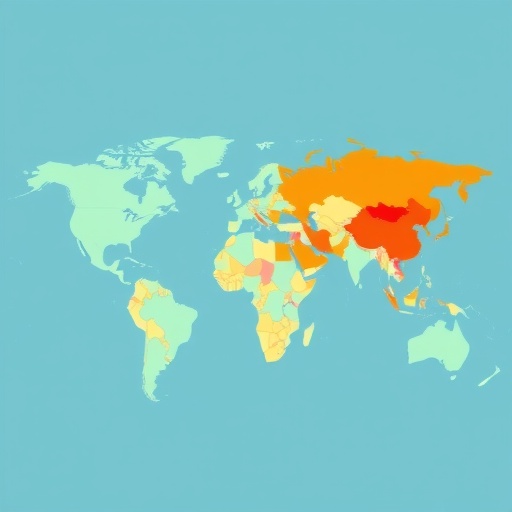
A sweeping analysis of nearly 400,000 teenagers across 52 countries has found that the strongest predictors of globally responsible behavior are not students’ science scores, but their attitudes toward global issues and their confidence that they can do something about them. The study, based on data from the 2018 Programme for International Student Assessment (PISA), suggests that knowing more science does not automatically translate into choosing ethical products, reducing household energy use, following international affairs or joining campaigns for environmental and social causes. Instead, the psychological steps between knowledge and action—especially intention, self-efficacy and social attitudes—appear to be far more important. The findings offer an unexpected challenge to the assumption that scientific literacy alone will prepare young people to respond to climate change, inequality, cultural conflict and other problems that cross national borders.
Global competence is an increasingly important educational goal because today’s major challenges rarely remain confined to one community. The concept includes the capacity to examine local, global and intercultural issues, understand perspectives different from one’s own, interact respectfully across cultures and take action for sustainable development. In practical terms, it can involve recognizing the social consequences of climate change, supporting equal rights, questioning misinformation, staying informed about world events or making consumption choices based on ethical and environmental considerations. The OECD introduced global competence as an innovative domain in PISA 2018, asking fifteen-year-old students about their knowledge, beliefs, attitudes, confidence and reported behavior. Yet international assessments have indicated that students do not consistently turn awareness of global problems into concrete action.
To investigate why, Tamara Kastorff and colleagues combined country-level analyses of PISA 2018 data using a meta-analytic path-modeling approach. The researchers analyzed responses from 399,321 students in 52 participating countries, applying the sampling and replicate weights required by PISA’s complex survey design. They estimated relationships separately within each country and then synthesized the standardized regression coefficients using random-effects models. This approach allowed the team to identify patterns that were broadly shared internationally while also measuring how much the strength of those relationships varied from country to country. The study was guided by the theory of planned behavior, a framework from social psychology proposing that behavior is most immediately preceded by intention, while intention is shaped by attitudes, perceived social expectations and perceived control over the behavior.
The results showed that several attitudes were consistently associated with stronger intentions to behave in globally engaged ways. Awareness of global issues had a small but statistically significant relationship with intention, with a pooled standardized coefficient of 0.07. Awareness of intercultural communication produced a stronger association of 0.15, while interest in learning about other cultures was linked to an effect of 0.11. These coefficients are not percentages and do not mean that a particular fraction of students will act; they represent the expected change in intention, measured in standard-deviation units, associated with a one-standard-deviation difference in a predictor. In other words, the effects were modest, but they appeared across a large and diverse international sample. The researchers also found that students who believed immigrants should have the same rights as themselves showed a comparatively strong association with behavioral intention, with a pooled coefficient of 0.29.
Students’ sense of social understanding and personal capability produced a more complicated pattern. Perspective-taking—the ability to consider situations from another person’s point of view—was positively related to intention, although the average association was very small, at 0.02. Cognitive flexibility, defined as the ability to adapt thinking when facing difficult or unfamiliar situations, showed a similarly modest positive relationship of 0.03. The most consistent capability-related predictor was self-efficacy regarding global issues: students who felt more able to understand or engage with global challenges were more likely to report intentions to act, with an average coefficient of 0.08. This finding fits a central idea in the theory of planned behavior: even when people approve of an action, they may be less likely to intend to perform it if they believe it is too difficult, ineffective or beyond their control.
One result stood out because it ran against the researchers’ expectations. Scientific literacy did not significantly predict behavioral intention across the 52 countries. The pooled coefficient was −0.0009, with a 95 percent confidence interval ranging from −0.0021 to 0.0001, a result statistically indistinguishable from zero. In PISA, scientific literacy is not simply the ability to recall facts. Students solve real-world problems requiring them to explain phenomena scientifically, evaluate or design investigations, and interpret data and evidence. The 2018 assessment included 115 items organized into 34 thematic units, and the analysis incorporated ten “plausible values” for each student’s science performance to account for measurement uncertainty. Despite this sophisticated measure of scientific reasoning, higher performance was not linked to stronger intentions to engage in global competence behavior.
The finding does not mean that science education is irrelevant. Scientific literacy can help people interpret evidence, distinguish reliable claims from misinformation and understand the mechanisms behind environmental or public-health risks. During the COVID-19 pandemic, for example, science knowledge and trust in medicine were associated with preventive behavior in earlier research. But the new analysis suggests that general performance on a broad science test may be too distant from the decisions measured by the global competence questionnaire. Knowing how to interpret a graph about ecosystems is not identical to deciding to reduce energy use at home; understanding climate mechanisms does not automatically create the motivation, social support or confidence needed to change consumption. Researchers have long described this as the “knowledge-action gap,” in which factual knowledge is necessary for informed choices but insufficient on its own.
Intentions, by contrast, were positively associated with every category of reported behavior examined in the study. Students with stronger global-mindedness—treated in the model as an intention-related construct—were more likely to say that they reduced energy consumption at home, selected products for ethical or environmental reasons and participated in environmental-protection activities. The pooled coefficients ranged from 0.06 to 0.08 for these behaviors. Global-mindedness was also linked to keeping informed about world events through social media, regularly reading websites about international social issues, signing environmental or social petitions online, participating in activities promoting gender equality and boycotting products or companies for political, ethical or environmental reasons. The average associations ranged from 0.04 to 0.09, indicating small but consistent relationships across the countries studied.
However, the researchers caution that these findings should not be interpreted as proof that attitudes or intentions cause behavior. PISA data are cross-sectional, meaning that students’ science performance, beliefs, intentions and reported actions were measured at approximately the same period. Such data can reveal associations but cannot establish whether a particular classroom experience created an intention or whether an intention produced later behavior. The behavior measures were also self-reported, making them vulnerable to memory errors, differences in interpretation and social-desirability bias. Some questionnaire items may now reflect an outdated media environment, particularly those concerning social media and access to international news. In addition, global competence is a broad construct measured here through a limited set of individual items, so the results may not capture every form of civic, intercultural or sustainability-related engagement.
The international comparisons nevertheless revealed that context matters. More than 90 percent of the between-country variability in several intention-behavior associations was attributed to differences between countries rather than sampling noise within them. Moderator analyses showed that the links between intention and reported global competence behavior were generally stronger in countries with higher Human Development Index and Environmental Performance Index scores. The HDI combines indicators of life expectancy, education and income, while the EPI summarizes national environmental performance across areas such as air quality, water resources, biodiversity, climate change and environmental health. These relationships do not show that national prosperity or environmental policy directly causes students to act more globally responsibly, but they suggest that opportunities, institutions and social conditions may influence whether intentions can become feasible actions. For schools, the message is clear: teaching facts about global problems matters, but education may have greater impact when it also builds positive attitudes, intercultural openness and the confidence to act, while giving students realistic opportunities to participate in meaningful solutions.
Cite this news
SCIENMAG. (August 27, 2026). PISA 2018 Across 52 Countries Links Scientific Literacy to Students’ Global Competence. https://scienmag.com/pisa-2018-across-52-countries-links-scientific-literacy-to-students-global-competence/
SCIENMAG. "PISA 2018 Across 52 Countries Links Scientific Literacy to Students’ Global Competence." Scienmag, 27 August 2026, https://scienmag.com/pisa-2018-across-52-countries-links-scientific-literacy-to-students-global-competence/. Accessed 27 August 2026.
SCIENMAG. "PISA 2018 Across 52 Countries Links Scientific Literacy to Students’ Global Competence." Scienmag. August 27, 2026. https://scienmag.com/pisa-2018-across-52-countries-links-scientific-literacy-to-students-global-competence/


