


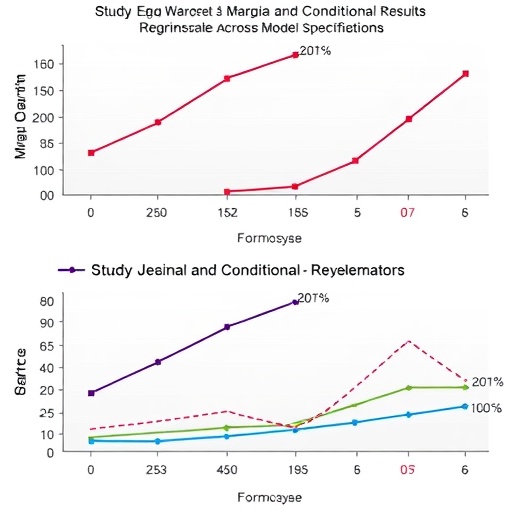
Large-scale educational assessments may have found a powerful statistical ally in an unlikely place: stability. A new study by Leslie Rutkowski and David Rutkowski reports that the achievement distributions produced by conditioning models remain remarkably consistent even when researchers substantially change the way those models are specified. The finding addresses a recurring concern in the analysis of international assessments such as PISA, TIMSS and the U.S. National Assessment of Educational Progress, where students answer only a fraction of the available test questions. According to the study, changing the background variables or statistical parameterization used to estimate achievement does not automatically alter the overall picture of how well students perform—or the differences between important subgroups. The result could reassure researchers and the public that many reported large-scale assessment statistics are more robust than critics have sometimes assumed.
The technical challenge begins with the design of modern education surveys. Assessments such as PISA and TIMSS cover far more material than any individual student could reasonably complete. Instead of giving every student the same complete examination, testing agencies use matrix sampling: questions are divided into blocks, and different students receive different combinations. This design provides broad coverage of a subject while keeping each student’s testing time manageable. The trade-off is that an individual student’s proficiency cannot be measured with the same precision as it could be if that student answered every item. Since the goal of these studies is generally to estimate population and subgroup performance rather than to rank individual students, statistical models are used to reconstruct the distribution of achievement that is only partially observed.
The method at the center of the research is known as latent regression. It treats achievement, represented by a latent variable such as mathematical ability, as an underlying trait that cannot be observed directly. What researchers observe are responses to a limited selection of test items, together with information from background questionnaires. Those questionnaires may include demographic characteristics, socioeconomic conditions, educational experiences, attitudes and school information. In a simplified formulation, latent achievement is modeled as a linear combination of these background variables plus unexplained residual variation. The item-response model describes how likely a student with a particular latent ability is to answer each question correctly. Combining the two sources of information produces a posterior distribution of possible achievement values for each student.
Rather than reporting a single uncertain estimate for every student, large-scale assessments typically draw several values from that posterior distribution. These are called plausible values. They are not conventional test scores and should not be interpreted as precise measurements of individual performance. Instead, they are multiple imputations designed to preserve uncertainty when researchers calculate averages, variances, regression coefficients and subgroup comparisons. In statistical terms, plausible values play a role similar to multiply imputed missing data. Each draw represents one plausible version of the unobserved achievement distribution, and results are combined using Rubin’s rules, which incorporate both variation within each imputed dataset and variation between datasets.
The study focused on a question that has generated debate among assessment specialists: how much does the conditioning model itself influence the final achievement estimates? A conditioning model may contain no predictors, a single demographic variable, or a complex collection of background measures reduced through principal component analysis. The authors emphasize that the intercept of such a model can change when predictors are centered, left uncentered or otherwise reparameterized. That change, however, does not necessarily indicate a change in the underlying achievement distribution. A simple analogy comes from ordinary regression. If achievement is predicted from a variable whose average is far from zero, the intercept describes the expected outcome at an artificial value of zero. Centering the predictor moves the intercept to the average predictor value, while leaving the slope and meaningful group differences unchanged.
To test the issue directly, the researchers created a simulated assessment modeled in many respects on the operational structure of PISA. They generated data for 4,312 hypothetical students across mathematics, reading and science, along with eight background variables containing continuous, binary and ordinal characteristics. The simulated achievement domains were strongly correlated, reflecting relationships commonly observed in international assessments. The team then generated hundreds of test items with varying difficulty and discrimination, arranged them into blocks and assigned the blocks to rotated forms. This produced a sparse testing design in which students encountered only part of the full item pool, closely approximating the conditions that make plausible values necessary in the first place.
The simulation was repeated 100 times. In each replication, the researchers calibrated a multidimensional two-parameter item-response theory model, rescaled the estimated item parameters and fitted several latent regressions. These included an empty model with no background predictors, models using a binary variable in centered and uncentered forms, and a fuller model incorporating principal components and school identifiers. Ten plausible values were drawn for each student under every specification. The authors then compared the resulting means, covariance structures and secondary regression results with values sampled directly from the generating distributions, which served as a benchmark or “ground truth.” This design allowed them to distinguish genuine model sensitivity from ordinary sampling and estimation noise.
The results showed that marginal achievement means were consistently recovered across the different conditioning models. The empty model and the more elaborate models produced only small differences in overall latent distributions. A model containing an uncentered binary predictor appeared to produce a different intercept and mean, but the discrepancy was explained by the coding of the predictor rather than by a substantive shift in achievement. Once the parameterization was taken into account, the distributions remained stable. Adding predictors did reduce the residual covariance and variance of the latent traits, as standard regression theory predicts, because some of the variation was explained by those predictors. That reduction should not be confused with a change in the overall scale of achievement.
The researchers also examined conditional and subgroup relationships by regressing plausible mathematics values on background variables. Across the alternative latent regression specifications, estimates for the intercept, subgroup coefficient and associated uncertainty were highly consistent. Standard errors based on plausible values were larger than those based on achievement values sampled directly from the generating model, reflecting the additional uncertainty introduced by missing information and measurement. When a second, correlated predictor was included, the coefficient for the original variable changed, illustrating ordinary multicollinearity rather than instability caused by plausible values. The central conclusion was that subgroup differences can survive even when the conditioning model is sparse, provided the assessment itself is sufficiently reliable and the measurement model captures the relevant achievement structure.
An empirical analysis using PISA 2022 mathematics data from the United States produced a similar pattern. The researchers analyzed more than 4,300 students after excluding cases with entirely missing mathematics responses and examined models ranging from an empty latent regression to one containing 23 principal components derived from background variables. The variables included sex, number of siblings, parental education, hunger, migration background, lateness, belonging, exercise, socioeconomic status and mathematics anxiety. The marginal means and their precision showed no systematic dependence on the complexity of the conditioning model. Regression coefficients were also broadly stable, although ordinal predictors displayed somewhat more variation than in the simulation, a result that may reflect the irregularities of real-world data.
The findings do not mean that conditioning models can be designed carelessly. The authors stress that missing background information, measurement error, weak assessment reliability and poorly chosen predictors can still produce bias or attenuated relationships, especially in subgroup analyses. Their simulations used a relatively simplified set of predictors compared with operational systems that may process hundreds of questionnaire variables. The evidence is therefore strongest for assessments with reliable measurement and analysis models that are compatible with the models used to generate plausible values. Even with those qualifications, the study offers a clear message: differences in coding, centering and conditioning-model complexity should not be mistaken for changes in the achievement scale itself. For researchers, the result supports cautious confidence in population estimates; for the wider public, it suggests that headline findings from large international assessments may be less fragile than their complicated statistical machinery makes them appear.
Cite Scienmag News
Courtney Benton. (August 26, 2026). Study Tests Whether Marginal and Conditional Results Remain Stable Across Model Specifications. Scienmag. https://scienmag.com/study-tests-whether-marginal-and-conditional-results-remain-stable-across-model-specifications/
Courtney Benton. "Study Tests Whether Marginal and Conditional Results Remain Stable Across Model Specifications." Scienmag, 26 August 2026, https://scienmag.com/study-tests-whether-marginal-and-conditional-results-remain-stable-across-model-specifications/. Accessed 5 September 2026.
Courtney Benton. "Study Tests Whether Marginal and Conditional Results Remain Stable Across Model Specifications." Scienmag. August 26, 2026. https://scienmag.com/study-tests-whether-marginal-and-conditional-results-remain-stable-across-model-specifications/


