


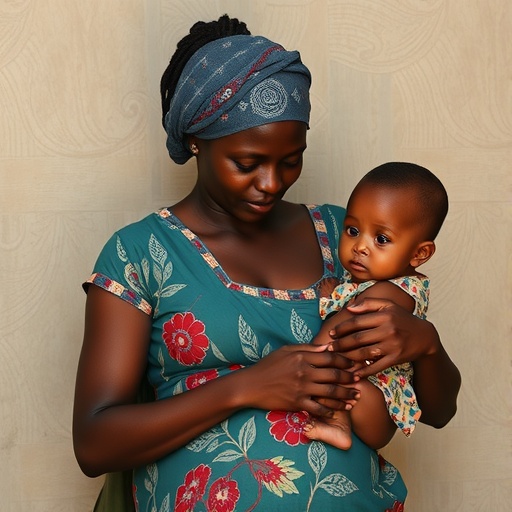
A large analysis spanning 50 low- and middle-income countries has found that pregnancies women later described as unwanted were associated with substantially lower use of maternal healthcare and several disadvantages for children. The study, based on information from 745,981 births, reports that unwanted pregnancies were linked to fewer antenatal-care visits, less skilled supervision during delivery and a higher likelihood of wasting in childhood. The findings, published in the Journal of Population Research, offer one of the broadest attempts to estimate whether pregnancy intention itself can influence health and healthcare use, rather than merely reflecting the difficult social and economic circumstances that often accompany an unintended birth. The results suggest that a pregnancy’s perceived wantedness may affect the care a mother receives before and during birth, with consequences that can extend into a child’s early life. However, the researchers caution that the strongest statistical estimates apply to a specific group: third- and higher-order births for which pregnancy intentions were influenced by the sex composition of older siblings.
Pregnancy intention is usually measured retrospectively, by asking mothers after a birth whether they wanted the pregnancy at that time, wanted it later or did not want it at all. That measure is valuable but scientifically complicated. A mother’s answer may be shaped by the outcome of the pregnancy, her current relationship with the child, the family’s economic conditions or the quality of healthcare she was able to obtain. These factors create what epidemiologists call endogeneity: the reported exposure—in this case an unwanted pregnancy—is entangled with other variables that also affect health. A simple comparison between wanted and unwanted pregnancies therefore cannot establish whether the pregnancy intention caused the difference in care or whether both were consequences of poverty, limited autonomy, family pressure or restricted access to services. To address this problem, Md Zobraj Hosen and Mohammad Hajizadeh used an instrumental-variable approach, a method designed to isolate variation in an exposure that is less directly connected to unmeasured confounding factors.
Their instrument was based on the sex composition of a mother’s previous children. For third and later births, the researchers compared mothers who already had at least one son and one daughter with mothers whose older children were all boys or all girls. In settings where families have preferences for a particular sex, a couple with children of only one sex may be more likely to continue having children, while a couple who already has both a son and a daughter may be more likely to regard another pregnancy as unwanted. The researchers used this pattern as a source of quasi-experimental variation. In technical terms, the instrument predicts reported pregnancy intention, but the method requires that it influence health outcomes primarily through that intention and not through some separate pathway. This is a demanding assumption, and the authors do not claim that it makes the study equivalent to a randomized trial. Instead, the analysis estimates a local average treatment effect—the effect among births whose reported pregnancy intention was actually shifted by the sex composition of previous siblings.
The pattern in maternal care was striking. In the instrumental-variable estimates, an unwanted pregnancy reduced the probability that a mother would receive at least four antenatal-care visits by 18.6 percentage points among third- and higher-order births. The likelihood of reaching at least eight visits fell by 24.7 percentage points. Antenatal care provides a series of opportunities to monitor blood pressure, detect anemia and infections, assess fetal growth, identify pregnancy complications and offer preventive interventions such as vaccination, nutritional advice and counseling. The number of visits is not the only measure of quality, and global recommendations have evolved over time, but repeated contact with trained health professionals generally increases the chance that problems will be detected before they become emergencies. A fall of nearly one-fifth in the share receiving four or more visits, and nearly one-quarter in the share receiving eight or more, represents a major loss of contact with the health system. The study does not establish precisely why care declined, but possible mechanisms include reduced emotional or financial support, delayed recognition of the pregnancy, lower household investment or barriers related to stigma and reproductive decision-making.
The analysis also identified a large difference at the moment of birth. Children from pregnancies reported as unwanted were 32.3 percentage points less likely to be delivered with skilled supervision. Skilled birth attendance means that a trained health professional, such as a midwife, nurse or doctor, is present and able to recognize complications and provide or arrange appropriate care. This can be critical when labor is obstructed, severe bleeding develops or a newborn needs immediate resuscitation. The result is particularly important because antenatal care and supervised delivery are connected stages of the same safety system: prenatal visits can prepare a mother for birth, while skilled attendance provides rapid intervention when complications arise. A reduction in supervised delivery does not mean that every child in an unwanted pregnancy experiences a dangerous birth, nor does it identify the precise service gap in any particular country. Rather, it indicates a population-level shift in the probability of receiving professional care, concentrated among the births whose pregnancy intentions were affected by previous sibling sex.
For children, the clearest nutritional signal was wasting. The study found that children born from pregnancies reported as unwanted were 11.8 percentage points more likely to be wasted. Wasting describes low weight relative to height and is commonly interpreted as an indicator of acute undernutrition, often associated with recent illness, inadequate food intake or both. It differs from stunting, which reflects impaired linear growth and typically develops through longer-term nutritional or health deficits, and from being underweight, which combines information about weight relative to age and can reflect either condition. The researchers examined all three indicators, but the instrumental-variable results highlighted wasting rather than showing a uniformly adverse effect across every measure. This distinction matters: the findings do not support the idea that unwanted pregnancy automatically produces every form of malnutrition. Instead, they point to a selected vulnerability that may arise through reduced healthcare contact, missed vaccinations, illness, feeding constraints or the diversion of household resources when a new child arrives in a family that did not intend another birth.
Vaccination results were more limited and varied by the child’s sex. In analyses separating boys and girls, the negative effects on antenatal care and skilled delivery appeared for both female and male children. Reduced vaccination coverage, however, reached statistical significance only among male children. The authors also tested child health outcomes including stunting, wasting and underweight, allowing them to examine whether the association was broad or concentrated in particular dimensions of health. Sex-specific differences should be interpreted carefully rather than treated as evidence of a universal biological effect. They may reflect differences in caregiving, disease exposure, healthcare-seeking behavior, social preferences or statistical precision across groups. The broader message is that family preferences surrounding the sex of children can influence reproductive timing and desired family size, while the consequences may then be distributed unevenly among children. In some communities, son preference or daughter preference can affect decisions about continuing childbearing, investment in care and the use of health services.
The study draws on Demographic and Health Survey data collected between 2011 and 2022, nationally structured surveys widely used to study reproductive, maternal and child health in low- and middle-income countries. Such surveys typically combine interviews with women of reproductive age, information about births and household characteristics, and measurements of children’s height and weight. The large sample permits comparisons across many settings and supports analyses adjusted for observable differences between families. The researchers also used World Bank data in their broader empirical framework, while the underlying survey data are available through the DHS Program. The scale of the dataset is a major strength, but cross-country evidence inevitably combines societies with different laws, health systems, cultural norms and definitions of access. Retrospective reports of pregnancy intention remain another limitation, even when instrumental variables are used. The estimates should therefore not be read as a fixed effect that applies equally to first births, second births or all unintended pregnancies worldwide.
The findings nevertheless carry a clear public-health implication: preventing unwanted pregnancies and ensuring that every pregnant person can obtain respectful, high-quality care are complementary strategies. Access to contraception, accurate reproductive information and confidential counseling can help people plan whether and when to have children, while strong maternal and child health services can protect families when pregnancies occur regardless of intention. The paper’s causal strategy strengthens the case that pregnancy intention is not merely a demographic label but may be connected to healthcare behavior and child wellbeing through social and household pathways. At the same time, the results should not be used to blame women or families for missed care. An unwanted pregnancy can occur in the presence of contraceptive failure, coercion, poverty, inadequate services or legal restrictions, and responsibility for reducing health risks rests heavily with health systems and social policy. By revealing measurable differences in antenatal visits, skilled delivery and child nutrition, the study turns a sensitive reproductive-health question into a broader warning about how family circumstances can shape medical care long after a pregnancy begins.
Cite Scienmag News
Harold Sullivan. (August 27, 2026). Unintended Pregnancies Causally Affect Maternal and Child Health, Healthcare Use in LMICs. Scienmag. https://scienmag.com/unintended-pregnancies-causally-affect-maternal-and-child-health-healthcare-use-in-lmics/
Harold Sullivan. "Unintended Pregnancies Causally Affect Maternal and Child Health, Healthcare Use in LMICs." Scienmag, 27 August 2026, https://scienmag.com/unintended-pregnancies-causally-affect-maternal-and-child-health-healthcare-use-in-lmics/. Accessed 5 September 2026.
Harold Sullivan. "Unintended Pregnancies Causally Affect Maternal and Child Health, Healthcare Use in LMICs." Scienmag. August 27, 2026. https://scienmag.com/unintended-pregnancies-causally-affect-maternal-and-child-health-healthcare-use-in-lmics/


