


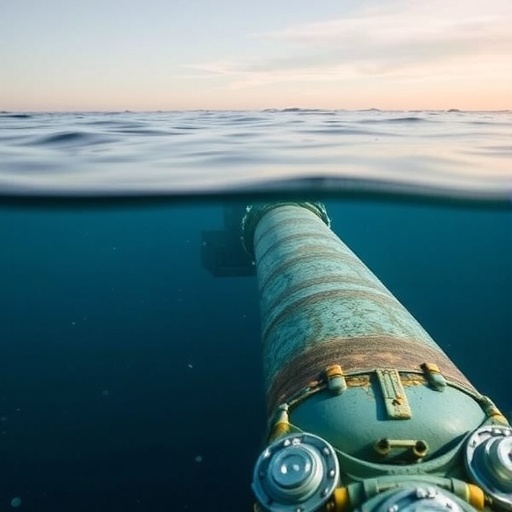
Scientists have identified a potentially major and previously overlooked source of microplastic pollution in the North Sea: the plastic coatings and components used in subsea oil and gas pipelines, hoses, cables and umbilicals. A new study from the University of Plymouth estimates that as much as 500 tonnes of microplastics could enter the UK North Sea each year as abandoned offshore infrastructure gradually breaks down on the seabed. The researchers warn that the pollution could continue long after pipelines have stopped carrying oil or gas, creating a persistent environmental burden that may need to be considered before new marine infrastructure is installed.
The study examined the quantity of plastic embedded in subsea pipelines and umbilicals across the UK Continental Shelf. This region includes large areas of the North Sea, where most UK oil and gas activity has taken place, as well as parts of the North Atlantic, Irish Sea and English Channel. By assessing the construction and coating materials used in this infrastructure, the researchers estimated that approximately 220,000 tonnes of plastic have been deployed on the UK Continental Shelf. These materials are not limited to visible external coverings. They can include polymer coatings, protective layers, insulation, flexible hoses and the synthetic components of cables and umbilicals that connect offshore installations to equipment on the seabed.
The researchers estimate that more than half of this plastic—around 120,000 tonnes—could remain in the marine environment after decommissioning if subsea infrastructure is left in place. Once pipelines and related equipment are abandoned, they are exposed to continual physical stress. Seabed sediments can scour and abrade their surfaces as currents and waves move sand across the ocean floor. Mechanical damage from storms, shifting sediment and contact with other structures can further weaken coatings. At the same time, chemical and environmental processes slowly alter the polymers. Ultraviolet radiation is likely to be limited at depth, but oxidation, temperature changes, seawater exposure and biological activity may still contribute to long-term degradation.
As the plastics deteriorate, larger fragments can progressively break into smaller particles. Microplastics are commonly defined as plastic particles smaller than five millimetres, although degradation can ultimately produce particles far smaller than that threshold. These particles may be transported by bottom currents, suspended in the water column or incorporated into seabed sediments. Their movement will depend on particle size, density, shape, local hydrodynamics and the characteristics of the surrounding seabed. Some fragments may remain close to the original infrastructure, while others could spread across wider areas of the North Sea and become available to organisms living on or near the seafloor.
Using several modelling approaches, the team calculated that between 4.5 and 500 tonnes of microplastics could be released into the UK North Sea every year as legacy oil and gas plastics degrade. The broad range reflects uncertainty over environmental conditions and the rate at which different materials fragment. Sand abrasion, for example, is likely to be more intense in areas with mobile sediments and strong currents than in relatively stable seabed environments. The estimate is therefore not a direct measurement of particles already found in the water. Instead, it represents a scenario-based projection derived from the mass of plastic present, assumptions about its degradation and models describing how marine conditions could influence release.
Even the lower end of the estimate would add to existing sources of marine plastic pollution, while the upper estimate would be substantial in comparison with several familiar sources. Previous estimates suggest that UK rivers release between four and 16.5 tonnes of plastic into the North Sea each year. The study’s high-end projection of 500 tonnes is also more than seven times the annual quantity of microbeads previously estimated to enter the North Sea from cosmetics before microbeads were banned in the UK. The comparison does not mean that all sources behave identically or produce particles with the same chemical composition, but it illustrates the potential scale of plastic released from infrastructure that is rarely considered in assessments of marine pollution.
The researchers also used Predicted No-Effect Concentration, or PNEC, analysis to investigate the possible ecological significance of accumulating particles. PNEC analysis is an environmental risk-assessment method that estimates the concentration below which a substance is not expected to cause harmful effects to aquatic organisms. By comparing modelled microplastic concentrations with estimated thresholds, the team indicated that legacy plastics could eventually reach levels capable of affecting marine life across substantial areas. Such effects may depend on species, particle size, exposure duration and the presence of chemical additives or pollutants attached to the plastic surface. Microplastics can be ingested by marine organisms, potentially causing physical irritation, reduced feeding efficiency or energy loss, while their broader effects remain an active area of research.
The study’s authors stress that leaving infrastructure in place is not automatically the worst environmental option in every situation. Removing pipelines and umbilicals can disturb seabed habitats, generate vessel emissions, create safety risks and require complex engineering operations. In some locations, abandoned structures may also provide surfaces for marine organisms and contribute to artificial reef effects. Decommissioning decisions must therefore weigh multiple environmental and social consequences rather than focusing on a single impact. However, the researchers argue that the long-term breakdown of plastic materials should be formally included in these assessments. A decision that appears to reduce short-term disturbance could create a continuing source of microplastic pollution for decades or longer.
Dr Freija Mendrik, a research fellow at the University of Plymouth and lead author of the study, said the work was the first to estimate the mass of plastic contained in oil and gas infrastructure across the UK Continental Shelf. She described the possible 120,000 tonnes remaining after decommissioning as a previously unrecognised environmental burden and said the findings could apply to decommissioning decisions worldwide. Dr Sarah Gall, a lecturer in marine conservation and principal investigator for the INSITE-funded project, said independent scientific evidence was essential because decommissioning is highly complex. She highlighted the importance of considering plastics not only when old infrastructure is retired, but also when new energy installations and other marine structures are designed and permitted.
Professor Richard Thompson, head of the University of Plymouth’s International Marine Litter Research Unit, said the findings showed that contributions from the oil and gas sector could be considerable even though the infrastructure provides important services during its operational life. He argued that the persistence of plastic means every source contributes to the total environmental burden, with implications for management, legislation and potential litigation. The research, carried out with the University of North Carolina and funded through the INSITE North Sea Programme, extends earlier work from Plymouth on microplastic sources and impacts, including tyre particles, fibres released during clothes washing and the ecological consequences of offshore structures. Its central message is that the environmental life of marine infrastructure does not end when its operational life does: the plastic it contains may continue interacting with the ocean long after the final pipeline has been shut down.
News Publication Date: 17-Aug-2026
Web References: http://dx.doi.org/10.1016/j.jhazmat.2026.143055
References: Journal of Hazardous Materials; DOI: 10.1016/j.jhazmat.2026.143055
Cite Scienmag News
Violet Maxwell. (August 19, 2026). Could subsea pipelines be an overlooked source of ocean microplastics? Scienmag. https://scienmag.com/could-subsea-pipelines-be-an-overlooked-source-of-ocean-microplastics/
Violet Maxwell. "Could subsea pipelines be an overlooked source of ocean microplastics?" Scienmag, 19 August 2026, https://scienmag.com/could-subsea-pipelines-be-an-overlooked-source-of-ocean-microplastics/. Accessed 4 September 2026.
Violet Maxwell. "Could subsea pipelines be an overlooked source of ocean microplastics?" Scienmag. August 19, 2026. https://scienmag.com/could-subsea-pipelines-be-an-overlooked-source-of-ocean-microplastics/


