


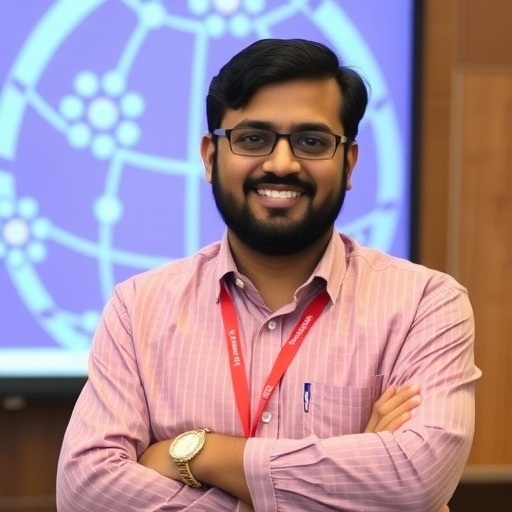
BOSTON, Massachusetts—The global aging-research community is preparing for a major meeting in Boston this fall, where scientists, pharmaceutical executives, biotechnology founders, clinicians, and investors will gather to examine how discoveries in the biology of aging can be converted into medicines. Organizers of the 13th Aging Research & Drug Discovery (ARDD) Meeting announced that Murali Venkatesan, Ph.D., Global Head of Danaher Ventures, will be a featured speaker at the event, scheduled for October 1–3, 2026, at the David Rubenstein Treehouse at Harvard University. The announcement comes as longevity research moves beyond speculative discussions about extending lifespan and toward a growing pipeline of interventions designed to delay disease, preserve function, and lengthen the period of life spent in good health.
The meeting is being organized by Insilico Medicine, an artificial-intelligence-driven biotechnology company, and the ARDD organizing committee. Its program is expected to focus on the central scientific challenge facing the field: determining which biological changes associated with aging are causes of disease, which are consequences, and which can be safely modified. Aging is not a single molecular process but a network of interacting mechanisms that includes genomic instability, epigenetic alterations, impaired protein quality control, mitochondrial dysfunction, cellular senescence, chronic inflammation, and the decline of stem-cell and tissue-repair systems. Drug developers are increasingly attempting to target these mechanisms with small molecules, biologics, gene-based approaches, and other therapeutic technologies, but translating promising laboratory findings into effective human treatments remains difficult.
ARDD 2026 will convene researchers working across this complex landscape, including academic investigators studying fundamental aging biology and clinical teams evaluating potential interventions in humans. A major focus is expected to be the development of measurable indicators that can show whether an intervention is influencing aging-related biology before conventional clinical outcomes become apparent. These indicators, often called biomarkers of aging, may include patterns of DNA methylation, inflammatory proteins, immune-cell features, imaging measurements, physical-performance tests, and composite assessments of biological age. Reliable biomarkers could help researchers design smaller and faster clinical studies, identify participants most likely to benefit, and determine whether a treatment is affecting the underlying biology rather than merely alleviating one symptom of age-related disease.
Vadim Gladyshev, Executive Chair of ARDD and Professor of Medicine at Harvard University, said the biology of aging has become one of biomedical science’s most promising frontiers, while emphasizing that scientific progress will depend on collaboration across disciplines and sectors. His comments reflect a growing shift in the field from describing the molecular signatures of aging to testing whether those signatures can guide therapeutic decisions. The distinction is important: an association between a molecular marker and age does not prove that changing the marker will improve health. Researchers must establish causality, define the relevant tissues and cell types, identify potential toxicities, and determine when treatment should begin and how long it should continue.
The conference will also explore the role of pharmaceutical companies in turning aging research into clinical programs. The organizers say leaders from ten of the world’s largest pharmaceutical companies will participate, alongside biotechnology innovators, entrepreneurs, institutional investors, and academic specialists. This industrial involvement is significant because many aging-related interventions will require capabilities that are difficult to assemble in academic laboratories alone, including medicinal chemistry, scalable manufacturing, regulatory strategy, pharmacovigilance, and large randomized trials. At the same time, pharmaceutical development can impose a discipline on basic science by demanding clearly defined targets, reproducible assays, pharmacological evidence, and clinical endpoints that matter to patients.
Morten Scheibye-Knudsen, Co-Chair of ARDD and Associate Professor at the University of Copenhagen, described the meeting’s move to Boston as a new chapter for the event. Boston and the surrounding biotechnology corridor contain major universities, hospitals, pharmaceutical companies, venture firms, and life-science incubators, creating an environment where discoveries can move rapidly between laboratory research and clinical development. Scheibye-Knudsen also pointed to the increasing emphasis on translating aging science into medicines. That transition will require more than identifying compounds that extend the lifespan of laboratory organisms; it will require evidence that a treatment can preserve cognition, mobility, cardiovascular resilience, immune function, or other dimensions of health in people without introducing unacceptable risks.
Insilico Medicine CEO and ARDD Co-Chair Alex Zhavoronkov said the event has become a platform for dialogue among academia, pharmaceutical companies, startups, and investors. Insilico has been associated with the use of artificial intelligence in target discovery and drug design, areas that are becoming increasingly relevant to longevity research. Computational systems can analyze large collections of genomic, clinical, imaging, and chemical data to identify patterns that may be difficult to detect using traditional methods. They can also help prioritize drug targets and generate or evaluate candidate molecules. However, computational predictions still require experimental validation, animal studies where appropriate, and carefully controlled clinical testing. In aging research, where biological pathways are interconnected and interventions may affect many organs, the need for validation is especially strong.
The 2026 meeting is anchored by Tier 1 sponsors Insilico Medicine and Eli Lilly, with the McKinsey Health Institute serving as the Sole Knowledge Partner. Additional sponsors include AbbVie, AniVC, AstraZeneca, BioAge Labs, Biocytogen, Cambrian Bio, Cyclarity Therapeutics, Dior, GlycanAge, Gordian Biotechnology, Human Longevity, the Institute for Healthier Living Abu Dhabi, LongeVC, Maxwell Biosciences, Nestlé, Tally Health, and TruDiagnostic. Synaro Capital, The Cat Health Company, and PranaGen Bioscience are listed as Tier 4 sponsors, while Estée Lauder, Morgan Stanley, the Intrinsic Capacity Frailty & Sarcopenia Research Conference for Healthy Longevity, and QuadraScope are supporting the event as Tier 5 sponsors. The breadth of this network illustrates how aging biology now intersects with drug development, diagnostics, nutrition, consumer health, finance, and preventive medicine.
Despite the excitement surrounding longevity biotechnology, the field faces substantial scientific and regulatory hurdles. Human aging unfolds over decades and is influenced by genetics, lifestyle, socioeconomic conditions, environmental exposures, and access to medical care. A successful intervention may therefore need to demonstrate benefits across several age-related conditions rather than a single disease category. Researchers must also distinguish between extending lifespan and extending healthspan, the period during which a person remains physically and cognitively capable. Regulatory agencies traditionally approve medicines for defined diseases, so developers may need to show that aging-directed treatments prevent or delay specific conditions, or improve validated measures of function and resilience. ARDD 2026 is positioned as a forum for debating how these trials should be designed and how evidence should be interpreted.
The Aging Research & Drug Discovery Meeting, now in its 13th year, is described by its organizers as the world’s largest meeting dedicated to aging and longevity biotechnology. The 2026 gathering will bring together researchers, clinicians, pharmaceutical and biotechnology leaders, investors, entrepreneurs, and policymakers with the aim of accelerating the movement of aging biology from discovery into practical research and development programs. The Nordic Aging Society, a nonprofit scientific organization focused on aging research and collaboration across the Nordic region and beyond, is supporting the meeting. Organizers say the Boston event will provide an opportunity to assess how rapidly the field is maturing—and whether its expanding scientific and financial momentum can produce therapies that do more than promise longer lives, instead helping people remain healthier for more of the years they have.
News Publication Date: August 14, 2026
Web References: agingpharma.org
References: Aging Research & Drug Discovery (ARDD) Meeting announcement; Insilico Medicine; Nordic Aging Society.
Cite Scienmag News
Beatrice Stafford. (August 15, 2026). Murali Venkatesan to Present at 13th Aging Research and Drug Discovery Meeting. Scienmag. https://scienmag.com/murali-venkatesan-to-present-at-13th-aging-research-and-drug-discovery-meeting/
Beatrice Stafford. "Murali Venkatesan to Present at 13th Aging Research and Drug Discovery Meeting." Scienmag, 15 August 2026, https://scienmag.com/murali-venkatesan-to-present-at-13th-aging-research-and-drug-discovery-meeting/. Accessed 3 September 2026.
Beatrice Stafford. "Murali Venkatesan to Present at 13th Aging Research and Drug Discovery Meeting." Scienmag. August 15, 2026. https://scienmag.com/murali-venkatesan-to-present-at-13th-aging-research-and-drug-discovery-meeting/


