


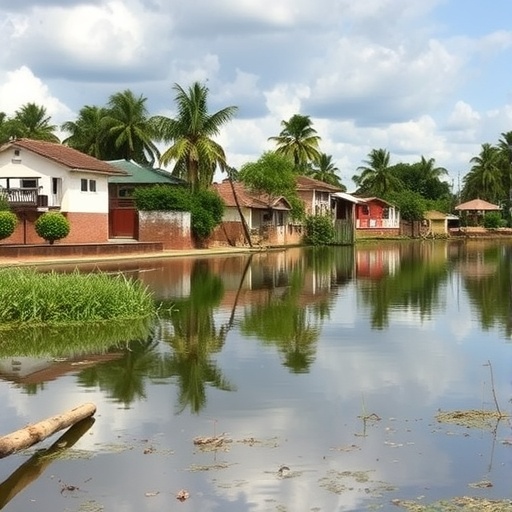
Cities are becoming laboratories of disease emergence, and in Benin, the most revealing evidence may be developing in places that appear deceptively ordinary: drainage channels, discarded containers, puddles, wells and other urban water environments. A study by Hata, Wakisaka, Odjougbele and colleagues, published in Scientific Reports, has used molecular tools to examine the mosquitoes breeding in these settings and the vector-borne pathogens they may carry. The research provides a detailed look at how urban water systems can support mosquito populations while also serving as surveillance points for viruses and other microorganisms of public-health concern.
The study addresses a central challenge in mosquito-borne disease control. Traditional surveillance often depends on identifying adult mosquitoes by their external features, recording their abundance and testing them for a limited number of known pathogens. That approach remains valuable, but it can miss cryptic species, immature life stages and microorganisms that are difficult to detect using conventional methods. Molecular analysis expands the view by examining genetic material recovered from mosquitoes and environmental samples. DNA can help distinguish closely related mosquito species, while RNA and DNA sequencing can reveal pathogen signatures that might otherwise remain undetected.
Urban water environments are particularly important because they can create a mosaic of mosquito habitats. Some species prefer relatively clean water collected in household containers, while others thrive in polluted drains, septic environments, discarded tires or stagnant pools. These habitats can occur within a few metres of homes, schools and markets. Rapid urban growth, inadequate drainage and inconsistent waste management may multiply such breeding sites, allowing mosquitoes to persist through seasonal changes and increasing opportunities for contact between vectors and people.
In Benin, as in many tropical and subtropical regions, mosquito surveillance must account for several genera with different ecological behaviours. Aedes mosquitoes are commonly associated with containers and can transmit arboviruses such as dengue, chikungunya and yellow fever viruses. Anopheles mosquitoes are best known for their role in malaria transmission, while Culex species can occupy polluted water and may be involved in the transmission of a range of viral and parasitic agents. Correctly identifying these mosquitoes is not a cosmetic exercise: species-level differences influence where control measures should be deployed, which pathogens should be tested and how disease risk is interpreted.
The researchers’ molecular approach is designed to complement field observations. Mosquitoes collected from urban water-associated habitats can be processed to extract genetic material, after which targeted assays or sequencing methods compare those genetic fragments with reference databases. One layer of analysis can identify the mosquito itself, including specimens that are difficult to classify by appearance. Another can search for pathogen-related sequences. Depending on the assay and the quality of the recovered material, such testing may detect viral genomes, bacterial DNA, parasites or other microorganisms associated with the mosquito.
This distinction is crucial when interpreting pathogen findings. Detecting a fragment of viral RNA or microbial DNA does not automatically demonstrate that a mosquito is infectious. A pathogen may be present in a mosquito after it has taken a blood meal, without having replicated or reached the salivary glands required for transmission. Molecular signals can also represent closely related organisms or remnants of material that is no longer viable. Even so, these signals are epidemiologically valuable. They can identify areas that warrant further testing, reveal unexpected pathogen diversity and provide an early warning before a large outbreak becomes visible through hospital records.
The study’s broader contribution lies in connecting mosquito ecology with pathogen surveillance in the same urban landscape. Instead of treating water management and disease monitoring as separate public-health tasks, the research shows how they can inform one another. A drain that repeatedly produces vector mosquitoes may also indicate where environmental interventions could have the greatest effect. Removing containers, improving drainage, covering water-storage vessels and managing waste can reduce larval habitats, while molecular surveillance can help determine whether those interventions are changing mosquito communities or lowering the circulation of pathogen-related genetic material.
Advanced molecular surveillance is also valuable because pathogens do not remain static. Viruses evolve through mutation and, in some cases, recombination, while mosquito populations can change in response to climate, urbanisation, insecticide exposure and human movement. Sequencing can provide information about genetic variation and may help scientists distinguish locally maintained transmission from pathogens introduced from elsewhere. It can also support the detection of microorganisms that are not included in routine diagnostic panels. However, sequencing results require careful validation through epidemiological investigation, repeat sampling and, where appropriate, laboratory tests that confirm infectivity.
The Benin research therefore represents more than a catalogue of mosquitoes and microbes. It offers a framework for examining urban water environments as interconnected ecological and public-health systems. By combining field collection with molecular identification, the study helps clarify which mosquitoes are present, which organisms are associated with them and where gaps in surveillance remain. Its findings support a preventive approach: identify risk in the environment, investigate pathogen signals before disease spreads widely and direct vector-control resources toward the places where people and mosquitoes most consistently meet. As cities expand, this combination of entomology, genetics and environmental health may become an essential component of outbreak preparedness.
Cite Scienmag News
Phoebe Ingram. (August 13, 2026). Scientists map mosquitoes and disease pathogens in Benin’s urban waters. Scienmag. https://scienmag.com/scientists-map-mosquitoes-and-disease-pathogens-in-benins-urban-waters/
Phoebe Ingram. "Scientists map mosquitoes and disease pathogens in Benin’s urban waters." Scienmag, 13 August 2026, https://scienmag.com/scientists-map-mosquitoes-and-disease-pathogens-in-benins-urban-waters/. Accessed 4 September 2026.
Phoebe Ingram. "Scientists map mosquitoes and disease pathogens in Benin’s urban waters." Scienmag. August 13, 2026. https://scienmag.com/scientists-map-mosquitoes-and-disease-pathogens-in-benins-urban-waters/


