


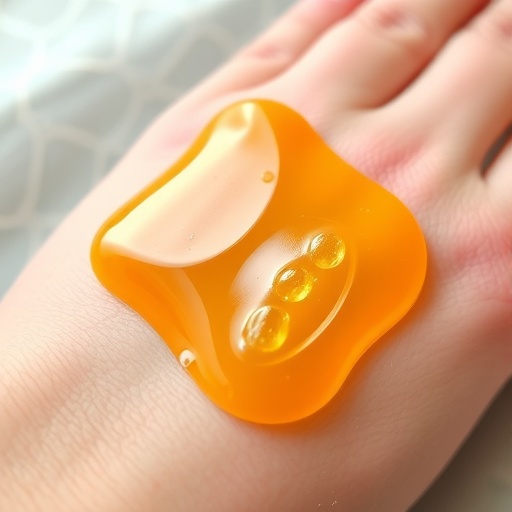
A new wound dressing that combines a natural protein, mineral nanoparticles and two complementary therapeutic compounds could offer a multifunctional approach to one of medicine’s most urgent problems: stopping bleeding while preventing infection. The material, described by S. Maleki Dizaj, S. Sharifi, M. Y. Memar and colleagues in Scientific Reports, is based on gelatin and contains calcium carbonate nanoparticles loaded with gentamicin and curcumin. Its design brings together three functions that are often treated separately in wound care. The dressing is intended to help form a stable barrier over damaged tissue, support hemostasis—the process that stops bleeding—and suppress bacterial growth at the wound site. By integrating these properties into one biocompatible platform, the research addresses the difficult early phase of healing, when blood loss, microbial contamination and inflammation can rapidly compromise recovery.
Gelatin is a particularly attractive foundation for this type of biomaterial because it is derived from collagen, the major structural protein in skin and connective tissue. When processed into a wound dressing, gelatin can form a moist, flexible matrix that conforms to irregular tissue surfaces. Moisture retention is important because excessive drying can damage newly formed cells, while a controlled moist environment can support cell migration and tissue repair. Gelatin is also biodegradable, meaning that the body can gradually break it down after the wound has begun to heal. However, gelatin alone does not necessarily provide sufficient mechanical strength, antibacterial protection or rapid bleeding control. The new formulation therefore uses gelatin as a biological framework and adds nanoscale calcium carbonate, gentamicin and curcumin to give the dressing a broader therapeutic profile.
Calcium carbonate nanoparticles are central to the material’s proposed hemostatic action. Calcium ions are essential participants in the coagulation cascade, the chain of biochemical reactions that converts liquid blood into a protective clot. When a wound occurs, platelets adhere to the damaged surface and become activated, while a series of clotting factors ultimately helps generate fibrin, a protein that forms a mesh over the injury. A dressing containing calcium carbonate may provide a local source of calcium as the mineral interacts with the wound environment. The particles can also increase the surface area available for blood components to interact with the dressing, potentially helping blood concentrate and clot at the site of injury. These effects are especially relevant for dressings designed for trauma, surgery or wounds where rapid control of bleeding is critical.
The nanoscale form of calcium carbonate may also influence how the dressing behaves after it is applied. Nanoparticles have a high surface-area-to-volume ratio, allowing them to interact efficiently with surrounding fluids and with the gelatin network. Their distribution throughout the polymer matrix may affect the dressing’s porosity, swelling and degradation. Those characteristics determine how quickly wound fluid enters the material and how readily active compounds move out of it. A carefully engineered porous structure can absorb excess exudate while maintaining contact with the wound. At the same time, gradual disintegration of the gelatin and mineral components could help create a localized release system, keeping therapeutic agents near the injury rather than allowing them to disperse immediately across the body.
Gentamicin provides the formulation’s conventional antibacterial component. This aminoglycoside antibiotic acts primarily by entering susceptible bacterial cells and binding to bacterial ribosomes, the molecular machines responsible for producing proteins. By disrupting protein synthesis, gentamicin can cause the formation of faulty proteins and ultimately damage the bacterial cell. Delivering the antibiotic from a wound dressing may offer a way to establish high concentrations at the contaminated surface while limiting the need for repeated systemic administration. Local delivery is not automatically risk-free, and antibiotic exposure must be controlled to avoid toxicity and unnecessary selection for resistant organisms. Nevertheless, embedding gentamicin in a biomaterial can provide a sustained and localized antibacterial strategy, particularly during the vulnerable period immediately after injury.
Curcumin adds a second, chemically distinct dimension to the dressing. Best known as a major bioactive compound in turmeric, curcumin has been investigated for antioxidant, anti-inflammatory and antimicrobial properties. In wounds, excessive or prolonged inflammation can damage surrounding tissue and delay the transition from inflammation to repair. Curcumin may help moderate some of the molecular pathways associated with inflammatory signaling and oxidative stress, although its practical medical use has often been limited by poor water solubility, rapid degradation and weak absorption. Incorporating it into calcium carbonate nanoparticles and a gelatin matrix could improve its dispersion and keep it in contact with the wound for longer. The combined presence of curcumin and gentamicin is intended to address different aspects of the wound environment rather than relying on an antibiotic alone.
The formulation’s antibacterial concept is particularly important because open wounds can become colonized by organisms from the skin, environment or medical setting. Bacterial growth consumes nutrients, produces damaging enzymes and toxins, and can maintain inflammation that prevents new tissue from forming. Some bacteria also organize themselves into biofilms, dense communities surrounded by a protective matrix that makes them harder to eliminate. A dressing that physically covers the wound while releasing antibacterial agents could create several barriers at once. Gentamicin targets susceptible bacteria directly, while curcumin may contribute additional antimicrobial and anti-inflammatory activity. The calcium carbonate and gelatin matrix can act as the delivery vehicle, controlling how the compounds are presented to the tissue. The effectiveness of this strategy depends on release rate, bacterial susceptibility and the ability of the dressing to maintain adequate contact with the wound.
Biocompatibility is a decisive requirement for any material intended to remain against injured tissue. A dressing may be antibacterial and hemostatic yet still fail if it causes significant irritation, damages healthy cells or provokes an unwanted immune response. Gelatin is generally considered biologically compatible, but its source, processing method and degree of purification can influence performance. Likewise, nanoparticle size, concentration and surface characteristics can affect how cells respond to calcium carbonate. The research therefore places emphasis on a formulation that can perform several tasks without becoming harmful to the surrounding tissue. In practical terms, an ideal dressing would adhere gently, absorb wound fluid, stop bleeding, limit microbial growth, release its active ingredients in a controlled manner and eventually degrade or be removed without disrupting newly formed tissue.
The study represents a broader movement in biomedical engineering toward multifunctional wound-care materials rather than single-purpose coverings. Conventional gauze can absorb blood but does not necessarily provide sustained antibacterial treatment or actively support healing. Advanced dressings may incorporate polymers, nanoparticles, antibiotics, plant-derived compounds and biological signals into one engineered system. The gelatin-based calcium carbonate platform described in Scientific Reports follows that trend by combining hemostasis, antimicrobial delivery and biocompatibility in a single dressing architecture. Its eventual clinical value will depend on evidence beyond material fabrication, including detailed release studies, cytocompatibility testing, antibacterial performance against clinically relevant strains, animal wound models and carefully designed human trials. Questions about long-term storage, manufacturing consistency, antibiotic resistance and performance in complex wounds will also need to be addressed. Even so, the concept highlights how nanoscale engineering can turn a simple wound covering into an active therapeutic interface between medicine and damaged tissue.
Cite Scienmag News
Glenn Wilkins. (August 12, 2026). Antibacterial Hemostatic Gelatin Dressing Uses Calcium Carbonate Nanoparticles, Gentamicin, and Curcumin. Scienmag. https://scienmag.com/antibacterial-hemostatic-gelatin-dressing-uses-calcium-carbonate-nanoparticles-gentamicin-and-curcumin/
Glenn Wilkins. "Antibacterial Hemostatic Gelatin Dressing Uses Calcium Carbonate Nanoparticles, Gentamicin, and Curcumin." Scienmag, 12 August 2026, https://scienmag.com/antibacterial-hemostatic-gelatin-dressing-uses-calcium-carbonate-nanoparticles-gentamicin-and-curcumin/. Accessed 3 September 2026.
Glenn Wilkins. "Antibacterial Hemostatic Gelatin Dressing Uses Calcium Carbonate Nanoparticles, Gentamicin, and Curcumin." Scienmag. August 12, 2026. https://scienmag.com/antibacterial-hemostatic-gelatin-dressing-uses-calcium-carbonate-nanoparticles-gentamicin-and-curcumin/


