


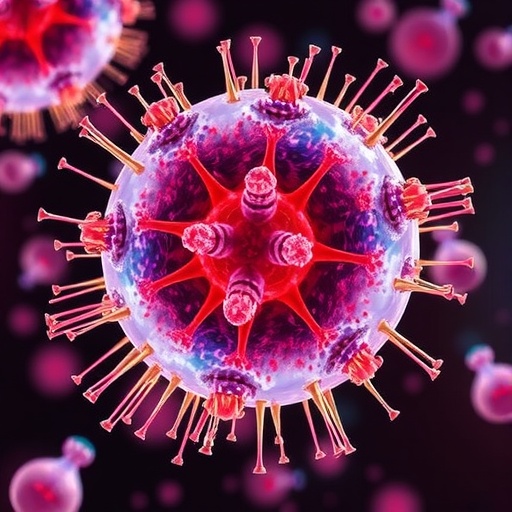
A research team in Japan has won a US$1 million Milestone 2 award in the XPRIZE Healthspan competition for developing engineered “super exosomes,” microscopic biological delivery vehicles designed to target aging and damaged cells. Led by Professor Keisuke Goda of Tohoku University’s SiRIUS Institute of Medical Research and Graduate School of Medicine, in collaboration with researchers from the University of Tokyo’s Department of Chemistry, the team was selected from more than 600 competitors worldwide.
XPRIZE Healthspan is a seven-year international competition focused on extending the period of life people spend in good health. Participating teams are challenged to develop treatments capable of restoring muscle, cognitive, and immune function in adults between 50 and 90 years old. The competition sets a minimum target of reversing at least 10 years of biological decline, while the most ambitious goal is a 20-year improvement within one year or less of treatment. Goda’s team is now moving forward after receiving recognition for results obtained in aged animal studies.
At the center of the research are exosomes, naturally occurring nanoparticles released by cells. These membrane-bound vesicles normally transport proteins, lipids, messenger RNA, and other molecular signals between cells, functioning as part of the body’s communication network. Because exosomes can carry biological cargo and interact with specific tissues, scientists have been investigating them as potential alternatives to synthetic drug-delivery systems. However, naturally produced exosomes often lack sufficient targeting precision, limiting their ability to reach the cells most relevant to a disease or aging process.
The Tohoku-led group attempted to solve that problem by chemically modifying the surface of exosomes with lanthanide ions. Lanthanides are a family of metallic elements with distinctive electronic and chemical properties. According to the researchers, attaching these ions changes the surface behavior of the exosomes and substantially improves their ability to recognize and bind to senescent cells. The resulting particles have been named “super exosomes,” a term that reflects their enhanced targeting and delivery capabilities rather than a new biological category.
Cellular senescence is one of the major biological processes associated with aging. Senescent cells have generally stopped dividing because of accumulated damage or stress, but they do not necessarily disappear. Instead, some remain metabolically active and release inflammatory molecules, growth regulators, and other signals that can disrupt nearby tissues. This collection of secreted factors, often called the senescence-associated secretory phenotype, can contribute to chronic inflammation, impaired tissue repair, and the deterioration of organs. Precisely influencing these cells has therefore become a major objective in longevity research.
The proposed super-exosome platform is designed to deliver regenerative molecular cargo directly to aging tissues after attaching to senescent cells. Potential cargoes include growth factors, messenger RNA, and other genetic materials capable of altering cellular behavior. Rather than distributing such molecules broadly throughout the body, a targeted exosome could concentrate them near damaged or dysfunctional tissue. In theory, this approach could promote repair while reducing unwanted effects in healthy cells, although the degree of targeting and the durability of the response will need to be confirmed in human studies.
In preclinical experiments involving several groups of aged mice, the researchers reported statistically significant improvements in frailty, physical performance, and multiple functional measures associated with aging. They also described the treatment’s safety profile as excellent in the studies conducted so far. The team says the overall benefit corresponds to more than 15 additional healthy human years when estimated using cross-species lifespan scaling. Such calculations can help compare biological effects between species, but they are not evidence that a mouse treatment will extend human life by a specific number of years. Human biology, dosing, immune responses, and long-term risks could differ substantially.
The award will support the next stage of development: clinical studies planned in collaboration with Tohoku University Hospital and the Tohoku University Healthspan Research Center. These studies will need to establish how the particles behave in humans, how efficiently they reach senescent cells, what cargoes are most effective, and whether the treatment produces measurable improvements in strength, cognition, immunity, or other healthspan indicators. Researchers will also have to monitor possible immune reactions, unintended effects on healthy tissues, changes in tumor risk, and the persistence of engineered exosomes in the body. These questions are essential before claims of age reversal can move beyond the laboratory.
The platform could eventually be investigated for conditions involving muscle decline, cognitive impairment, immune dysfunction, hair loss, skin aging, and reproductive health. The team plans to commercialize the technology through NanoTitan, with the aim of developing scalable manufacturing and international distribution for exosome-based therapeutics produced in Japan. “Advancing to the XPRIZE Healthspan finals is an important milestone, but our ultimate goal is to translate this technology into therapies that allow people to lead healthy, independent, and active lives longer,” Goda said. The research now enters its most demanding phase: determining whether an impressive result in aged mice can become a safe, reproducible, and clinically meaningful treatment for people.
Web References: https://mediasvc.eurekalert.org/Api/v1/Multimedia/673c8fb3-268a-4a90-93b4-a0d531624a52/Rendition/low-res/Content/Public
Cite Scienmag News
Beatrice Stafford. (August 11, 2026). Goda Lab Advances to Final XPRIZE Healthspan Phase with Breakthrough Super Exosomes. Scienmag. https://scienmag.com/goda-lab-advances-to-final-xprize-healthspan-phase-with-breakthrough-super-exosomes/
Beatrice Stafford. "Goda Lab Advances to Final XPRIZE Healthspan Phase with Breakthrough Super Exosomes." Scienmag, 11 August 2026, https://scienmag.com/goda-lab-advances-to-final-xprize-healthspan-phase-with-breakthrough-super-exosomes/. Accessed 3 September 2026.
Beatrice Stafford. "Goda Lab Advances to Final XPRIZE Healthspan Phase with Breakthrough Super Exosomes." Scienmag. August 11, 2026. https://scienmag.com/goda-lab-advances-to-final-xprize-healthspan-phase-with-breakthrough-super-exosomes/


