


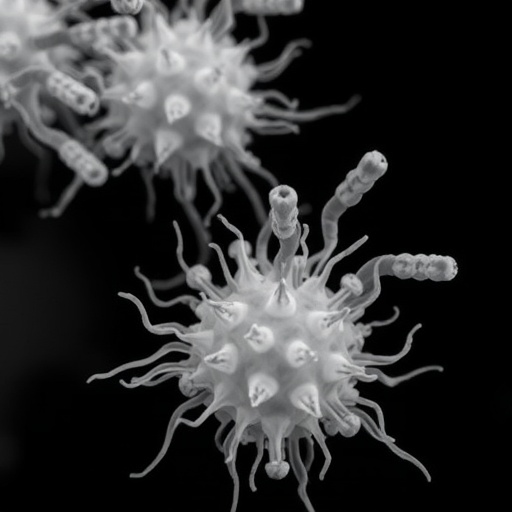
Pseudomonas aeruginosa is one of the most difficult bacterial pathogens to treat, particularly when it forms biofilms or develops resistance to multiple antibiotics. The problem is especially acute in people with cystic fibrosis, severe burns, chronic lung disease or weakened immune systems. A new study published in npj Viruses reports a streamlined purification method that could help move bacteriophage therapies closer to clinical use. The researchers describe a single-step monolithic chromatography process capable of purifying diverse P. aeruginosa phages while reducing bacterial endotoxin to levels compatible with therapeutic applications.
Bacteriophages, or phages, are viruses that infect bacteria. Because they can recognize specific bacterial surface structures and replicate inside susceptible cells, they are being investigated as precision antimicrobials. Their specificity is also a manufacturing challenge: a phage preparation must contain enough active virus to be effective, but it must not carry along harmful contaminants from the bacterial cells used to grow it. Conventional purification workflows often require several sequential operations, including clarification, filtration, concentration and multiple chromatography or centrifugation steps. Each additional stage can reduce yield, increase processing time and complicate quality control.
The central obstacle is endotoxin, a component of the outer membrane of Gram-negative bacteria such as P. aeruginosa. When bacterial cells break apart during phage production, lipopolysaccharide molecules are released into the surrounding material. If administered to patients in excessive amounts, endotoxin can trigger powerful inflammatory responses, including fever, hypotension and, in severe cases, life-threatening systemic inflammation. Removing endotoxin without also removing or damaging the phages is therefore a critical requirement for therapeutic-grade preparations.
Echterhof, Dharmaraj, Blankenberg and colleagues focused on monolithic chromatography, a separation technology that differs from conventional packed-bed columns. Instead of passing a sample through a dense bed of porous particles, the liquid flows through a continuous, highly interconnected structure containing channels and functional surfaces. This architecture allows convective transport, meaning that large biological particles can reach binding sites through fluid movement rather than relying mainly on slow diffusion into small pores. The design can support high flow rates and may be particularly useful for viruses, which are substantially larger than many proteins.
In the reported workflow, phage-containing material is processed through a single monolithic chromatography step intended to separate infectious phage particles from unwanted bacterial components. The approach takes advantage of differences in the physicochemical behavior of phages, endotoxin and other impurities during chromatography. By combining efficient fluid transport with selective interactions at the monolith surface, the method is designed to retain or recover phages while reducing the contaminant burden. The study’s emphasis on diverse P. aeruginosa phages is important because phage preparations can vary widely in particle properties, surface composition, genome type and production behavior.
A purification platform that works across multiple phages could address a persistent weakness in phage manufacturing. Many existing processes are optimized for one virus or one host strain, making them difficult to transfer when a new phage is selected against an emerging clinical isolate. In practice, therapeutic development may require individual phages, mixtures known as cocktails or rapidly assembled combinations tailored to a patient’s infection. A method that can accommodate this biological diversity could make process development more predictable and reduce the need to redesign purification conditions for every candidate.
The researchers describe the chromatography step as single-step and monolithic, a combination that has practical implications beyond laboratory convenience. Fewer unit operations can mean less handling, a smaller risk of contamination and lower material losses between stages. It may also simplify scale-up, because monolithic devices can be operated with relatively low pressure while maintaining substantial throughput. For a clinical manufacturing process, these characteristics could help integrate phage purification into a more standardized framework involving validated equipment, controlled process parameters and reproducible release testing.
The work also highlights the difference between producing a phage preparation and producing a medicine. High phage titers alone do not demonstrate that a preparation is suitable for administration. Manufacturers must evaluate infectious activity, identity, purity, residual host-cell material, sterility and endotoxin. They must also determine whether the purification process preserves particle integrity and biological function. The reported endotoxin reduction is therefore a central result: it suggests that monolithic chromatography can address one of the most important safety barriers while maintaining the phage product needed for antibacterial activity.
Although the study represents progress, purification is only one part of the path toward approved phage therapeutics. Phages may be neutralized by pre-existing or treatment-induced antibodies, and their narrow host range can make bacterial resistance a continuing concern. Researchers must also establish pharmacokinetics, dosing strategies, stability during storage and the behavior of phage cocktails. Nevertheless, a robust manufacturing process is foundational. By showing that a single monolithic chromatography operation can efficiently purify varied P. aeruginosa phages with therapeutic-grade endotoxin reduction, the study offers a potentially scalable solution to a major bottleneck in viral medicine and strengthens the technical case for phage-based treatments against antibiotic-resistant infections.
Cite Scienmag News
Ophelia Keating. (August 10, 2026). Single-step chromatography purifies diverse Pseudomonas aeruginosa phages while sharply reducing endotoxins. Scienmag. https://scienmag.com/single-step-chromatography-purifies-diverse-pseudomonas-aeruginosa-phages-while-sharply-reducing-endotoxins/
Ophelia Keating. "Single-step chromatography purifies diverse Pseudomonas aeruginosa phages while sharply reducing endotoxins." Scienmag, 10 August 2026, https://scienmag.com/single-step-chromatography-purifies-diverse-pseudomonas-aeruginosa-phages-while-sharply-reducing-endotoxins/. Accessed 3 September 2026.
Ophelia Keating. "Single-step chromatography purifies diverse Pseudomonas aeruginosa phages while sharply reducing endotoxins." Scienmag. August 10, 2026. https://scienmag.com/single-step-chromatography-purifies-diverse-pseudomonas-aeruginosa-phages-while-sharply-reducing-endotoxins/


