


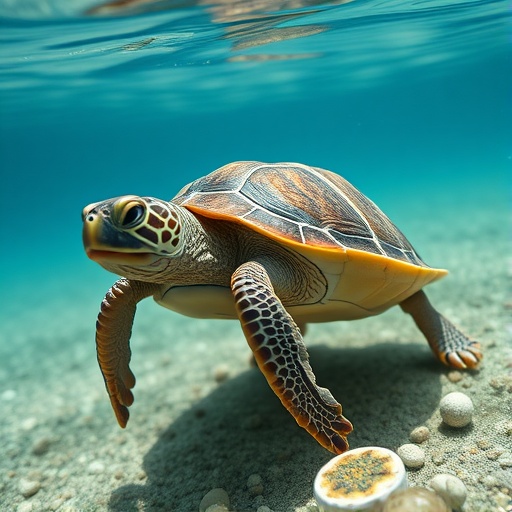
AMES, Iowa—A tiny, antenna-like structure found on many animal cells may help explain how turtle embryos sense the warmth that determines whether they develop as male or female. A new study led by Iowa State University evolutionary biologist Nicole Valenzuela links primary cilia to the molecular networks involved in vertebrate sex determination, suggesting that these once-overlooked cellular structures could be central to how some turtles translate environmental temperature into developmental decisions.
In many turtle species, sex is not fixed by sex chromosomes. Instead, the temperature surrounding developing eggs influences the formation of the embryo’s reproductive organs. Warm incubation typically produces females, while cooler conditions produce males. This phenomenon, known as temperature-dependent sex determination, has fascinated scientists for decades, particularly as climate change threatens to skew hatchling sex ratios in species whose nests are becoming progressively warmer.
Primary cilia are slender projections that extend from the surface of most animal cells. Often described as cellular antennae, they detect signals in the surrounding environment and help relay information into the cell. Their surface contains specialized receptors and signaling proteins, allowing them to respond to mechanical, chemical and potentially thermal cues. Once dismissed as largely useless remnants, primary cilia are now known to regulate major developmental pathways and have been associated with disorders including cancer and diseases affecting the brain, lungs and other organs.
Valenzuela’s team became interested in these structures while investigating how turtle sex-determination systems have evolved. Turtles represent an unusually informative group for this question because different species use fundamentally different mechanisms. Painted turtles retain the ancestral temperature-dependent system, whereas spiny softshell turtles possess sex chromosomes that genetically influence whether an embryo develops as male or female. Comparing these species offered the researchers a way to examine which molecular processes remain stable and which change when sex determination evolves.
The researchers analyzed gene activity in the developing reproductive organs of both species and combined those data with information about protein-protein and protein-DNA interactions. They used the results to construct regulatory network models showing how transcription factors control groups of genes during gonad formation. Transcription factors are proteins that bind to DNA and activate or repress other genes, creating interconnected control systems that guide cells as they acquire specialized identities.
The two turtles shared 89 major transcription-factor hubs within these networks. Fifty of those hubs showed little change between species, potentially representing a conserved molecular foundation for building turtle gonads. However, the hubs that changed most strongly were repeatedly associated with gene functions related to primary cilia. The finding surprised the researchers because cilia had not been a central part of prevailing models for turtle sex determination.
The connection grew more persuasive when the team examined it using several analytical approaches. In painted turtles, some of the implicated regulatory relationships were associated with the functions performed by primary cilia, while in spiny softshell turtles, other relationships were linked to the formation and structural organization of the cilia themselves. This difference may indicate that the cellular antenna is regulated in distinct ways in species whose sex is determined by temperature versus chromosomes. A separate, forthcoming analysis of turtle embryo histones—proteins that package DNA and influence whether genes are accessible—has also produced related associations, according to Valenzuela.
The hypothesis is biologically plausible because primary cilia are known to organize signaling pathways that influence embryonic development. They can detect changes outside the cell and help coordinate responses through molecular systems such as Hedgehog and other developmental signaling networks. Some of these pathways have already been connected to sexual development in mammals. The new study does not yet demonstrate that primary cilia directly sense incubation temperature or instruct a turtle embryo to become male or female, but it identifies a compelling cellular mechanism for future experiments.
Researchers now want to determine where primary cilia appear during turtle gonad development, how their structure changes with incubation temperature, and which proteins allow them to respond to thermal conditions. Direct laboratory tests could also reveal whether disrupting cilia-related genes alters gonadal development or changes the temperature at which embryos switch from producing one sex to the other. Such experiments would be essential for distinguishing a true causal mechanism from a correlation detected in complex gene-regulatory data.
The implications may extend beyond turtle biology. Primary cilia participate in fundamental processes involved in human development and disease, making turtles a potentially useful comparative model for understanding how cells detect and interpret environmental signals. Their extraordinary tolerance of extreme cold could also provide clues about the molecular control of thermal sensing and cellular protection. For now, the study opens an unexpected research avenue: a microscopic cellular antenna may be one of the missing links between a turtle nest’s temperature, an embryo’s developing gonads and the evolution of sex-determination systems across vertebrates.
Web References: https://journals.plos.org/plosone/article?id=10.1371/journal.pone.0353280
References: PLOS One; DOI: 10.1371/journal.pone.0353280
Cite Scienmag News
Drew Townsend. (August 8, 2026). Antenna-like cell structure helps turtles sense warmth that determines sex. Scienmag. https://scienmag.com/antenna-like-cell-structure-helps-turtles-sense-warmth-that-determines-sex/
Drew Townsend. "Antenna-like cell structure helps turtles sense warmth that determines sex." Scienmag, 8 August 2026, https://scienmag.com/antenna-like-cell-structure-helps-turtles-sense-warmth-that-determines-sex/. Accessed 3 September 2026.
Drew Townsend. "Antenna-like cell structure helps turtles sense warmth that determines sex." Scienmag. August 8, 2026. https://scienmag.com/antenna-like-cell-structure-helps-turtles-sense-warmth-that-determines-sex/


