


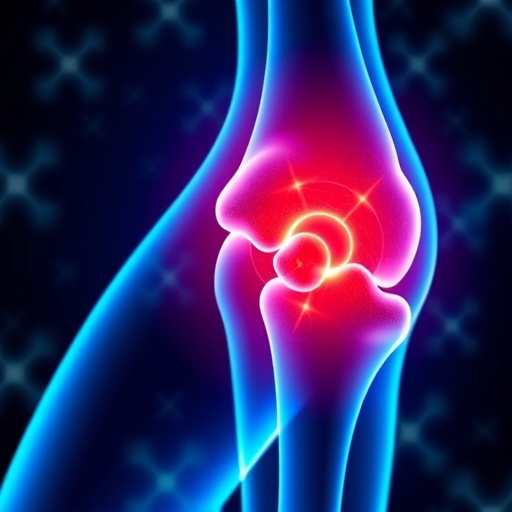
Osteoarthritis is often described as a disease of worn-out cartilage, but a new review argues that the condition is better understood as a disorder of communication across the entire joint. The analysis, published in Genes & Diseases, focuses on purinergic signaling, a molecular network that allows cells to respond to extracellular nucleotides and adenosine. According to the authors, disturbances in this system may connect the major features of osteoarthritis, including inflammation, cartilage destruction, abnormal bone remodeling and persistent pain.
Purinergic signaling is built around chemical messengers released when cells are stressed, injured or metabolically active. Among the most important are adenosine triphosphate, or ATP, and adenosine. Inside cells, ATP serves as a primary energy source. Outside cells, however, ATP can act as a danger signal, alerting neighboring cells to tissue damage through specialized receptors. Adenosine is generated as extracellular nucleotides are broken down and generally has more regulatory and protective effects. The balance between these signals helps determine whether joint tissue remains stable or enters a cycle of inflammation and degeneration.
The review distinguishes between two principal receptor families. P2 receptors respond to extracellular ATP and related nucleotides, while P1 receptors respond to adenosine. Under healthy conditions, these receptors help coordinate the activities of cartilage cells, bone-forming and bone-resorbing cells, immune cells and sensory nerves. In osteoarthritis, mechanical stress and cellular injury can increase the release of ATP into the joint environment. Excessive or prolonged activation of P2 receptors may then amplify inflammatory signaling, encourage the production of tissue-degrading enzymes and intensify pain-related nerve activity.
Cartilage is particularly vulnerable to this imbalance because it has limited capacity for repair. Chondrocytes, the cells responsible for maintaining the cartilage matrix, can respond to extracellular ATP through several P2 receptor subtypes. When stimulation becomes excessive, these pathways may promote the release of inflammatory mediators and matrix-degrading enzymes, including molecules that break down collagen and aggrecan. As the extracellular matrix loses its structural integrity, cartilage becomes less capable of absorbing mechanical loads, increasing stress on the remaining tissue and reinforcing the cycle of cellular damage.
Purinergic signaling also extends beyond cartilage. The review describes potential effects on the subchondral bone, the layer of bone directly beneath the cartilage, where osteoblasts and osteoclasts regulate remodeling. Changes in P2 receptor activity may disturb the balance between bone formation and resorption, contributing to the abnormal thickening and structural changes commonly observed in osteoarthritis. These alterations can change how forces move through the joint and may further damage cartilage. The same signaling network can influence synovial cells and immune pathways, helping sustain the low-grade inflammation that characterizes many forms of the disease.
Pain is another major component of the purinergic system. ATP released from injured or stressed tissues can activate P2 receptors on sensory neurons and supporting cells, increasing the excitability of pain pathways. Continued stimulation may contribute to peripheral sensitization, in which nerves respond more strongly to normally painful signals. In some patients, prolonged input from the joint may also promote changes in the central nervous system, making pain persist even when the original tissue injury is relatively limited. This helps explain why structural damage and reported pain do not always correspond closely in osteoarthritis.
In contrast, adenosine and P1 receptor signaling are generally associated with mechanisms that restrain inflammation and support tissue maintenance. The review highlights evidence that selected P1 receptors may help protect chondrocytes by improving autophagy, the cellular recycling process that removes damaged components. They may also support mitochondrial function, reduce oxidative stress and help preserve the extracellular matrix. These effects are important because dysfunctional mitochondria and excessive reactive oxygen species can push cartilage cells toward senescence or programmed cell death, weakening the tissue’s ability to repair itself.
The therapeutic implications are significant, although they remain largely investigational. Rather than treating osteoarthritis solely with painkillers or broad anti-inflammatory drugs, researchers are exploring whether harmful P2 receptor activity can be selectively blocked while protective P1 signaling is enhanced. Such an approach could theoretically address both symptoms and disease mechanisms. However, purinergic receptors are found throughout the body and perform essential functions in the nervous, cardiovascular and immune systems. Drugs that affect them must therefore be highly selective, carefully dosed and delivered in ways that limit unwanted effects outside the joint.
The authors emphasize that several challenges must be resolved before purinergic therapies can move into routine clinical care. Researchers need to determine which receptor subtypes are most important at different stages of osteoarthritis and whether the same targets operate similarly in cartilage, bone, synovium and nerves. Drug delivery is another obstacle, since compounds may need to reach multiple tissues while avoiding systemic exposure. Even so, the review presents purinergic signaling as a promising framework for understanding why osteoarthritis progresses and why pain can become chronic. By mapping the molecular conversation between injured cells, immune pathways and structural tissues, scientists may be able to develop treatments that do more than temporarily quiet symptoms.
Web References: https://doi.org/10.1016/j.gendis.2025.102002
References: Hongliang Li, Tianqi Wang, Zi Wang, Jincen Hou, Zhong Li and Jiyuan Yan, “Purinergic signaling in osteoarthritis: Mechanistic insights into pathogenesis and therapeutic targeting,” Genes & Diseases, Volume 13, Issue 5, 2026, Article 102002.
Cite Scienmag News
Ophelia Keating. (August 7, 2026). Purinergic Signaling Discoveries Reveal Promising New Treatment Avenues for Osteoarthritis. Scienmag. https://scienmag.com/purinergic-signaling-discoveries-reveal-promising-new-treatment-avenues-for-osteoarthritis/
Ophelia Keating. "Purinergic Signaling Discoveries Reveal Promising New Treatment Avenues for Osteoarthritis." Scienmag, 7 August 2026, https://scienmag.com/purinergic-signaling-discoveries-reveal-promising-new-treatment-avenues-for-osteoarthritis/. Accessed 3 September 2026.
Ophelia Keating. "Purinergic Signaling Discoveries Reveal Promising New Treatment Avenues for Osteoarthritis." Scienmag. August 7, 2026. https://scienmag.com/purinergic-signaling-discoveries-reveal-promising-new-treatment-avenues-for-osteoarthritis/


