


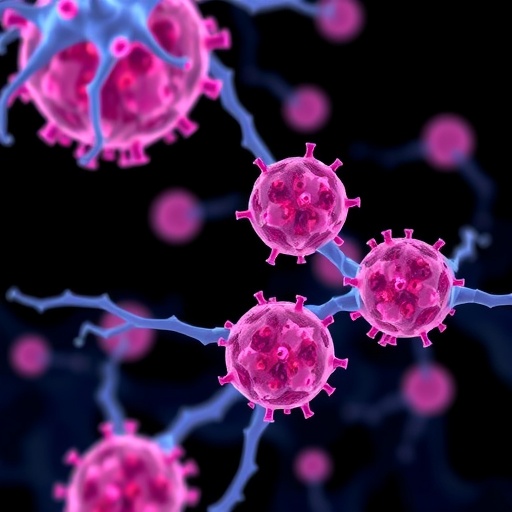
A new biobank of three-dimensional human tumour models is giving researchers an unprecedented view of the genes that cancers depend on to survive. The resource, developed by scientists at the Wellcome Sanger Institute and clinical collaborators across the United Kingdom, combines patient-derived organoids with genomic, clinical and functional data. In a study published in Nature on 5 August 2026, the team used the collection to build a large-scale map of cancer gene dependencies, revealing thousands of potential vulnerabilities that could eventually guide the development of more precise treatments.
The biobank contains 256 organoids representing five cancer types with significant unmet medical needs: colorectal, oesophageal, pancreatic, stomach and ovarian cancers. Organoids are miniature three-dimensional cultures grown from patient tumour cells. Unlike conventional two-dimensional cell lines, in which cancer cells spread across the flat surface of a laboratory dish, organoids can reproduce important features of the original tumour’s architecture, genetic diversity and behaviour. They are not complete tumours, but they provide a more biologically realistic environment for studying how cancer cells grow and respond to treatment.
Creating the collection required a coordinated network of hospital and research centres in Birmingham, Cambridge, Glasgow, London and Southampton. Fresh tumour tissue donated by consenting patients was rapidly transported to the Sanger Institute, where researchers isolated viable cancer cells and placed them in carefully controlled culture conditions. These conditions included specialised growth factors and three-dimensional scaffolds or matrices that encourage cells to organise into structures resembling aspects of the tissue from which they originated. Establishing such cultures is technically demanding because tumour samples contain a mixture of cancer cells, immune cells, connective tissue and other normal cells, and not every sample forms a stable organoid.
To determine how faithfully the organoids represented the patients’ cancers, the researchers compared DNA sequences from the organoids with sequences from the original tumours and, where available, blood samples from the same patients. This approach allowed the team to distinguish inherited genetic variants from mutations acquired by the tumour and to monitor whether the models changed as they were maintained in the laboratory. The analysis showed that the organoids generally retained key genetic characteristics of the tumours from which they were derived, supporting their use as experimental models while also providing a way to track laboratory adaptation over time.
The researchers then applied CRISPR screening to 162 organoid models. CRISPR is a genome-editing technology that can be programmed to disrupt individual genes. In a screening experiment, thousands of cells receive different gene-targeting guides, and the population is monitored to determine which genetic disruptions prevent cells from surviving or multiplying. If cells carrying a particular guide disappear from the culture, the targeted gene may be essential under those conditions. By performing these screens across many tumour models, the team could distinguish broad cancer dependencies from vulnerabilities restricted to particular cancer types or molecular subgroups.
The screens identified thousands of dependencies. Some genes were required by many cancer models, reflecting fundamental processes such as DNA replication, protein production, cell division or energy metabolism. Others were important only in tumours carrying particular mutations or genomic changes. These selective dependencies are especially interesting for drug discovery because they may offer a route to target cancer cells while limiting damage to healthy tissues. However, a gene dependency observed in an organoid is not automatically a viable drug target; it must be validated through additional experiments, tested for safety and assessed in increasingly complex biological systems.
By integrating the CRISPR results with genomic and clinical information, the researchers identified 1,733 associations between gene dependencies and tumour features. These links included specific DNA alterations and treatment histories, helping to explain why genetically different cancers may respond differently to the same therapy. The resource also provided clues about how some tumours adapt after treatment. In several cases, organoids established from the same patient before and after therapy allowed the team to compare tumour states and identify changes associated with treatment resistance, as well as weaknesses that might be exploited by alternative approaches.
The findings do not represent an immediate new treatment for patients, and the organoids are not intended to replace clinical trials or traditional cancer models. Instead, the biobank is designed as an open research platform that can help scientists prioritise hypotheses before investing in drug development. Researchers can use the models to investigate cancer biology, test combinations of therapies, study resistance mechanisms and explore why a treatment succeeds in one molecular context but fails in another. Because the models are linked to patient data and genetic information, they may also help close the gap between laboratory discoveries and the biology of cancers observed in hospitals.
The study forms part of a broader international effort to improve next-generation cancer models. Two complementary papers published in Nature describe an expanded dependency map using genome-editing screens and the Human Cancer Models Initiative’s international collection of patient-derived models. Together, the studies point toward a more systematic era of cancer research in which experimental models are selected according to the genetic and clinical features they represent. Data from the new biobank will be made freely available through the Cell Model Passports website, while organoids are expected to be distributed through Merck and the nonprofit American Type Culture Collection, allowing laboratories worldwide to investigate cancer’s vulnerabilities with shared, better-characterised tools.
News Publication Date: 5 August 2026
Web References:
Wellcome Sanger Institute: https://www.sanger.ac.uk/
Cell Model Passports: https://cellmodelpassports.sanger.ac.uk/
Wellcome: https://wellcome.org/
References:
Herranz-Ors, C. et al. (2026), “A tumour-derived organoid biobank maps cancer gene dependencies,” Nature. DOI: 10.1038/s41586-026-10830-y
“A dependency map enhanced with next-generation 3D cancer models,” Nature. DOI: 10.1038/s41586-026-10843-7
“A compendium of next-generation patient-derived models for diverse cancers,” Nature. DOI: 10.1038/s41586-026-10806-y
Cite Scienmag News
Nathaniel Bowman. (August 6, 2026). New tumour-model biobank exposes cancer vulnerabilities. Scienmag. https://scienmag.com/new-tumour-model-biobank-exposes-cancer-vulnerabilities/
Nathaniel Bowman. "New tumour-model biobank exposes cancer vulnerabilities." Scienmag, 6 August 2026, https://scienmag.com/new-tumour-model-biobank-exposes-cancer-vulnerabilities/. Accessed 4 September 2026.
Nathaniel Bowman. "New tumour-model biobank exposes cancer vulnerabilities." Scienmag. August 6, 2026. https://scienmag.com/new-tumour-model-biobank-exposes-cancer-vulnerabilities/


