


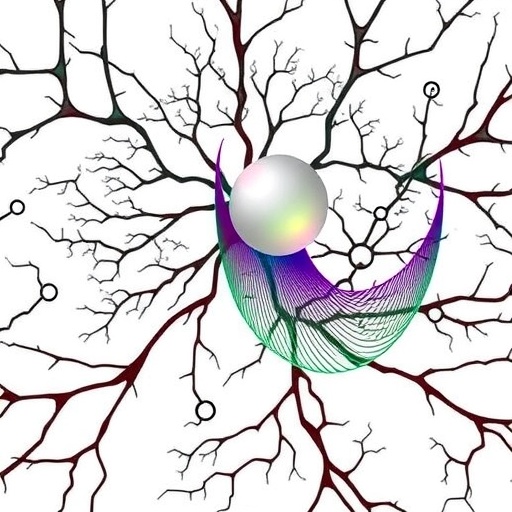
The cerebral cortex may not be built according to the simple developmental script scientists have relied on for decades. A new study in mice suggests that neural stem cells begin splitting into separate developmental lineages much earlier than previously thought, producing distinct classes of projection neurons in parallel rather than switching from one type to another over time. The finding offers a new explanation for how the brain constructs its highly organized layers—and could reshape how researchers understand the origins of cortical complexity.
The study, published in Science Advances, was led by Irene Varela-Martínez, a postdoctoral researcher at the Institute of Science and Technology Austria (ISTA), in collaboration with scientists at the Centro Nacional de Biotecnología in Madrid and the laboratory of Simon Hippenmeyer at ISTA. The researchers investigated radial glial cells, neural precursor cells that generate most of the neurons in the developing cerebral cortex. Their results indicate that these progenitors do not follow a single, uniform developmental program. Instead, they branch early into at least two lineages with different capacities and production patterns.
The cerebral cortex is the brain’s outermost layer and is essential for perception, attention, memory, language, conscious thought, and voluntary action. Its gray matter contains a dense mixture of neurons and glial cells arranged into six characteristic layers. During development, neurons are generally generated in an “inside-out” sequence: cells destined for deeper layers are produced first, while later-born neurons migrate past them to occupy more superficial positions. This orderly layering led scientists to assume that neural stem cells also followed a strict temporal sequence in which one major neuronal class was produced before another.
Projection neurons are particularly important for understanding this process because they form long-distance communication routes throughout the brain and nervous system. One group, known as intra-telencephalic projection neurons, or IT-PNs, connects different regions of the cerebral cortex, including areas in the opposite hemisphere. Another group, extra-telencephalic projection neurons, or ET-PNs, sends signals beyond the cortex, including toward structures such as the brainstem and spinal cord. Because ET-PNs are concentrated in deeper cortical layers and IT-PNs are abundant in upper layers, researchers had proposed that stem cells first generated ET-PNs and later switched to producing IT-PNs.
Earlier observations by Varela-Martínez and her colleagues already hinted that this model was incomplete. In developing mouse brains, the production of ET-PNs and IT-PNs overlapped rather than occurring in two completely separate waves. The two neuronal groups also appeared to follow different developmental dynamics. To determine whether these differences reflected distinct family histories, the team turned to Mosaic Analysis with Double Markers, or MADM, a sophisticated genetic technique used to trace cell divisions and reconstruct neuronal lineages.
MADM allows daughter cells produced during a division to be labeled in contrasting colors, making it possible to follow their descendants through embryonic development. Rather than simply identifying a neuron’s final molecular identity, the method reveals how it arose, which cells shared a common ancestor, and how large or restricted its developmental clone became. Applying MADM to radial glial progenitors, the researchers found that at least two branches emerged in parallel from the same precursor population and separated early during corticogenesis.
One branch generated exclusively IT-PNs. The other produced a mixture of ET-PNs and IT-PNs, demonstrating that the capacity to generate both classes was retained within a specific lineage rather than being a universal feature of all radial glial progenitors. This early diversification challenges the long-standing idea that cortical stem cells operate as interchangeable units that progressively change their output according to developmental time. Instead, lineage identity appears to play a major role from the beginning.
The researchers also discovered that the two branches behave very differently as development proceeds. ET-PNs are produced in relatively small clusters of cells, and these lineages become depleted early. IT-PN lineages, by contrast, generate larger groups of neurons and remain active across the entire period of cortical neurogenesis. Their descendants are distributed through multiple cortical layers. This difference in lineage longevity explains why ET-PNs are relatively prominent during early development, while later stages produce overwhelmingly IT-PNs, even though both neuronal classes can arise during overlapping periods.
The findings suggest that the mature cortex is assembled through an early branching process in which neuronal diversity is established sooner than expected. The result does not overturn the inside-out pattern of cortical layering; rather, it adds a hidden layer of complexity beneath it. Neurons can still populate the cortex in a predictable spatial sequence while being produced by progenitors that have already diverged into distinct developmental programs. Understanding these programs may help explain how precise connectivity emerges and why disruptions in early neural lineage decisions can contribute to neurological disorders.
Varela-Martínez is now using related questions to investigate how the cerebral cortex evolved. Mammalian brains have expanded in size and complexity across evolutionary history, raising a central biological question: how did neural stem cells adapt to produce more neurons and a wider range of cell types? By comparing developmental programs across species, researchers may learn whether larger brains arise through longer neurogenic periods, more prolific progenitors, altered lineage branching, or combinations of these mechanisms. The new work provides a detailed framework for asking how a small number of embryonic precursor cells can generate the extraordinary cellular architecture of the brain.
Web References: https://doi.org/10.1126/sciadv.adw5487
References: Science Advances, “Early Fate Diversification of Radial Glial Progenitors During Corticogenesis,” DOI: 10.1126/sciadv.adw5487
Keywords
Cerebral cortex, developmental neuroscience, neural stem cells, radial glia, projection neurons, intra-telencephalic projection neurons, extra-telencephalic projection neurons, corticogenesis, neuronal lineages, brain development, MADM, neuroscience
Cite Scienmag News
Cassandra Pierce. (August 6, 2026). Neural precursor divides into two cell lineages earlier than expected. Scienmag. https://scienmag.com/neural-precursor-divides-into-two-cell-lineages-earlier-than-expected/
Cassandra Pierce. "Neural precursor divides into two cell lineages earlier than expected." Scienmag, 6 August 2026, https://scienmag.com/neural-precursor-divides-into-two-cell-lineages-earlier-than-expected/. Accessed 3 September 2026.
Cassandra Pierce. "Neural precursor divides into two cell lineages earlier than expected." Scienmag. August 6, 2026. https://scienmag.com/neural-precursor-divides-into-two-cell-lineages-earlier-than-expected/


