


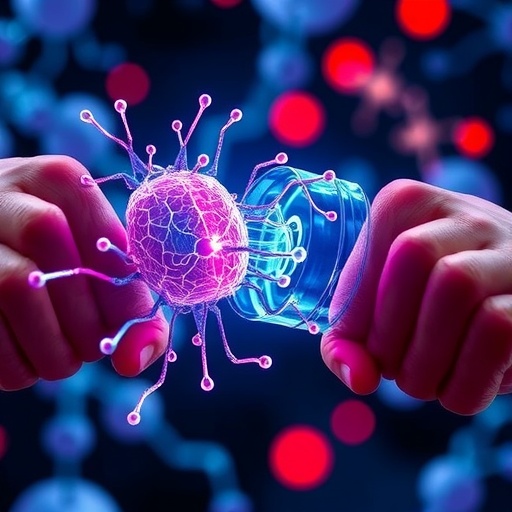
Glioblastoma, the most aggressive primary brain cancer, remains notoriously difficult to control. Its cells do not stay neatly confined within a visible tumour mass; instead, they infiltrate surrounding brain tissue, forming microscopic extensions that can remain after surgery. Removing more tissue can increase the risk of neurological damage, while leaving even small clusters of cancer cells can allow the disease to return. The challenge is compounded by the blood-brain barrier, a tightly regulated network of blood vessels that protects neural tissue but also restricts the delivery of many therapeutic compounds. As a result, the five-year survival rate for glioblastoma is only around 7 per cent.
Now, researchers from the University of Technology Sydney, Harvard University and Henan universities have developed a multifunctional nanoparticle system intended to confront both problems in sequence. The platform combines surgical imaging with postoperative treatment, using the same near-infrared light source to activate two distinct functions. The work, reported in Science Translational Medicine, describes a “double-punch” approach: first helping surgeons identify tumour tissue with cellular-level precision, then attacking malignant cells that remain after the visible tumour has been removed.
At the centre of the system is an ultrathin, two-dimensional material engineered with isolated platinum atoms. These atoms are deposited individually using an atomic-scale fabrication process adapted from the semiconductor industry. This arrangement is important because single atoms can behave differently from larger clusters or conventional nanoparticles, offering highly active catalytic sites while keeping the material extremely thin. The resulting structure, known as a single-atom nanozyme, is designed to imitate certain enzyme-like chemical reactions while also carrying optical and targeting components.
During surgery, the nanoparticles function as near-infrared imaging agents. A fluorescent dye attached to the two-dimensional sheet emits light in response to a near-infrared wavelength, including light in the second near-infrared window, often called NIR-II. This region of the spectrum can penetrate biological tissue more effectively than visible light and generally produces less background scattering. According to the researchers, the system enabled the detection of tumour cell clusters as small as 44 micrometres in experimental models, a scale that exceeds the resolution of standard clinical imaging methods. A tumour-targeting molecule attached to the nanoparticles was also designed to help them cross the blood-brain barrier and accumulate in glioma cells.
The technology is intended to address a persistent weakness in glioblastoma surgery: the boundary between malignant and healthy brain tissue is often indistinct. Conventional imaging may reveal the main tumour, but it cannot reliably expose every infiltrating cell. By illuminating tumour-associated material during the operation, the nanoparticle platform could provide a visual guide to areas that might otherwise appear normal. The researchers describe this as a form of surgical navigation capable of operating at approximately the level of individual cell clusters, although the performance was demonstrated in animals rather than human patients.
After the visible tumour has been removed, the same material is designed to serve a therapeutic role. The nanoparticles can be administered into the surgical cavity and exposed again to the same near-infrared wavelength. Under illumination, the system generates heat and reactive molecular species, including chemically active oxygen-derived compounds capable of damaging cancer cells. This combined process is known as photothermal and photodynamic therapy: one component raises the local temperature, while the other promotes oxidative stress that can injure cellular membranes, proteins and genetic material.
The platinum single atoms add another chemical function intended to overcome the low-oxygen conditions found inside many glioblastomas. Tumour tissue often contains regions of hypoxia, where oxygen levels are insufficient for some forms of phototherapy to work efficiently. In the reported platform, the platinum sites catalyse the conversion of hydrogen peroxide naturally present in the tumour microenvironment into oxygen. This reaction is designed to increase local oxygen availability while simultaneously supporting the generation of reactive species during light exposure. In principle, the nanozyme therefore turns a chemical weakness of the tumour into fuel for treatment, while the light-triggered effects provide a second mechanism of attack.
In mouse models of glioblastoma, the combined imaging and treatment strategy suppressed tumour recurrence after surgery. All treated animals survived to the 60-day endpoint, whereas animals receiving surgery alone had a reported survival of 42 days. Follow-up assessments did not reveal detectable neurological or motor deficits in the treated mice. The findings suggest that a material capable of identifying infiltrating tumour cells and then treating the surgical site could offer a way to narrow the gap between what surgeons can see and what cancer cells leave behind. However, the results remain preliminary. The study was performed in animals, and the safety, distribution, clearance and effectiveness of the nanoparticles must be established before human testing can be considered. The imaging system and light-delivery requirements will also need to be evaluated in the much larger and more complex environment of the human brain. If the approach survives those stages of development, it could eventually provide surgeons with a more precise view of glioblastoma and offer a targeted postoperative treatment against microscopic disease, one of the main causes of recurrence.
News Publication Date: 5-Aug-2026
Web References: Science Translational Medicine: https://www.science.org/doi/epdf/10.1126/scitranslmed.aeb8054
References: DOI: 10.1126/scitranslmed.aeb8054
Cite Scienmag News
Nathaniel Bowman. (August 6, 2026). Double-punch strategy shows promise against brain cancer. Scienmag. https://scienmag.com/double-punch-strategy-shows-promise-against-brain-cancer/
Nathaniel Bowman. "Double-punch strategy shows promise against brain cancer." Scienmag, 6 August 2026, https://scienmag.com/double-punch-strategy-shows-promise-against-brain-cancer/. Accessed 6 September 2026.
Nathaniel Bowman. "Double-punch strategy shows promise against brain cancer." Scienmag. August 6, 2026. https://scienmag.com/double-punch-strategy-shows-promise-against-brain-cancer/


