


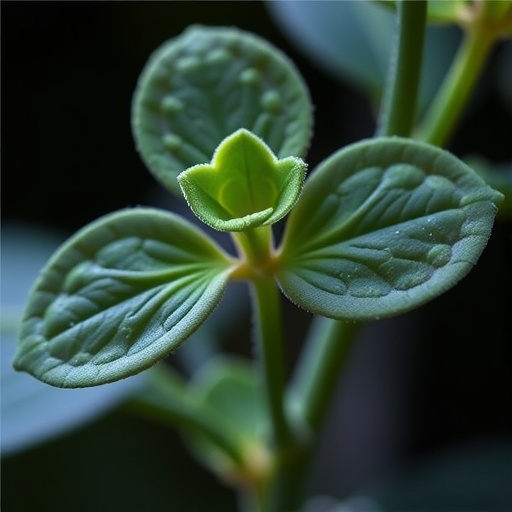
Scientists have uncovered a surprising molecular double life at the heart of plant development. A protein long associated with activating genes has now been shown to directly stimulate a major gene-silencing machine, revealing how plants may switch between opposing chromatin states as they move through critical reproductive transitions. The discovery places the plant protein ULTRAPETALA1, or ULT1, at the center of a previously unknown connection between two chromatin-regulating systems that have traditionally been viewed as rivals.
The findings, published in Nature Plants, challenge the conventional view that ULT1 functions mainly as a trithorax-group, or trxG, factor. TrxG proteins generally help maintain active genes by supporting the trimethylation of histone H3 at lysine 4, known as H3K4me3. In contrast, Polycomb-group, or PcG, complexes repress gene activity by depositing trimethylated histone H3 at lysine 27, or H3K27me3. These chemical marks are written onto histone proteins, the molecular spools around which DNA is wrapped, and help determine whether genes remain accessible or are locked down.
The antagonism between trxG and PcG systems is fundamental to development in multicellular organisms. Genes controlling cell identity, growth and reproductive timing must be activated in some tissues and silenced in others, often with extraordinary precision. In plants, this regulatory challenge is intensified by their lifelong developmental flexibility. Unlike animals, many plants continue producing new organs throughout their lives and can alter reproductive development in response to environmental conditions. The molecular mechanisms that allow plants to balance gene activation and repression have therefore remained a major question in plant epigenetics.
ULT1 had previously been characterized as a factor that antagonizes CURLY LEAF, or CLF, an enzymatic component of the plant Polycomb Repressive Complex 2, known as PRC2. PRC2 is responsible for adding the H3K27me3 mark to chromatin, thereby suppressing nearby genes. Based on earlier genetic and molecular evidence, ULT1 was regarded primarily as a trxG-associated protein that promoted gene activity and counteracted PRC2-mediated repression. The new study, however, shows that this picture is incomplete: ULT1 can also support PRC2, depending on the catalytic subunit involved.
Using epigenomic analyses, the researchers found that ULT1 increases H3K27me3 levels at more than 1,000 genes. This broad effect indicates that ULT1 is not simply a brake on Polycomb activity. Instead, it can help establish or reinforce repression across a substantial group of genomic targets. Such a dual role could allow plants to fine-tune developmental programs rather than treating gene activation and silencing as strictly separate processes.
The team also discovered that ULT1 physically interacts with components of PRC2, particularly the enzymatic subunit SWINGER, or SWN. In biochemical experiments performed outside living cells, ULT1 significantly enhanced the ability of SWN-containing PRC2 to methylate histone H3 at lysine 27. The protein also stimulated PRC2 complexes containing CLF, although the effect was weaker. This difference provides a potential biochemical explanation for why ULT1 can produce distinct genetic and developmental outcomes depending on which PRC2 catalytic subunit is present.
PRC2 is not a single uniform machine. Its activity depends on the combination of core proteins and catalytic subunits assembled into the complex, as well as on the chromatin environment and regulatory factors surrounding it. CLF and SWN are related enzymes, but they do not necessarily perform identical functions in every tissue or developmental stage. The observation that ULT1 preferentially boosts SWN-containing PRC2 suggests that these two versions of the complex may have different intrinsic activities and may respond differently to accessory proteins.
This mechanism offers a new model for how a single regulatory factor can act as a molecular switch. In one context, ULT1 may support trxG-associated activation and oppose CLF-dependent repression. In another, especially when partnered with SWN-containing PRC2, it may enhance H3K27 trimethylation and strengthen gene silencing. Rather than functioning as a permanently activating or repressing protein, ULT1 could help direct chromatin toward one state or the other according to the composition of the surrounding molecular machinery.
The consequences are especially important for reproductive development, when plants must coordinate the transition between vegetative growth and the formation of flowers and seeds. Small changes in the timing or intensity of gene repression can alter when these transitions occur and how reproductive structures develop. By linking an ostensibly activating factor to a repressive enzyme complex, the study suggests that plants possess a flexible chromatin control system capable of rapidly recalibrating developmental decisions. The discovery expands the understanding of how epigenetic memory is built, modified and sometimes reversed, while identifying ULT1 as a key regulator of the balance between plant gene activation and silencing.
Cite Scienmag News
Juliet Wilcox. (August 4, 2026). Plant ULTRAPETALA1 Balances Trithorax and Polycomb Signals to Fine-Tune Reproductive Transitions. Scienmag. https://scienmag.com/plant-ultrapetala1-balances-trithorax-and-polycomb-signals-to-fine-tune-reproductive-transitions/
Juliet Wilcox. "Plant ULTRAPETALA1 Balances Trithorax and Polycomb Signals to Fine-Tune Reproductive Transitions." Scienmag, 4 August 2026, https://scienmag.com/plant-ultrapetala1-balances-trithorax-and-polycomb-signals-to-fine-tune-reproductive-transitions/. Accessed 5 September 2026.
Juliet Wilcox. "Plant ULTRAPETALA1 Balances Trithorax and Polycomb Signals to Fine-Tune Reproductive Transitions." Scienmag. August 4, 2026. https://scienmag.com/plant-ultrapetala1-balances-trithorax-and-polycomb-signals-to-fine-tune-reproductive-transitions/


