


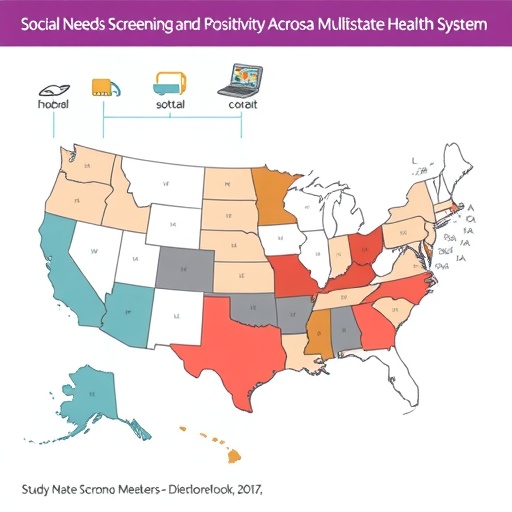
A new cohort study published in JAMA Network Open is drawing attention to the role hospitals can play in identifying patients whose health is shaped by social conditions outside the clinic. The study examined health-related social needs (HRSNs) screening across inpatient and outpatient settings and found that screening reached a broad patient population with relatively little evidence that participation was limited to a highly selected group. Nearly 30% of screened patients reported at least one social need, underscoring the scale of challenges that may otherwise remain invisible in routine medical care.
HRSNs are nonmedical conditions that can directly influence a person’s ability to prevent illness, follow treatment plans, and recover from disease. They include food insecurity, unstable housing, difficulty paying utility bills, transportation barriers, problems obtaining medications, and concerns about personal safety. Although these issues are not diagnoses in the conventional sense, they can alter exposure to disease, access to care, and the effectiveness of clinical treatment. Screening programs aim to identify those needs early enough for health systems to connect patients with social services, community organizations, financial assistance, or other forms of support.
The study’s central finding concerns not only how many patients reported needs, but also who was reached by the screening process. The investigators found that patients who belonged to racial and ethnic minority groups and those with public insurance reported social needs at higher rates than other groups. Public insurance commonly includes Medicaid and Medicare, although the study summary does not provide a detailed breakdown of individual insurance categories. The pattern suggests that HRSN screening can reveal disparities that are closely linked to economic resources, structural disadvantage, and unequal access to stable housing, food, transportation, and health services.
A major concern in any screening program is selection bias. If only the most engaged, healthiest, or easiest-to-contact patients complete a questionnaire, the results may underestimate the prevalence of unmet needs and fail to reach people at greatest risk. The researchers characterized the screening effort as having substantial reach and being largely free of selection, indicating that the process was able to include patients across inpatient and outpatient environments rather than relying exclusively on a narrow segment of the health system’s population. This distinction is technically important: a high proportion of positive screens is more informative when the underlying screened population reflects the patients receiving care.
Inpatient screening may be particularly valuable because hospitalization brings patients into repeated contact with nurses, physicians, social workers, case managers, and discharge planners. A patient admitted for an acute medical problem may also be facing inadequate food, a lack of transportation to follow-up appointments, homelessness, or difficulty obtaining prescriptions after discharge. These factors can increase the likelihood of missed appointments, medication interruptions, emergency department visits, and readmission. By identifying them during hospitalization, clinicians may be able to incorporate social support into discharge planning rather than treating it as an unrelated issue.
Outpatient settings provide a different opportunity. Primary care and specialty clinics often have longer-term relationships with patients and may be better positioned to monitor whether a social need persists, improves, or worsens. Screening can be incorporated into electronic health records, previsit questionnaires, patient portals, or conversations with clinical staff. However, simply asking about a need does not resolve it. Effective programs require referral networks, personnel who can respond to positive screens, mechanisms for documenting follow-up, and community resources capable of accepting referrals.
The findings arrive as health systems and policymakers continue to debate how broadly HRSN screening should be required. Policy mandates can encourage institutions to build consistent workflows, but they may also create operational burdens if hospitals lack staffing, funding, or reliable community partnerships. The study provides support for maintaining inpatient screening workflows even as policy requirements change, particularly because discontinuing them could reduce access to screening for patients with disproportionately high social needs. The authors’ conclusion emphasizes equitable reach rather than screening as an end in itself.
From a population-health perspective, the nearly 30% rate of identified need illustrates why social conditions are increasingly treated as essential components of clinical risk assessment. Traditional medical records capture laboratory values, diagnoses, vital signs, and medication lists, but they may omit whether a patient has a refrigerator, a safe place to sleep, or a dependable way to reach a pharmacy. HRSN data can add context to those clinical measurements. A missed appointment, uncontrolled blood pressure, or repeated hospitalization may have explanations that are not visible through biomedical data alone.
The study does not imply that screening alone can eliminate health inequities, and the available summary does not establish that screening directly improved outcomes for individual patients. Its contribution is instead methodological and practical: it shows that broad screening across inpatient and outpatient care is feasible and can identify a substantial burden of unmet social needs among groups already facing greater health risks. The results point toward a model in which hospitals use screening to make social barriers visible, coordinate responses, and preserve access for patients who might otherwise be overlooked as health policy evolves.
Web References: https://doi.org/10.1001/jamanetworkopen.2026.26901
References: JAMA Network Open, DOI: 10.1001/jamanetworkopen.2026.26901
Cite Scienmag News
Courtney Benton. (August 4, 2026). Study Tracks Social Needs Screening and Positivity Across a Multistate Health System. Scienmag. https://scienmag.com/study-tracks-social-needs-screening-and-positivity-across-a-multistate-health-system/
Courtney Benton. "Study Tracks Social Needs Screening and Positivity Across a Multistate Health System." Scienmag, 4 August 2026, https://scienmag.com/study-tracks-social-needs-screening-and-positivity-across-a-multistate-health-system/. Accessed 3 September 2026.
Courtney Benton. "Study Tracks Social Needs Screening and Positivity Across a Multistate Health System." Scienmag. August 4, 2026. https://scienmag.com/study-tracks-social-needs-screening-and-positivity-across-a-multistate-health-system/


