


A revolution in animal evolution may have been driven by one of nature’s least glamorous products: fossilized feces. An international study led by researchers at Flinders University argues that the accumulation of animal waste in ancient marine environments helped fuel the Cambrian Radiation, the extraordinary burst of diversification that began about 540 million years ago and produced many of the major animal groups known today.
The researchers describe this transformation as the “faecal revolution,” proposing that changing diets, increasingly sophisticated digestive systems and the spread of coprolites—the geological term for fossilized fecal material—played a far more important role in early ecosystem development than previously recognized. Their review, published in Trends in Ecology & Evolution, presents feces not merely as biological waste, but as a mechanism that redistributed organic carbon and nutrients through the first complex marine food webs.
The Cambrian Explosion, or Cambrian Radiation, has traditionally been linked to several interacting factors, including rising oxygen concentrations, genetic innovation, environmental change and the evolution of predation. The new interpretation does not replace those explanations. Instead, it adds a biological feedback loop: as animals evolved more effective ways to consume and digest food, they produced more varied and substantial waste, which in turn became a source of energy and nutrients for other organisms.
The process began after the appearance of the earliest animals during the Ediacaran Period, around 600 million years ago. At that time, many organisms had relatively simple body plans and limited digestive capabilities. By the beginning of the Cambrian Period, however, animals with more complex internal anatomy began to emerge. Their digestive systems could process a broader range of food, extract nutrients more efficiently and generate fecal deposits with different physical and chemical properties.
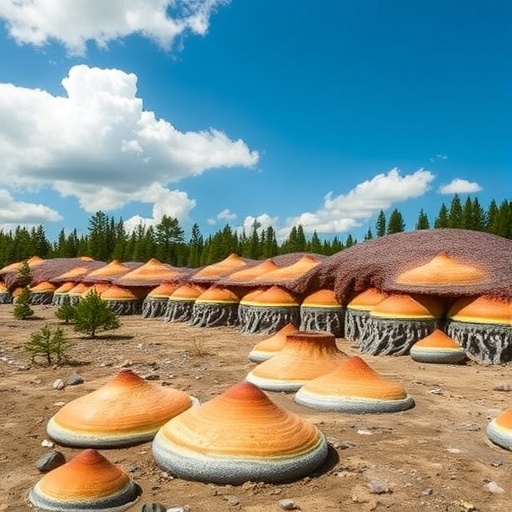
Those deposits are preserved in the fossil record as coprolites, ranging from microscopic pellets to centimeter-scale structures containing shells, skeletal fragments and other remains of consumed organisms. Researchers have identified examples in more than 35 deposits around the world, including sites in Australia, Greenland, North America and China. Their increasing variety in size, shape and contents provides evidence that feeding strategies and digestive systems were becoming more specialized as the Cambrian progressed.
Among the most significant developments occurred in early arthropods, the highly diverse group that includes the distant ancestors of modern insects, crustaceans and spiders. Some Cambrian arthropods evolved specialized foreguts and digestive glands, allowing them to break down tougher or more varied foods. These anatomical innovations likely increased the amount and diversity of organic matter entering the seafloor environment, where microbes and other animals could use it.
This matters because nutrients in early oceans were not distributed evenly. Animal feeding and digestion physically moved organic material through sediments and the water column, while fecal pellets could transport carbon away from the surface and make it available to organisms living on or within the seafloor. In modern ecosystems, similar processes influence nutrient cycling, carbon storage and the structure of food webs. The researchers suggest that the Cambrian development of these processes helped create conditions in which marine ecosystems could become larger, denser and more interconnected.
The study also highlights the ecological consequences of changing trophic interactions. As animals began occupying different feeding roles—such as grazers, scavengers, predators and deposit feeders—their waste became part of a continuously expanding network of consumption and recycling. More complex digestive systems supported more specialized diets, while more specialized diets generated new forms of organic debris. This feedback may have accelerated the expansion of ecological niches and encouraged animals to diversify into previously unoccupied environments.
The authors emphasize that feces alone cannot explain the Cambrian Radiation. Oxygen availability, body-plan innovation, developmental genetics, predation and environmental shifts all contributed to the transformation of life. Yet the fossil record suggests that excrement was an overlooked component of the same system. By increasing the flow of carbon and nutrients through ancient oceans, the researchers argue, early animals may have helped fertilize the ecosystems that ultimately supported their own evolutionary expansion.
The findings offer a striking reminder that major biological transitions can be driven by processes that appear ordinary at the individual level. The first complex digestive systems did not simply help animals survive; they changed how matter moved through the planet. Long before humans used manure to enrich agricultural soils, Cambrian animals may already have been fertilizing their environment—one coprolite at a time.
News Publication Date: 4-Aug-2026
Web References: https://researchnow.flinders.edu.au/en/persons/russell-bicknell/ ; https://doi.org/10.1016/j.tree.2026.06.013
References: Kimmig, J. and Bicknell, R. D. C. “The Cambrian fecal revolution: Fueling the Cambrian Radiation.” Trends in Ecology & Evolution. DOI: 10.1016/j.tree.2026.06.013
Cite Scienmag News
Gavin Prescott. (August 4, 2026). How an Excrement Explosion Permanently Transformed Earth’s Ecosystems. Scienmag. https://scienmag.com/how-an-excrement-explosion-permanently-transformed-earths-ecosystems/
Gavin Prescott. "How an Excrement Explosion Permanently Transformed Earth’s Ecosystems." Scienmag, 4 August 2026, https://scienmag.com/how-an-excrement-explosion-permanently-transformed-earths-ecosystems/. Accessed 3 September 2026.
Gavin Prescott. "How an Excrement Explosion Permanently Transformed Earth’s Ecosystems." Scienmag. August 4, 2026. https://scienmag.com/how-an-excrement-explosion-permanently-transformed-earths-ecosystems/


