

Wednesday, July 29, 2026
Science
No Result
View All Result
  • Login
  • HOME
  • SCIENCE NEWS
  • CONTACT US
  • HOME
  • SCIENCE NEWS
  • CONTACT US
No Result
View All Result
Scienmag
No Result
View All Result
Home Science News Medicine

Transcriptomic Profiling Reveals Differences Between Human Brown and White Fat Depots

July 29, 2026
in Medicine
Reading Time: 2 mins read
0
Transcriptomic Profiling Reveals Differences Between Human Brown and White Fat Depots

Transcriptomic Profiling Reveals Differences Between Human Brown and White Fat Depots

65
SHARES
587
VIEWS
Share on FacebookShare on Twitter
ADVERTISEMENT

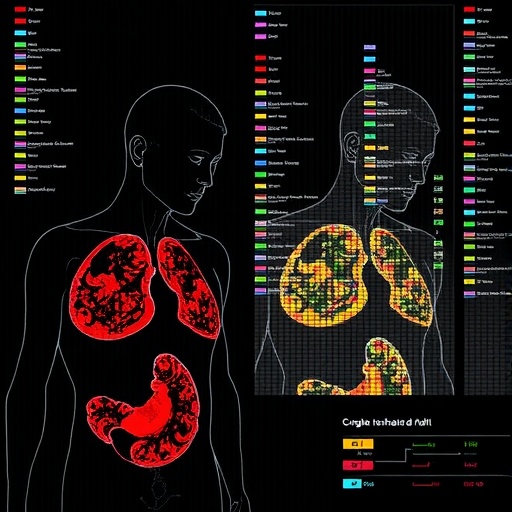
A new transcriptomic map of human fat is helping to clarify why “brown” and “white” adipose tissues behave so differently—and how those differences may be exploited for metabolic health. In a study appearing in Nature Communications (2026), Nguyen and colleagues compared gene-expression programs across depots traditionally linked to thermogenesis (brown fat) and energy storage (white fat), using high-resolution profiling to move beyond broad markers.

The work centers on identifying depot-specific regulatory signatures: sets of genes and pathway activities that track with functional state rather than relying on single surface proteins. By examining how transcripts cluster by tissue location and cellular composition, the authors highlight coordinated changes in mitochondrial genes, lipid-handling programs, and stress-response pathways—hallmarks of adipose specialization.

A key finding is that brown adipose tissue exhibits a distinct transcriptional architecture consistent with enhanced oxidative metabolism. The study reports elevated activity in programs related to mitochondrial function and thermogenic regulation, aligning with the tissue’s capacity to generate heat. In contrast, white adipose tissue shows expression patterns dominated by lipid storage and energy-buffering processes.

Beyond listing differentially expressed genes, the researchers integrate signatures of cellular heterogeneity. Adipose depots contain mixed cell types, and the paper emphasizes that apparent expression differences often reflect both intrinsic adipocyte programs and shifts in supportive stromal and immune populations. This helps explain why responses to diet, temperature, or inflammation can vary between individuals and depots.

The authors also describe changes in inflammatory and remodeling pathways, suggesting that adipose function is shaped by immune signaling and tissue repair dynamics. Such pathways may influence how readily brown-like thermogenic features emerge—or fail to emerge—under metabolic stress.

Because transcriptomic profiling can capture subtle regulatory changes, the study provides candidate gene networks that may serve as targets for interventions aimed at “reprogramming” white fat toward a more metabolically active phenotype. Importantly, the depot-specific nature of these networks implies that therapies may need to account for anatomical context.

Together, the findings position human adipose tissue as a modular organ system, where distinct molecular circuits define function. If validated in larger cohorts and linked to clinical outcomes, these depot-resolved gene programs could become a foundation for next-generation anti-obesity and anti-diabetes strategies.

Subject of Research: Human brown and white adipose tissue depots; transcriptomic profiling and metabolic regulation.

Article Title: Transcriptomic profiling of human brown and white adipose tissue depots.

Article References: Nguyen, N., Cero, C., Guarnieri, A.R. et al. Transcriptomic profiling of human brown and white adipose tissue depots. Nat Commun (2026). https://doi.org/10.1038/s41467-026-76065-7

Image Credits: AI Generated

Tags: adipocyte subtype diversity and functionadipose tissue gene expression profilescellular heterogeneity in fat tissuesdepot-specific regulatory gene signaturesgene expression clustering in adipose tissuehigh-resolution transcriptomic mapping of adipose depotshuman brown and white fat transcriptomic differenceslipid metabolism pathways in fat depotsmetabolic health implications of brown and white fatmitochondrial function in adipose tissuestress-response pathways in adipose tissuethermogenic vs energy storage fat
Share26Tweet16
Previous Post

Oligomeric alpha-Synuclein in Neural Extracellular Vesicles Signals Parkinson Non-Motor Symptoms

Next Post

Pine Island Glacier Shows Dynamic Response to Two Decades of Ice Shelf Regrounding

Related Posts

Bioinspired Porous Metal-Amino Acid Nanozymes Treat Atherosclerosis via Dual Pathways
Medicine

Bioinspired Porous Metal-Amino Acid Nanozymes Treat Atherosclerosis via Dual Pathways

July 29, 2026
Palmitoylation boosts NKAα2 and improves diabetic cardiomyopathy via fumarate pathway
Medicine

Palmitoylation boosts NKAα2 and improves diabetic cardiomyopathy via fumarate pathway

July 29, 2026
3D Visualization Reveals Nanoplastic Distribution in Neonatal Mouse Brains
Medicine

3D Visualization Reveals Nanoplastic Distribution in Neonatal Mouse Brains

July 29, 2026
Oligomeric alpha-Synuclein in Neural Extracellular Vesicles Signals Parkinson Non-Motor Symptoms
Medicine

Oligomeric alpha-Synuclein in Neural Extracellular Vesicles Signals Parkinson Non-Motor Symptoms

July 29, 2026
Economic Security, Health, and Religion Shape Life Satisfaction Among Older Urban Iranians
Medicine

Economic Security, Health, and Religion Shape Life Satisfaction Among Older Urban Iranians

July 29, 2026
Single-Cell Profiling of NK/T-Cell Lymphoma Uncovers Stratified Immune States
Medicine

Single-Cell Profiling of NK/T-Cell Lymphoma Uncovers Stratified Immune States

July 29, 2026
Next Post
Pine Island Glacier Shows Dynamic Response to Two Decades of Ice Shelf Regrounding

Pine Island Glacier Shows Dynamic Response to Two Decades of Ice Shelf Regrounding

  • Mothers who receive childcare support from maternal grandparents show more

    Mothers who receive childcare support from maternal grandparents show more parental warmth, finds NTU Singapore study

    27656 shares
    Share 11059 Tweet 6912
  • University of Seville Breaks 120-Year-Old Mystery, Revises a Key Einstein Concept

    1061 shares
    Share 424 Tweet 265
  • Bee body mass, pathogens and local climate influence heat tolerance

    682 shares
    Share 273 Tweet 171
  • Researchers record first-ever images and data of a shark experiencing a boat strike

    546 shares
    Share 218 Tweet 137
  • Groundbreaking Clinical Trial Reveals Lubiprostone Enhances Kidney Function

    531 shares
    Share 212 Tweet 133
Science

Embark on a thrilling journey of discovery with Scienmag.com—your ultimate source for cutting-edge breakthroughs. Immerse yourself in a world where curiosity knows no limits and tomorrow’s possibilities become today’s reality!

RECENT NEWS

  • Bioinspired Porous Metal-Amino Acid Nanozymes Treat Atherosclerosis via Dual Pathways
  • Palmitoylation boosts NKAα2 and improves diabetic cardiomyopathy via fumarate pathway
  • 3D Visualization Reveals Nanoplastic Distribution in Neonatal Mouse Brains
  • Brain criticality variability explains why ADHD symptoms differ across individuals

Categories

  • Agriculture
  • Anthropology
  • Archaeology
  • Athmospheric
  • Biology
  • Biotechnology
  • Blog
  • Bussines
  • Cancer
  • Chemistry
  • Climate
  • Earth Science
  • Editorial Policy
  • Marine
  • Mathematics
  • Medicine
  • Pediatry
  • Policy
  • Psychology & Psychiatry
  • Science Education
  • Social Science
  • Space
  • Technology and Engineering

Subscribe to Blog via Email

Enter your email address to subscribe to this blog and receive notifications of new posts by email.

Join 5,147 other subscribers

© 2025 Scienmag - Science Magazine

Welcome Back!

Login to your account below

Forgotten Password?

Retrieve your password

Please enter your username or email address to reset your password.

Log In
No Result
View All Result
  • HOME
  • SCIENCE NEWS
  • CONTACT US

© 2025 Scienmag - Science Magazine

Discover more from Science

Subscribe now to keep reading and get access to the full archive.

Continue reading
